

Tacos al Pastor Recipe (Step-by-Step Guide)
Al pastor — literally “shepherd style” in Spanish — is one of Mexico’s most beloved street foods, and its story is as layered as its marinade. According to Tasting Table, the dish was born in the 1930s in Puebla, when Lebanese immigrants who brought their shawarma tradition (spit-roasted spiced lamb) began adapting their techniques to local Mexican ingredients. If you’re interested to learn more about the history of al pastor, you can read our article on this. The lamb gave way to pork, the pita bread became a corn tortilla, and the Middle Eastern spice profile was transformed by native chiles and achiote — the earthy, brick-red seed paste that is the soul of al pastor’s color and flavor. As documented in research on Frida’s Cocina, the dish migrated from Puebla to Mexico City in the 1950s and ’60s, taking on the full form we recognize today: deeply marinated pork, pineapple, cilantro, onion, and salsa on a small corn tortilla.
If you’ve never made tacos al pastor at home, here is what I want you to know: the marinade does most of the work. A few dried chiles, some achiote paste, citrus, and spices blended smooth — that’s it. You don’t need a vertical spit. You need a hot pan and a little patience. Let’s do this.
Recipe at a Glance
• Prep time: 20 minutes (+ 4–24 hours marinating)
• Cook time: 25–30 minutes
• Total time: ~45 minutes active / up to 25 hours with marinating
• Difficulty: Intermediate
• Yield: 6 servings (~18 tacos)
• Course: Antojito / Street Food / Main
• Region/Origin: Mexico City; roots in Puebla; inspired by Lebanese shawarma
Ingredients
For the Achiote-Guajillo Marinade
• 4 dried guajillo chiles (stems and seeds removed) — mild, fruity heat; the most important aromatic
• 2 dried ancho chiles (stems and seeds removed) — deep, chocolatey richness
• 3 tablespoons (45 g) achiote paste (annatto paste) — earthy, brick-red color; find it at any Latin grocery or online (see substitution note below)
• ¼ cup (60 ml) fresh orange juice
• 2 tablespoons (30 ml) white vinegar
• 4 garlic cloves
• 1 teaspoon (2 g) ground cumin
• 1 teaspoon (1 g) dried Mexican oregano (regular dried oregano works, but Mexican oregano has a more citrusy, floral note)
• 1½ teaspoons (7 g) kosher salt
Substitution — achiote paste: If you can’t find achiote paste, grind 2 tablespoons of annatto (achiote) seeds in a spice grinder with a little oil. As a last resort, use 1 tablespoon sweet paprika + ½ teaspoon turmeric for color — the flavor will differ, but the marinade will still be delicious. The authentic version with true achiote paste is always worth hunting down.
For the Pork
• 2½ lbs (1.1 kg) boneless pork shoulder (also sold as pork butt), sliced ¼ inch (6 mm) thin
• ¼ of a fresh pineapple, cored and sliced into rings or chunks
Tip: Ask your butcher to slice the shoulder, or partially freeze it yourself (45 minutes in the freezer) to make thin slicing much easier.
For Serving
• 18 small corn tortillas (4–5 inch / street-taco size)
• ½ cup (80 g) white onion, finely diced
• 1 cup (16 g) fresh cilantro leaves
• 2 limes, cut into wedges
• Salsa verde or salsa roja, for serving
• Pickled jalapeños or radish slices (optional but encouraged)
Substitution — tortillas: Flour tortillas are acceptable if that’s your preference, but small corn tortillas are traditional and the right call.
We offer catering services in and around Austin, TX and Texas Hill Country. Inquire HERE.
Step-by-Step Instructions
1. Toast and rehydrate the chiles. Wipe the guajillo and ancho chiles clean with a damp cloth. Tear off the stems and shake out the seeds. Heat a dry skillet over medium heat. Toast each chile 30–45 seconds per side, pressing gently with a spatula, until fragrant and just darkened — you’ll smell a pleasant toasty aroma. Do NOT let them turn black; bitterness is irreversible. Transfer to a bowl, cover with hot water, and soak 15 minutes until soft and pliable.
2. Blend the marinade. Drain the chiles (discard soaking water). Add them to a blender with the achiote paste, orange juice, vinegar, garlic, cumin, oregano, and salt. Blend on high for 2 full minutes until completely smooth. Strain through a fine-mesh sieve into a bowl, pressing solids with a spoon. The strained marinade will be silky, deep red, and fragrant.
3. Marinate the pork. Lay the thin pork slices in a large zip-lock bag or shallow baking dish. Pour the marinade over and massage it into every surface. Seal and refrigerate for a minimum of 4 hours — overnight is strongly preferred. After several hours, the pork will have absorbed the marinade to a deep brick-red color and the bag will smell pungently of chiles and citrus. The acid in the orange juice begins to tenderize the meat while the chiles penetrate all the way through.
4. Prep your cooking surface. Remove the pork from the refrigerator 20 minutes before cooking to take the chill off. Heat a cast-iron skillet or heavy grill pan over high heat until smoking-hot — this is not negotiable. A lukewarm pan will steam the pork instead of searing it, and you will miss the essential caramelized crust that defines al pastor.
5. Cook the pork in batches. Lay pork slices in a single layer — never overlapping. Cook 3–4 minutes per side without moving them, until the edges char and caramelize into a deep red-brown crust. Work in batches; crowding drops the pan temperature and steams the meat. Between batches, let the pan reheat fully.
6. Chop and final-char. Transfer cooked pork to a cutting board and chop into rough bite-sized pieces. Return all the chopped pork to the hot pan in one layer and cook 60–90 seconds more, undisturbed, to crisp the edges and develop more charred bits — listen for the sizzle to quiet down and look for the edges to go from red-brown to a darker, caramelized near-black. This final step mimics the exterior crust of the trompo.
7. Grill the pineapple. Place pineapple rings or chunks directly on the hot skillet or grill. Cook 2–3 minutes per side until charred and caramelized — you’ll know they’re ready when the edges turn deep amber and the kitchen smells like burned sugar and fruit. The heat converts the sugars and softens the acidic bite, creating the sweet-smoky counterpoint that makes al pastor complete.
8. Warm the tortillas. Heat corn tortillas directly over a gas burner flame (15 seconds per side with tongs) or in a dry skillet until charred spots appear and they’re pliable. Keep wrapped in a clean kitchen towel to stay warm and steamy.
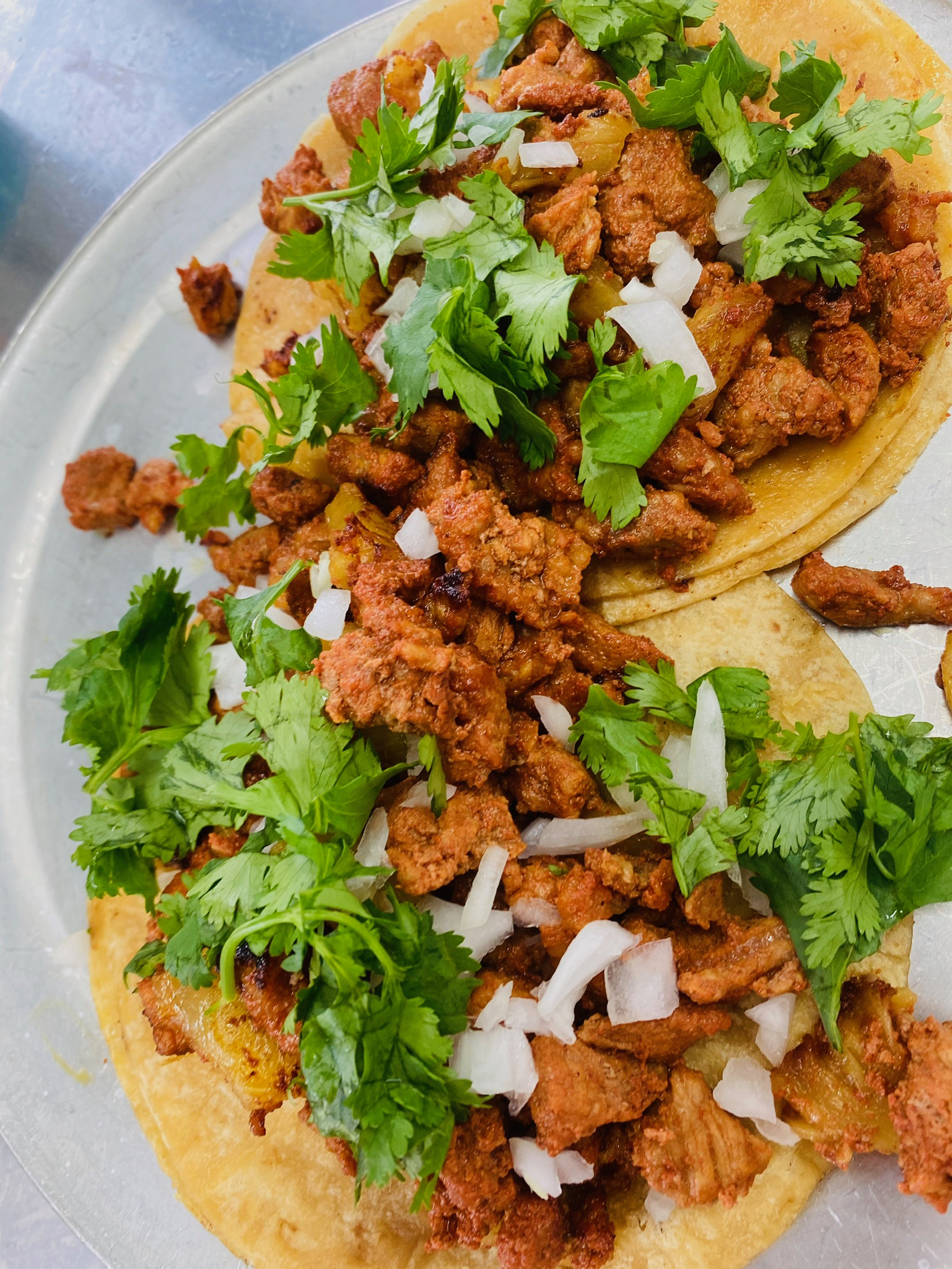
9. Assemble the tacos. Double up two warm tortillas per taco. Pile on a generous spoonful of pork, one or two pieces of charred pineapple, a pinch of white onion, fresh cilantro, a squeeze of lime, and your salsa of choice.
10. Serve immediately. Al pastor is best the moment it leaves the pan. Plate fast and eat faster.
Critical Technique Tips
• Don’t rush the marinade. Four hours is the absolute minimum — overnight is when the magic really happens. The chiles need time to penetrate every fiber of the pork.
• Extremely high heat is everything. If your pan isn’t smoking before the pork goes in, wait. The caramelized crust is the whole point.
• Strain the marinade. Un-strained chile skin creates a gritty texture on the finished meat. Those extra 90 seconds of straining are worth it every single time.



Tips, Variations & Substitutions
Regional Variations
• Mexico City style: Always served with pineapple, cilantro, and onion. Purists use only salsa verde.
• Northern Mexico (Monterrey/Trompo style): Known locally as tacos de trompo; sometimes uses a pink-hued marinade and is occasionally served on flour tortillas.
• Yucatán-influenced:Achiote takes a bigger role; cooks sometimes substitute sour orange (naranja agria) for regular orange juice — if you can find sour oranges at a Latin market, use them. The flavor is more complex and authentically Yucatecan.
Sourcing in Texas
Guajillo and ancho chiles are carried at most H-E-B stores in the produce or Latin foods section. For achiote paste, Central Market locations and H-E-B Plus stores are your best bet; Latin grocery stores throughout Austin, San Antonio, and Houston stock it reliably year-round.
Spice Level Adjustments
• Mild: Remove all chile seeds; use only 2 guajillo chiles and skip the ancho entirely.
• Medium: The recipe as written.
• Hot: Add 1–2 dried chiles de árbol to the marinade blend. They’re small but fiery.
Dietary Adaptations
• Vegetarian/vegan: Substitute king oyster mushrooms, jackfruit, or thick cauliflower steaks — marinate identically and roast at 425°F (220°C) until caramelized.
• Gluten-free: Naturally gluten-free. Double-check your achiote paste brand for added starch.
• Low-carb/keto: Serve the pork and pineapple in crisp lettuce cups instead of tortillas.
How to Serve Tacos al Pastor
Traditional al pastor tacos are street food at heart — they’re meant to be eaten standing up, stacked two tortillas high, with minimal accessories that let the meat shine.
Traditional accompaniments: - Salsa verde (tomatillo-based) is the classic pairing; salsa roja works equally well - Pickled jalapeños or pickled red onion add brightness and acidity - Radish slices for crunch and freshness - Agua fresca — jamaica (hibiscus) or tamarind — to drink
Plating notes: - Use doubled small corn tortillas for structural integrity — this is how street tacos are served everywhere in Mexico. - Serve on a wooden board or a colorful Talavera plate for visual warmth. - For a party, keep the skillet going over medium heat and serve in waves directly from the pan.
The Story Behind Tacos al Pastor
One of my favorite things about this dish is that its history is written on the taco itself — if you know what you’re looking at. That earthy red color? Achiote, a native Mexican ingredient. That sweet pineapple crown? A nod to tropical Mexican flavors. And the spinning-spit technique? That comes from the other side of the world.
Between 1880 and 1950, over 100,000 Arabic-speaking immigrants — predominantly from Lebanon — arrived in Mexico, as documented in research on the history of al pastor. They brought their culinary traditions with them, and chief among them was shawarma — spiced lamb cooked on a vertical rotating spit. In the restaurants of Puebla, Lebanese-Mexican cooks began adapting: lamb gave way to more affordable pork, pita bread became pan árabe (a flat pita-like bread), and local spices crept into the marinade. These first hybrid tacos were called tacos árabes — “Arab tacos.”
As Tasting Table notes, the critical transformation happened when the technique migrated from Puebla to Mexico City in the 1950s. Mexico City cooks went further: they introduced achiote paste, deepened the marinade with native chiles and citrus, replaced the pan árabe with corn tortillas, and added the now-iconic pineapple at the top of the trompo. The name shifted to al pastor — “shepherd style” — an acknowledgment of the dish’s pastoral, nomadic roots. The trompo became a beacon: seeing one turning in a taquería window is a universal Mexican cue for “best tacos on the block.”
Today, al pastor is democratic street food — it feeds workers heading home at midnight, families on Sunday, students between classes, and everyone in between. It is, I think, one of the most perfect examples of what happens when two food cultures meet, respect each other’s technique, and build something entirely new together.
Frequently Asked Questions
Can I make tacos al pastor without a vertical spit (trompo)? Absolutely — and that’s exactly what this recipe is designed for. A cast-iron skillet or heavy grill pan on very high heat creates the same caramelized crust that the trompo produces. The key is cooking in thin, flat slices (not a thick roast) and not crowding the pan, so the meat sears rather than steams.
What cut of pork is best for al pastor? Can I use pork loin? Pork shoulder (also called pork butt) is traditional and ideal — it has enough fat marbling to stay juicy at high heat and develop that caramelized crust. Pork loin is leaner and will cook faster but can dry out; if using loin, reduce cooking time to 2 minutes per side and do not marinate longer than 4 hours (the acid can make it mushy). Shoulder is strongly preferred.
Where can I buy achiote paste in the United States? Most Latin grocery stores carry it (look for the El Yucateco or La Anita brand). World Market, Central Market (here in Texas!), and many Walmart Supercenter locations also carry it in the international aisle. Amazon and MexGrocer ship it nationwide. The most common packaging is a small brick wrapped in foil.
How long should I marinate the pork — is overnight really necessary? The minimum is 4 hours, but overnight (8–12 hours) is noticeably better. The dried chile flavor needs time to penetrate the meat all the way through. If you only have an hour, the surface will be well-seasoned but the interior will taste mostly like plain pork — still good, but not al pastor.
Can I make the marinade ahead and freeze it? Yes. The blended, strained marinade freezes beautifully for up to 3 months in a sealed container. You can also freeze already-marinated raw pork (in the marinade) for up to 2 months — thaw overnight in the refrigerator before cooking.
What’s the difference between tacos al pastor and tacos de adobada? Great question. Tacos de adobada (popular in northern Mexico and the American Southwest) are made with pork marinated in a red chile sauce, but the marinade typically includes different spices and less (or no) achiote. Adobada is often cooked on a flat griddle rather than a trompo, and the flavor is slightly simpler and more straightforward. Al pastor’s marinade is more complex — the achiote and citrus give it a distinct earthiness and depth that adobada doesn’t have.
How do I store and reheat leftover al pastor? Leftover cooked al pastor keeps refrigerated for up to 4 days in a sealed container. To reheat, drop it in a very hot dry skillet for 2–3 minutes — this re-crisps the edges better than a microwave. It’s also excellent cold straight from the fridge on a tostada.