

Menudo Recipe (Step-by-Step Guide)
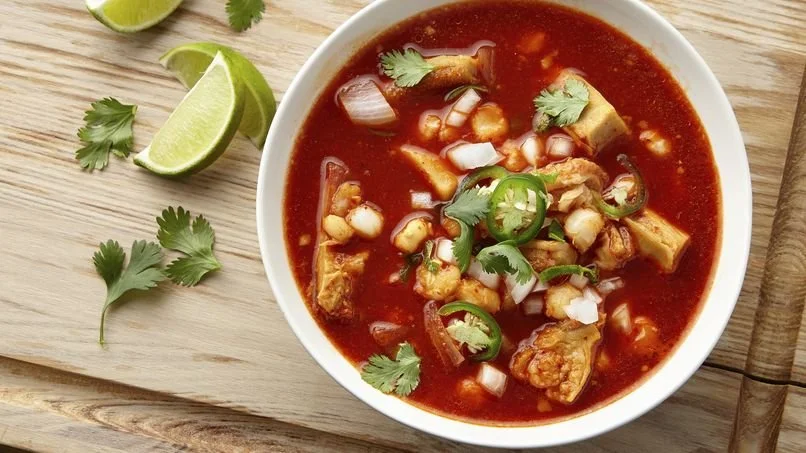
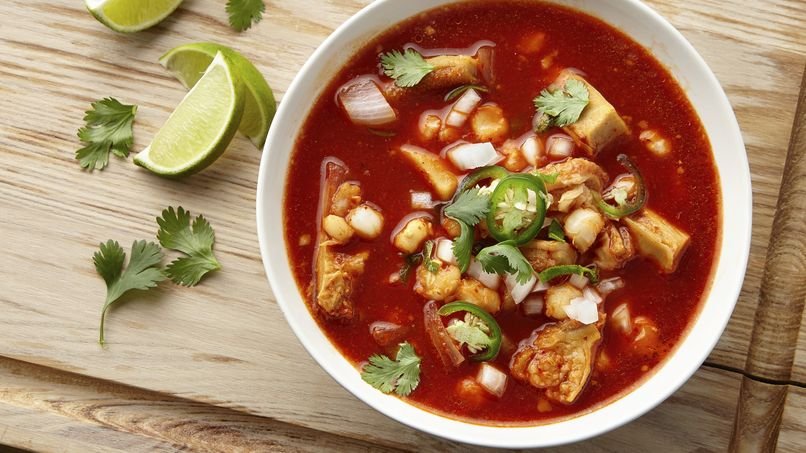
Menudo is a slow-cooked beef tripe soup simmered in a rich red chile broth built from dried guajillo and ancho chiles, loaded with hominy (dried corn kernels that have been nixtamalized — processed in lime water — to become tender and starchy), and served with a full spread of toppings that each person customizes in their own bowl. It has its deepest roots in Northern Mexico — particularly the states of Sonora and Chihuahua — but is eaten nationwide and holds a special, irreplaceable place in Mexican-American communities across Texas, California, Arizona, and New Mexico.
This recipe walks you through every step, including the one most home cooks skip — the proper cleaning of the tripe, which is what separates a great menudo from one that smells funky. I won’t lie to you: this is a day-long project. But the result is worth every hour, and it only tastes better the next day. Let’s walk through it.
Recipe at a Glance
• Prep time: 30 minutes
• Cook time: 4–6 hours (stovetop) or 8–10 hours (slow cooker)
• Total time: 4.5–6.5 hours
• Difficulty: Intermediate (tripe preparation requires attention; the cooking itself is largely hands-off)
• Yield: 8–10 servings (menudo is always made in large batches)
• Course: Soup / Main course
• Region/Origin: Northern Mexico — especially Sonora and Chihuahua; eaten nationwide
Ingredients
For the Tripe
• 3 lbs (1.4 kg) honeycomb tripe (beef), cut into 1–2-inch pieces
• 1 cup (240 ml) white vinegar
• ½ white onion
• 4 garlic cloves
• Water for blanching
For the Red Chile Broth
• 5 dried guajillo chiles, stemmed and seeded
• 3 dried ancho chiles, stemmed and seeded
• 2–3 dried chile de árbol (adjust for heat — see notes)
• 4 Roma tomatoes
• ½ white onion
• 6 garlic cloves, unpeeled
• 1 tablespoon dried Mexican oregano (critical — see note below)
• 1 teaspoon ground cumin
• ½ teaspoon freshly ground black pepper
• 10–12 cups (2.4–2.8 L) beef broth or water (or a combination)
• 1 tablespoon lard or neutral oil (for frying the chile sauce)
• Salt to taste
For the Hominy
• 2 cans (25 oz / 700 g each) canned hominy (maíz cacahuazintle pozolero), drained and rinsed
• OR 1 lb (450 g) dried pozole hominy, soaked overnight and pre-cooked separately
For the Toppings Bar (Non-Negotiable)
• Dried Mexican oregano
• Crushed red chile flakes or chile piquín
• 1 white onion, finely diced
• 1 bunch fresh cilantro, roughly chopped
• Lime wedges — generously cut (this is the most important topping)
• Tostadas or crusty bolillo rolls
• 6–8 radishes, thinly sliced
• Optional: chopped serrano or jalapeño, shredded green cabbage, dried oregano


Key Ingredient Notes
• Honeycomb tripe: The texture after 5+ hours of simmering transforms entirely — from rubbery and dense to tender, slightly gelatinous, and deeply flavored. Available at Latin butchers, Mexican supermarkets, and many Asian grocery stores. Ask your butcher to pre-cut it if possible.
• Dried Mexican oregano: This is not interchangeable with Mediterranean/Italian oregano. Mexican oregano (Lippia graveolens) has a distinctly citrusy, slightly anise-forward flavor that is absolutely foundational to menudo’s character. Find it at any Mexican market, usually sold in a bag. It is one of the most important spices in your Mexican pantry.
• Chile de árbol for heat: These small, thin dried chiles provide real, forward heat. Start with 2 for medium spice. The guajillo and ancho chiles build color and flavor — they contribute minimal heat.
We offer catering services in and around Austin, TX and Texas Hill Country. Inquire HERE.
Step-by-Step Instructions
1. Clean and blanch the tripe — the most important step in this recipe. Cut the tripe into 1–2-inch pieces. Place in a large colander and rinse thoroughly under cold running water for several minutes, turning the pieces as you go. Transfer to a large pot and cover with water. Add the white vinegar, half an onion, and 4 garlic cloves. Bring to a full boil and cook for 20–30 minutes — properly blanched tripe should smell neutral and faintly meaty, like clean beef broth, not barnyard. Drain completely. Rinse the tripe again under cold water. The blanching removes off-odors and gives you a neutral, clean foundation. Do not skip this step.
2. Toast the dried chiles. Wipe each dried chile with a damp cloth to remove any surface dust. Heat a dry comal or heavy skillet over medium heat. Working in batches, toast each chile for 30–45 seconds per side, pressing it flat with a spatula, until fragrant and slightly darkened — but not burnt. Burnt chiles will make the broth bitter. You are looking for a deeply toasted aroma, like dark chocolate.
3. Rehydrate the chiles. Stem and seed all toasted chiles. Place them in a bowl and cover with very hot (not boiling) water. Let soak for 20 minutes until completely softened and pliable.
4. Roast the tomatoes, onion, and garlic. On a dry comal, in a dry skillet, or under the broiler, char the Roma tomatoes, the halved onion, and the unpeeled garlic cloves until blackened in spots and the kitchen smells sweet and smoky — 8–10 minutes, turning as needed. The char adds smokiness and a complexity that no amount of sautéeing can replicate. Let the garlic cool, then squeeze the cloves from their skins.
5. Blend the chile sauce. Drain the rehydrated chiles, reserving 1 cup of the soaking liquid. In a blender, combine all the rehydrated chiles, roasted tomatoes, charred onion, squeezed garlic, dried Mexican oregano, cumin, black pepper, and ½–1 cup of the soaking liquid. Blend on high until completely smooth — at least 2 full minutes. The sauce should be a deep, vivid red with no visible chile pieces. Strain through a medium-mesh sieve into a bowl, pressing with the back of a spoon. Discard the solids.
6. Fry the chile sauce — this step is what separates good menudo from great menudo. In a large heavy pot or Dutch oven, heat the lard or oil over medium-high heat until shimmering. Pour in the strained chile sauce all at once — stand back, it will splatter. Let the sauce fry in the hot fat, stirring constantly, for 5–7 minutes until it darkens slightly in color, smells toasted rather than raw, and has reduced slightly. You are building the flavor foundation of the entire soup here.
7. Add the tripe and liquid. Add the cleaned, blanched tripe to the pot with the fried chile sauce. Pour in enough beef broth or water to cover generously — about 10–12 cups. Bring to a boil, then immediately reduce to the lowest possible simmer. Cover partially (leave a small gap for steam to escape).
8. Simmer low and slow. Cook over very low heat for a minimum of 4 hours, preferably 5–6. The tripe is done when it is completely tender — you should be able to cut through a piece with the side of a spoon with moderate pressure. Check occasionally, adding liquid if needed to keep the tripe covered. Stir gently every hour or so. Slow cooker method: After step 6, transfer the fried chile sauce and cleaned tripe to a slow cooker. Add the broth. Cook on Low for 8–10 hours. The slow cooker is ideal for this — low, steady heat over many hours is exactly what tripe needs.
9. Add the hominy. In the last 30–45 minutes of cooking, add the drained and rinsed canned hominy. Stir to combine. Let it simmer to absorb some of the broth’s deep flavor.
10. Season and taste. Add salt to taste — menudo typically needs a good amount of salt to come alive. Taste the broth: it should be deeply savory, mildly spicy, and rich with chile complexity. If it tastes flat, add more salt and a pinch of dried oregano. If it needs brightness, squeeze a lime directly into the pot. Menudo always tastes better the next day — if you can make it 24 hours ahead, do so.
11. Serve with the full toppings bar. Ladle into deep, wide bowls — a generous serving of tripe pieces, a scoop of hominy, and plenty of the deep-red broth. Set out all the toppings and let each person customize their bowl. This communal, build-your-own approach is half the joy of menudo. ### Critical Technique Tips - Do not rush the tripe. Tough, rubbery tripe means not enough time. Keep simmering. It always gets there.
• The chile sauce must be fried in hot fat before adding liquid. This step cooks out the raw, sharp taste of the blended chiles and builds the deep, toasted flavor that defines the broth.
• Menudo always tastes better the next day. The flavors deepen overnight. If at all possible, make it the day before you plan to serve it.
Tips, Variations & Substitutions
Regional Variations
• Menudo Blanco (White Menudo): The variation popular in Sonora and parts of Sinaloa — made without red chiles, producing a pale, clear broth seasoned with garlic, onion, and oregano. Cleaner in flavor, with the tripe’s natural gelatin beautifully on display. As Houstonia Magazine notes, menudo blanco is common in coastal states and has its own devoted following.
• Menudo Verde: A less common variation made with a green tomatillo-based broth and often seasoned with epazote (a pungent Mexican herb). Earthier and tangier than the red version.
• Pancita / Mondongo: In central and southern Mexico, a similar tripe soup is called pancita or mondongo — it may incorporate other offal and different regional chile combinations.
• Texas family style: Many Texas families add a small amount of fresh diced tomatoes directly to the simmering pot alongside the chile sauce — a Tex-Mex adaptation that’s completely at home and delicious.
Spice Level Adjustments
• 1 chile de árbol = very mild, mostly color and fragrance
• 2–3 árbol = medium heat (the everyday Texas standard)
• 4–6 árbol = genuinely fiery — for those who want heat that lingers
The guajillo and ancho chiles do not add significant heat — they are the flavor builders. Heat lives in the árbol.
Texas Sourcing
In Texas, honeycomb tripe is easy to find at Latin markets and most Fiesta Mart and H-E-B Plus locations — ask the butcher counter at H-E-B if you don’t see it in the case; they can often pull it from the back. Dried guajillo and ancho chiles are standard H-E-B fare (check the bag-spice aisle or the Hispanic foods section). Fresh lard for frying the chile sauce, and hominy (canned as maíz pozolero), are both reliably stocked at Latin grocers throughout the San Antonio and Austin areas.
Dietary Notes
• Menudo is naturally gluten-free as written.
• For those who love the concept but cannot eat tripe: the red chile broth and hominy base can be made with pork shoulder for a dish very close to pozole rojo. Different dish, same soul.
Serving Suggestions
A full toppings bar is the heart of serving menudo — this is not a dish you garnish and plate; this is a dish you set free. Dried oregano (rubbed between the palms before dropping on top — this releases the oils), crushed chile piquín, finely diced white onion, chopped cilantro, sliced radishes, and lime wedges belong on the table. Tostadas are for scooping; bolillos are for dunking. Both are correct. Both are essential.
For a beverage: a cold Modelo Especial or Tecate, a tall glass of agua fresca, or black coffee. The boldness of the broth pairs with anything clean and cold.
For photography and presentation, serve in a deep, wide cazuela (clay pot) — the vivid red broth against unglazed terracotta is one of the most stunning visuals in Mexican food photography. A pinch of dried oregano on top, a radish fan on the side, and a lime wedge balanced on the bowl rim is the classic presentation.
Cultural & Historical Notes
Menudo’s story begins, like so many great dishes, in necessity. As food writer Adán Medrano explains, the moneyed classes considered tripe inedible and discarded it — leaving it as the primary available protein for poor and working-class families. This pattern — the careful, creative transformation of discarded cuts into beloved, complex dishes — is one of the defining threads of Mexican culinary history, visible also in carnitas, barbacoa, and chicharrón.
Houstonia Magazine’s deep dive into menudo culture places its origins before the 1910 Mexican Revolution, developed to ensure no part of the cow went to waste during periods of scarcity. Menudo became a Northern Mexican icon in particular — in Sonora and Chihuahua, where cattle ranching is central to regional identity and the economy, a broth built from the whole animal made complete practical and cultural sense.
Wikipedia’s entry on menudo notes the dish’s deep regional variations across Mexico, with the red chile version most strongly associated with Chihuahua and Nuevo León, and the white version tied to Sonora and Sinaloa. The dish goes by different names in different regions — pancita, mondongo, mole de panza — reflecting its distributed, organic development across the country rather than a single point of origin.
The dish’s reputation as a remedio — a remedy for hangovers, illness, cold weather, and exhaustion — is not mere folk mythology. The broth is genuinely rich in gelatin from the tripe’s collagen; the chiles stimulate circulation; the hominy provides starchy, grounding comfort. Whether or not it cures anything physiologically, it absolutely changes how you feel. Generations of Mexican families treat it accordingly.
In the United States, menudo carries particular weight in Mexican-American communities in Texas, California, Arizona, and New Mexico — a Sunday morning ritual, a New Year’s tradition, a marker of cultural continuity across generations.
Frequently Asked Questions
How do I clean beef tripe properly so the menudo doesn’t smell bad? The blanching step is everything. Cut the tripe into pieces and rinse under cold running water for several minutes, turning the pieces. Then blanch in a large pot of water with white vinegar, half an onion, and garlic for 20–30 minutes at a full boil. Drain and rinse again. This eliminates virtually all off-odors. Properly cleaned and blanched tripe smells neutral — like beef broth, not barnyard. If you still notice an unpleasant smell after blanching, repeat the vinegar rinse once more.
Can I make menudo in a slow cooker or Instant Pot? Slow cooker: absolutely yes — it’s actually one of the ideal methods. After frying the chile sauce, transfer everything (fried sauce, blanched tripe, broth) to the slow cooker and cook on Low for 8–10 hours. Add hominy in the last 45 minutes. Instant Pot: yes, though the texture differs slightly. Cook on Manual/High Pressure for 90 minutes, then natural release. The tripe will be very tender, though some of the layered flavor development from long stovetop simmering is condensed. Both methods work well.
What is the difference between menudo and pozole? Both are hominy-based Mexican soups with deep chile broths, but they use different proteins. Menudo uses beef tripe; pozole uses pork (typically pork shoulder or head) or sometimes chicken. The flavor profiles are similar — both are slow-cooked, chile-red, and deeply savory — but menudo has a distinctive gelatinous richness from the tripe’s collagen that pozole doesn’t replicate. They are related in spirit but distinct in character.
Where can I buy honeycomb tripe in the United States? Latin grocery stores and Mexican supermarkets are your best bet — they almost always carry it, often already cut and cleaned. Many Asian grocery stores also carry tripe. Some mainstream grocery stores carry it in the offal section (Walmart, in areas with large Latino communities, often stocks it). Ask your butcher directly — they can usually order it if it’s not on the shelf.
How long does menudo keep in the refrigerator, and can I freeze it? Menudo keeps in the refrigerator for 4–5 days and actually improves on days 2–3 as the flavors deepen and marry. It freezes beautifully — up to 3 months in airtight containers. Freeze the tripe and broth together; freeze hominy separately if possible (hominy can become mushy when reheated from frozen with the broth). Reheat slowly over low heat, adding a splash of water or broth if needed.
Is menudo really a hangover cure? The short answer: probably not in any pharmacological sense. The longer answer: yes, in every way that actually matters. The broth is rich in gelatin and minerals from the tripe’s collagen. The chiles stimulate circulation and open up the sinuses. The hominy provides slow-digesting starch that stabilizes blood sugar. The warmth, the aroma, the ritual of sitting down to a bowl with family on New Year’s morning — that combination is medicine for the soul in a way that no vitamin C supplement will ever replicate. Generations of families treat it accordingly. I’m not arguing with them.