

Tlayuda Recipe (Step-by-Step Guide)
The tlayuda (pronounced tlah-YOO-dah) is Oaxaca’s most iconic street food, and if that’s not enough of a credential, consider this: when Netflix launched its Street Food: Latin America series and ran a fan poll, the tlayuda was voted the best street food in all of Latin America. That win was not a surprise to anyone who’s been to Oaxaca. This dish is a masterpiece of contrasts — crackly and chewy, rich and bright, humble in its ingredients but baroque in its flavors.
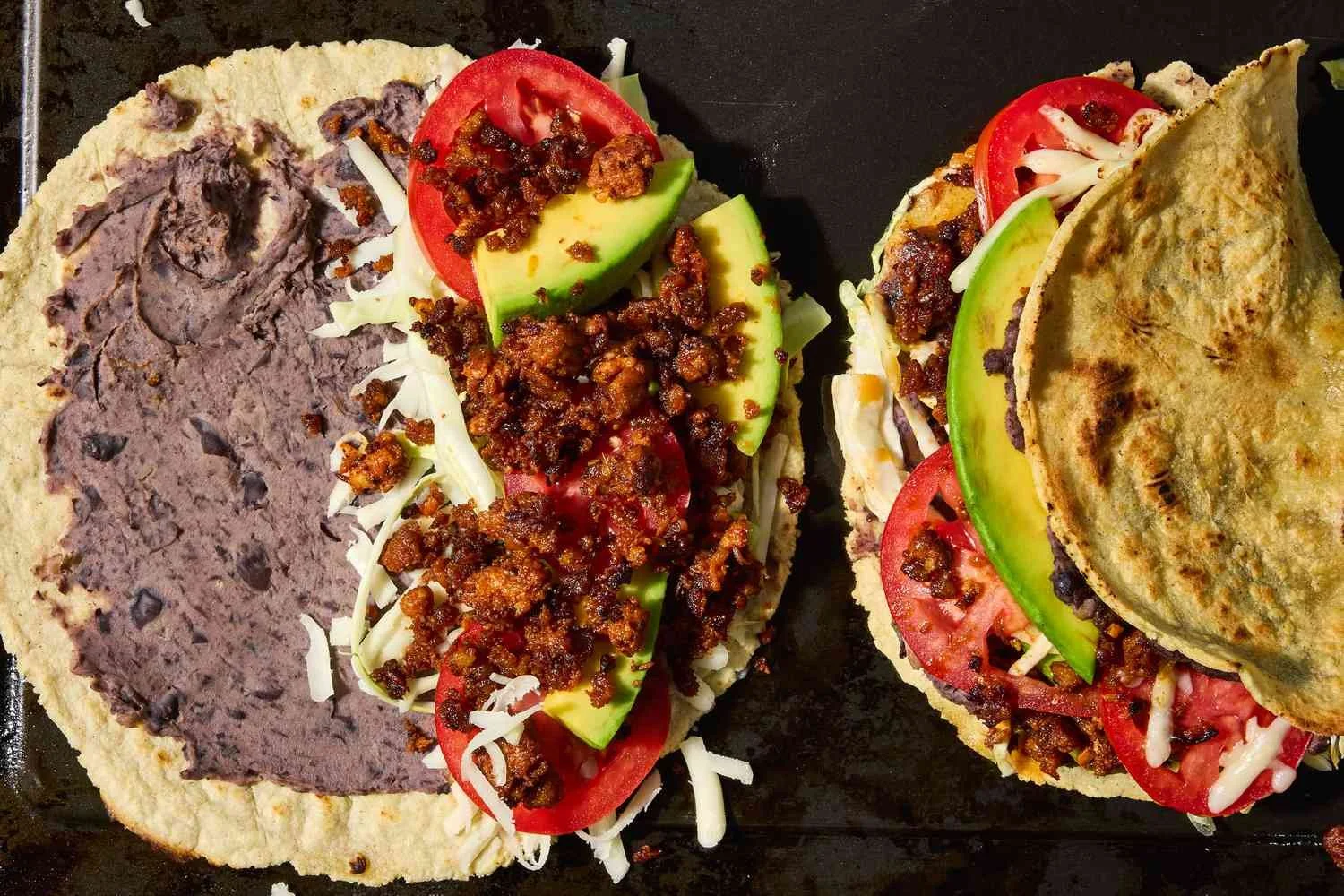
At its core, a tlayuda is a large, partially dried corn tortilla — roughly 12 to 16 inches across — that’s grilled over coals until it blisters and crisps at the edges while staying pliable in the center. It’s spread first with asiento (unrefined pork fat, the deeply savory sediment left after rendering lard), then with refried black beans, then piled with quesillo (the pulled string cheese of Oaxaca), shredded cabbage or lettuce, tomato, avocado, and your choice of meat: tasajo (dry-cured beef), cecina (chile-marinated pork), or chorizo. It can be served open-faced or folded in half. Either way, it is a full meal.
Key Details
• Prep time: 25 minutes
• Cook time: 30 minutes
• Total time: 55 minutes
• Difficulty: Intermediate
• Yield: 4 tlayudas (4 servings as a main)
• Course: Main / Street Food
• Region/Origin: Oaxaca, Mexico
Ingredients
For the Tlayuda Base
• 4 large flour tortillas, 12-inch (or 4 large store-bought corn tortillas, 10–12 inch)
• 2 tbsp lard or vegetable oil, for grilling
Substitution note: Authentic Oaxacan tlayuda tortillas are enormous, semi-dried white corn tortillas not available in most U.S. stores. Large flour tortillas are the most practical substitute and grill beautifully. If you can find large corn tortillas (Mission makes a 10-inch size), those are closer to tradition. Central Market in Austin sometimes stocks specialty corn tortillas from local tortillerías.
For the Asiento / Bean Layer
• 2 tbsp lard (substitute: bacon fat or olive oil)
• 1 can (15 oz / 425g) black beans, drained, or 1½ cups cooked black beans
• 2 garlic cloves, minced
• ¼ tsp cumin
• Salt to taste
Substitution note:Asiento is the rich, savory pork-fat sediment used in Oaxaca. Pure lard, rendered bacon fat, or even a good drizzle of olive oil will approximate its richness. If you can find asiento at a Latin specialty market — occasionally available in Oaxacan-focused stores in Houston and Austin — use it without hesitation.
For the Toppings
• 8 oz (225g) quesillo (Oaxacan string cheese), pulled into shreds
• 2 cups (140g) shredded green cabbage or romaine lettuce
• 2 Roma tomatoes, sliced
• 1 avocado, sliced
• ½ red onion, thinly sliced
• Fresh cilantro for garnish
• Salsa verde or salsa roja, for serving
• Lime wedges
Substitution note:Quesillo is sold as “Oaxacan cheese” or “queso Oaxaca” at H-E-B and most Latin markets. It is the correct and readily available substitute for itself. If you truly cannot find it, low-moisture mozzarella pulled into shreds is the next closest option.
For the Meat (choose one)
• 8 oz (225g) tasajo (dry-cured Oaxacan beef), grilled and thinly sliced
• OR 8 oz (225g) cecina (chile-marinated thin-cut pork), grilled
• OR 8 oz (225g) Mexican chorizo, cooked and crumbled
• OR shredded chicken tinga (chipotle-braised chicken) for a widely available alternative
Substitution note: Tasajo and cecina are best sourced at Latin carnecerias in San Antonio or Houston. If unavailable, skirt steak seasoned with salt, lime, and a touch of dried chile and grilled hard is a reasonable stand-in for tasajo. Chorizo from H-E-B works perfectly.
We offer catering services in and around Austin, TX and Texas Hill Country. Inquire HERE.
Step-by-Step Instructions
1. Prepare the refried black beans. Heat 1 tablespoon of lard or oil in a small saucepan over medium heat. Add the minced garlic and cook for 30 seconds until fragrant. Add the drained black beans, cumin, and a big pinch of salt. Use a potato masher or the back of a spoon to mash the beans until mostly smooth but with some texture remaining — not completely pureed. If the mixture is very thick, add a splash of water. Cook for 5 minutes, stirring frequently, until the beans are a thick, spreadable paste that holds its shape. The finished paste should be deep, almost chocolatey in color and deeply savory. Remove from heat.
2. Cook the meat. If using chorizo, cook it in a dry skillet over medium-high heat until well browned and crumbled, about 8 minutes. If using skirt steak or cecina, season generously and cook over the highest heat your pan or grill allows for 2–3 minutes per side — you want char. Let rest, then slice thin. If using chicken tinga, warm it through in a pan. Keep meat warm.
3. Dry-toast the tortillas. Heat a large dry skillet or comal over medium-high heat. Lay one tortilla flat and cook for 2–3 minutes per side, pressing down gently, until the surface blisters and some spots turn light golden-brown. The tortilla should become noticeably stiffer and dryer — this is what you want. It should be crackly at the edges and barely pliable in the center. Set aside and repeat.
4. Spread the fat and beans. While the tortilla is still warm, brush or rub ½ tablespoon of lard or asiento across the surface — it should melt in immediately, soaking into the warm tortilla. Then spread a generous layer of the black bean paste over the surface, leaving about a ½-inch border around the edge. The bean layer should be about ¼-inch thick. Don’t be shy — this is the flavor base for everything that follows.
5. Add the cheese and grill. Scatter a generous handful of pulled quesillo strings over the beans. Return the topped tortilla to the skillet or grill over medium heat, cover loosely with foil or a lid, and heat for 2–3 minutes until the cheese begins to melt and pool into the beans. The cheese should look glossy and just starting to stretch. If you’re grilling over charcoal, place it directly on the grate for that signature char and smoke.
6. Top and serve. Transfer the tlayuda to a board or large plate. Layer on the shredded cabbage, tomato slices, and your choice of meat. Fan avocado slices across the top. Scatter fresh onion and cilantro. Spoon salsa over everything and serve with lime wedges. Eat immediately — a tlayuda waits for no one.


Tips, Variations & Substitutions
Vegetarian tlayuda
Skip the meat and double the beans. Add sautéed mushrooms with garlic and dried chile, or chapulines (grasshoppers) for the adventurous — occasionally available at specialty Mexican markets and increasingly at food festivals in Austin.
Getting the right tortilla texture
The secret to a real tlayuda texture is dryness before crisping. If your tortillas are very fresh and soft, lay them on a wire rack and let them air out for 30 minutes before cooking. The goal is a tortilla with some structural integrity — crackly enough to hold toppings, pliable enough to fold in half without shattering.
Open-faced vs. folded
In Oaxacan street stalls, tlayudas are often served folded in half like a giant taco. This is the street-eating format. For a dinner presentation, serve it open-faced on a board and slice it like a flatbread pizza.
Where to find ingredients in Texas
• Quesillo / Oaxacan cheese: Every H-E-B carries it in the specialty cheese section. Central Market has excellent quality.
• Tasajo or cecina: Try La Michoacana or similar Mexican carnecerias in Austin’s east side or San Antonio. Call ahead.
• Lard: H-E-B sells Armour lard in the baking aisle. Rendering your own from bacon fat is even better.
• Specialty tortillas: Central Market in Austin, or local tortillerías in Austin’s East Cesar Chavez corridor.
How to Serve Tlayuda
A tlayuda is a complete meal on its own — protein, starch, fat, vegetables, dairy, all on one magnificent base. It’s served at room temperature in the center of the table, to be eaten communally with your hands or broken apart and shared. In Oaxacan households and street stalls, it’s most commonly a late-night or dinner dish.
Traditional accompaniments: - Mezcal, neat or in a mezcal negroni — Oaxaca is mezcal country and the two are inseparable - Agua de jamaica (hibiscus agua fresca) for a non-alcoholic option - A simple salsa verde on the side for extra heat - Chapulines (roasted grasshoppers) as a crunchy topping — they taste like lime and chile, not what you think
What to drink: Mezcal, always — a smoky, earthy joven poured neat is the Oaxacan way. For non-drinkers, agua de jamaica (hibiscus agua fresca) is tart and refreshing and cuts right through the richness of the beans and cheese.
Plating note: A tlayuda doesn’t need much dressing up. The visual appeal is in the contrast of the dark bean base, white-gold melting cheese, and colorful toppings. Keep it generous and unfussy — this is street food meant to be eaten standing up.
The Story Behind Tlayuda
The tlayuda’s history, like most great street foods, is tangled in centuries of necessity, improvisation, and indigenous knowledge. Culinary historians note that the enormous, semi-dried corn tortilla at its heart is likely pre-Hispanic in origin — a portable, durable food source designed to survive long journeys through Oaxaca’s mountains. The Florentine Codex of the 16th century, compiled by Franciscan monks, documented Mesoamerican women rolling and filling large masa cakes, suggesting the concept of a loaded, large corn flatbread has deep roots in the region.
According to Mexico News Daily’s culinary analysis, the etymology of “tlayuda” itself is disputed. The popular claim that it derives from the Nahuatl word for shelled corn (tlao-li) is considered linguistically shaky by some scholars, since the “ll–y” sound combination didn’t exist in pre-Hispanic languages. A more compelling theory links the word to the Spanish talludo, meaning strong, resistant, or enduring — perfectly describing a tortilla engineered to survive days of travel without spoiling.
The toppings that make a modern tlayuda came in waves. The beans and corn are ancient. The chorizo, cecina, and tasajo arrived with Spanish colonial influence and centuries of mestizaje, the blending of European and indigenous food cultures. As food writer Alvin Starkman has documented, by the early 20th century, novels described the tlayuda being torn apart and used as an edible utensil — a flatbread functioning like pita in the Middle East or naan in India. The contemporary version, piled high and served from charcoal grills late into the night, is the natural evolution of something that was always meant to be shared, sustaining, and deeply delicious.
When Netflix’s Street Food: Latin America crowned the tlayuda Latin America’s greatest street food, chef and culinary historian Rodrigo Llanes framed it perfectly: “a bridge between pre-Hispanic and European culture.” He’s right. Every bite carries that history.
Frequently Asked Questions
Where can I find actual Oaxacan tlayuda tortillas in the U.S.? They are very rare outside of Mexican specialty stores. A few Oaxacan-owned grocery stores in Los Angeles and Chicago stock them. In Texas, your best bet is specialty Latin markets in Houston (which has a significant Oaxacan community) or ordering from online Mexican food retailers. Large flour or corn tortillas are excellent practical substitutes.
What is asiento and can I skip it?Asiento is the savory pork-fat sediment left at the bottom of the pot when lard is rendered. It is deeply flavored — nutty, rich, slightly smoky. You can absolutely use lard, bacon fat, or olive oil instead. You’ll lose some depth of flavor, but the dish will still be excellent.
What does quesillo taste like? How is it different from mozzarella?Quesillo (also called queso Oaxaca) is made from the same pasta filata stretching technique as mozzarella but has a saltier, slightly tangier, more complex flavor. It melts beautifully and pulls into long, dramatic strings. Low-moisture mozzarella is the closest widely available substitute.
Can a tlayuda be made vegetarian? Absolutely. Skip the meat, use olive oil instead of lard, and double up on the beans and cheese. Many Oaxacan street vendors offer vegetarian tlayudas on request.
Is tlayuda eaten for breakfast, lunch, or dinner? Primarily late dinner or a late-night meal in Oaxaca. Street stalls typically open in the evening and stay open until midnight or later. That said, in many households, leftover tlayuda components are repurposed for breakfast.
How do I store leftover tlayuda? The components are best stored separately. Leftover bean paste keeps refrigerated for 5 days. Leftover meat keeps for 3–4 days. Assembled tlayudas do not store well — the tortilla absorbs moisture and loses its crispness. Make fresh.
What is tasajo and how is it different from regular beef?Tasajo is a Oaxacan specialty: thin cuts of beef that are heavily salted and partially dried in the sun or a curing chamber, then grilled. It has an intense, concentrated beefy flavor and chewy-tender texture. There’s nothing quite like it in the American supermarket — ask a good Latin carnecería to cut you a thin skirt steak and season it aggressively with salt and lime as an approximation.
Why did the tlayuda win the Netflix poll? Because it’s extraordinary. Chef Rodrigo Llanes put it well — the tlayuda carries the history of a civilization, the flavors of two continents meeting over centuries, and the joy of something made to be shared. It is, in the simplest terms, an edible representation of Oaxaca itself.