

Aguachile Recipe (Step-by-Step Guide)
People often call aguachile a cousin of ceviche, and the family resemblance is real — both feature raw seafood and citrus. But the two dishes diverge in a crucial way. Ceviche marinates its seafood for 20 to 30 minutes, letting the acid “cook” the protein into a firmer texture. Aguachile is tossed in its sauce and served immediately, so the shrimp stay silky, sweet, and almost translucently raw — closer to Japanese sashimi in texture than to ceviche. The heat is the other major difference. This dish is meant to sting a little. The chile is not a garnish; it’s the whole point.
If you’re nervous about the raw seafood, I’ll walk you through sourcing and safety. If you’re nervous about the heat, I’ll tell you how to dial it back. And if you’re already a fan wondering how to make the real thing at home, I promise this version — green aguachile, aguachile verde, the classic — will not let you down. Let’s make it.
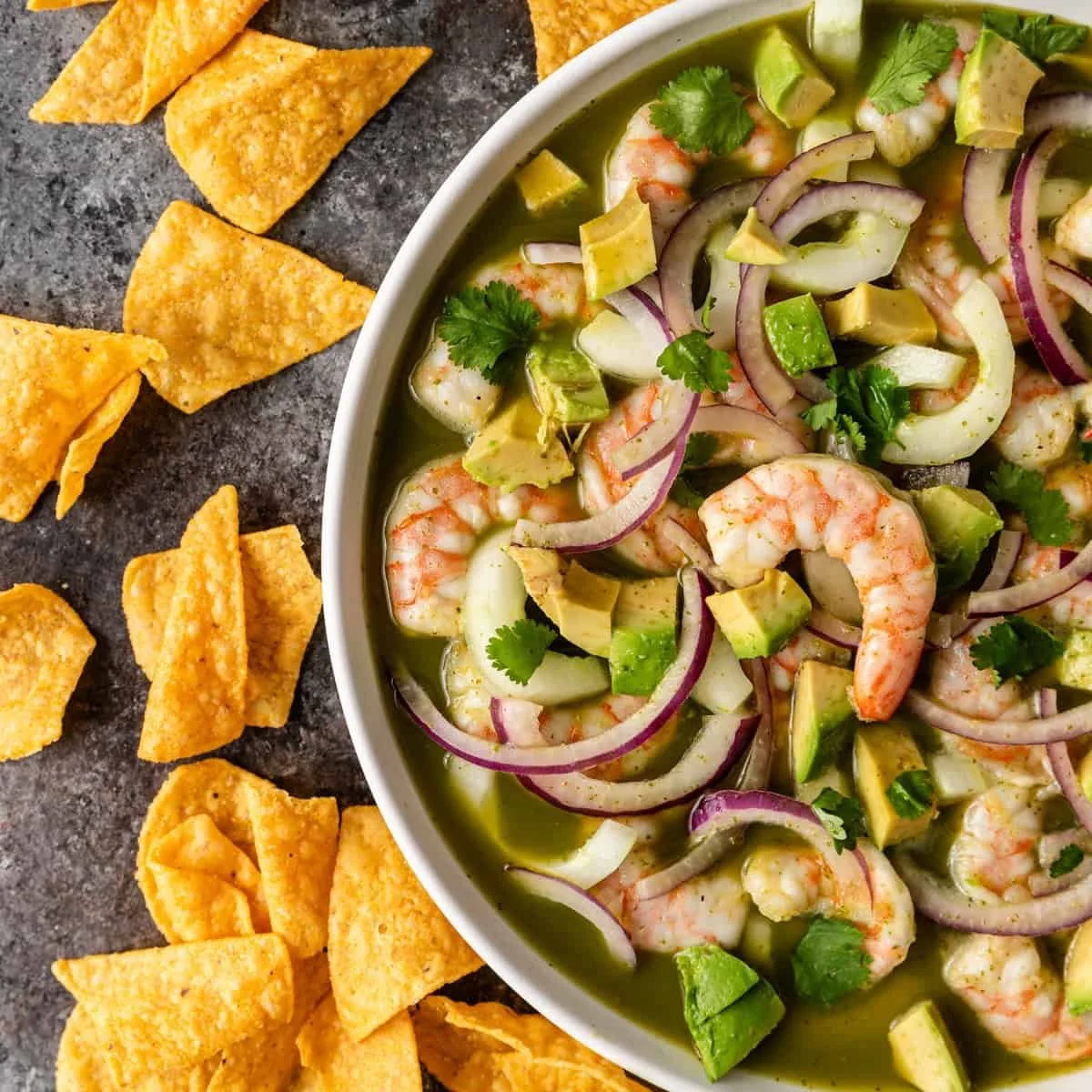
Key Details
• Prep time: 20 minutes
• Marinating time: 10–15 minutes
• Total time: 35 minutes
• Difficulty: Easy
• Yield: 4 servings (appetizer)
• Course: Appetizer / Seafood
• Region/Origin: Sinaloa, Pacific Coast, Mexico
Ingredients
For the Shrimp
• 1 lb (450g) large raw shrimp, peeled and deveined (16–20 count)
• 1 tsp (5g) kosher salt
• Juice of 2 limes (about ¼ cup / 60ml), for the initial salt cure
Substitution note: Fresh is best here. Buy the freshest raw shrimp you can find — Gulf shrimp from H-E-B or Central Market are excellent. Frozen “fresh-frozen” shrimp work well too; thaw overnight in the refrigerator. Never use pre-cooked shrimp for aguachile.
For the Aguachile Sauce
• 3–4 serrano chiles, stems trimmed (seeds in for full heat, seeds removed for medium)
• ¾ cup (180ml) fresh lime juice (about 6–7 limes)
• ¼ cup (60ml) cold water
• 1 cup (30g) fresh cilantro, leaves and tender stems
• 1 small garlic clove
• 1 tsp (5g) kosher salt
Substitution note:Chiltepín peppers are the most traditional Sinaloan chile — small, round, and searingly hot. They are hard to find outside Mexico, but some Latin markets in Austin and San Antonio carry them dried. Serrano is the most widely accepted substitute and gives a bright, grassy heat. Jalapeño works for a milder result.
For Serving
• 1 English cucumber, thinly sliced into half-moons
• ½ small red onion, very thinly sliced
• 1 avocado, thinly sliced
• Tostadas (6–8), store-bought or homemade
• Flaky salt and extra lime wedges
We offer catering services in and around Austin, TX and Texas Hill Country. Inquire HERE.
Step-by-Step Instructions
1. Butterfly the shrimp. Using a sharp knife, slice each shrimp lengthwise down the back so it opens into a flat, even piece. This dramatically increases the surface area exposed to the sauce, which is essential in aguachile since the shrimp get almost no marinating time. The cut shrimp should look like little open books. Arrange them in a single layer in a shallow, non-reactive dish (glass or ceramic).
2. Salt and pre-cure. Scatter the kosher salt evenly over the shrimp. Pour the juice of 2 limes over them and toss gently to coat. Refrigerate for 10 minutes. You’ll notice the edges start to turn pink and opaque — that’s the acid beginning its work. The shrimp will still be mostly raw at the center. That is correct.
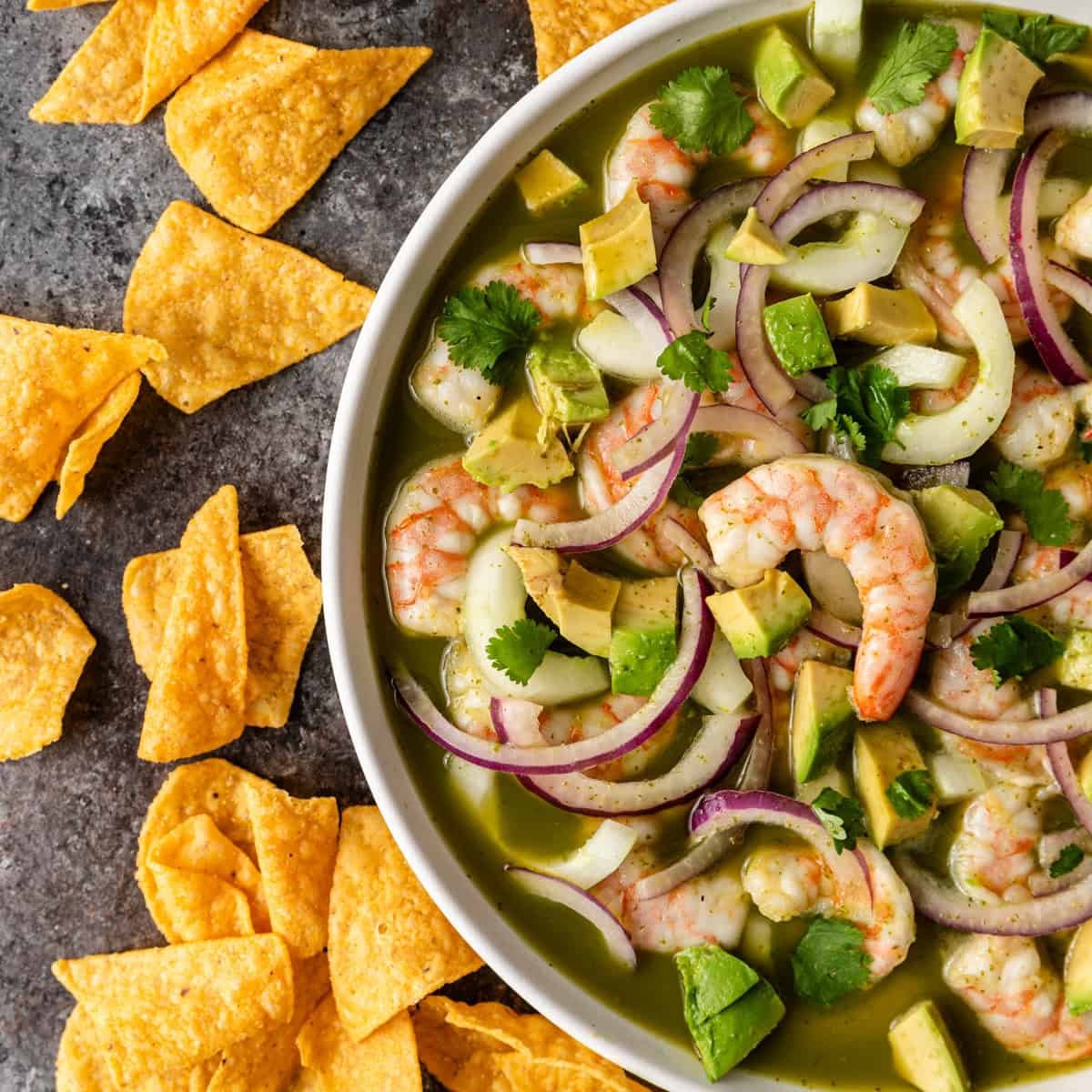
3. Make the aguachile sauce. While the shrimp cure, add the serrano chiles, ¾ cup lime juice, cold water, cilantro, garlic, and salt to a blender. Blend on high for 60–90 seconds until completely smooth. The sauce should be a vivid, almost neon green — bright and grassy-smelling, sharp with lime, with the serrano’s heat hitting you at the back of your nose. Taste and adjust salt.
4. Marinate. Pour the green sauce over the salted shrimp and use tongs to turn each piece, making sure both sides are fully coated. Cover and refrigerate for 10–15 minutes. The shrimp will firm up very slightly at the edges but remain tender and sweet in the center. Do not marinate longer than 20 minutes — you will lose that silky, almost-raw texture that makes aguachile unique.
5. Prepare the garnishes. While the shrimp finish their brief marinade, slice the cucumber and red onion as thin as you can manage — a mandoline is ideal here if you have one. Fan the cucumber slices around the edge of your serving platter or individual bowls. Scatter the onion on top.
6. Assemble and serve. Arrange the marinated shrimp over the cucumber and onion, spooning any extra sauce from the dish over everything. Lay avocado slices across the top. Finish with a pinch of flaky salt and a squeeze of fresh lime. Serve immediately, with cold tostadas on the side for scooping.
Tips, Variations & Substitutions
Heat level adjustments
• Mild: Use 1 jalapeño, seeds and ribs removed.
• Medium: Use 2 serranos, seeds removed.
• Traditional/Hot: Use 3–4 serranos with seeds. The sauce should make you take a breath.
• Nuclear: Add 1 habanero with the serranos. This is not recommended for first-timers.
Color variations
• Red aguachile (aguachile rojo): Replace the serrano-cilantro sauce with a blend of dried guajillo or chile de árbol, lime juice, and a touch of garlic. Roast the dried chiles first in a dry skillet until fragrant. The color is deep brick-red and the flavor is smokier and earthier.
• Black aguachile (aguachile negro): Made with a base of charred chiles and soy sauce (a Sinaloan tradition influenced by Chinese and Japanese immigrants to the region). Blend 2 chipotles en adobo, 1 tbsp soy sauce, lime juice, and a small piece of ginger.
Protein swaps
Sea scallops work beautifully sliced thin. Bay scallops can be used whole. Very fresh, sushi-grade fish like tuna or snapper, sliced thin, is also excellent.
Where to find ingredients in Texas
• Serrano chiles: Every H-E-B in Texas stocks them fresh.
• Chiltepín: Check Fiesta Mart locations in Austin and San Antonio, or Latin specialty markets. Central Market sometimes carries them dried.
• High-quality fresh shrimp: H-E-B Seafood, Central Market, or any Gulf Coast seafood market. Look for Gulf shrimp if available — the flavor is noticeably sweeter than Pacific imports.
• Tostadas: Look for the round Charras brand at H-E-B, or make your own by brushing corn tortillas with oil and baking at 400°F until crisp.
How to Serve Aguachile
Aguachile is served cold, immediately after assembly — this is not a dish that waits. It is most traditionally presented on a large flat platter or in wide, shallow bowls, so every shrimp is visible and the green sauce pools dramatically around the cucumber.
Traditional accompaniments: - Crispy tostadas for scooping - Cold Mexican beer — Pacífico, Modelo, or Pacifico Clara from Sinaloa specifically - Michelada (beer + lime + Clamato + hot sauce) - Agua de pepino con limón — cucumber-lime water, which echoes the flavors in the dish
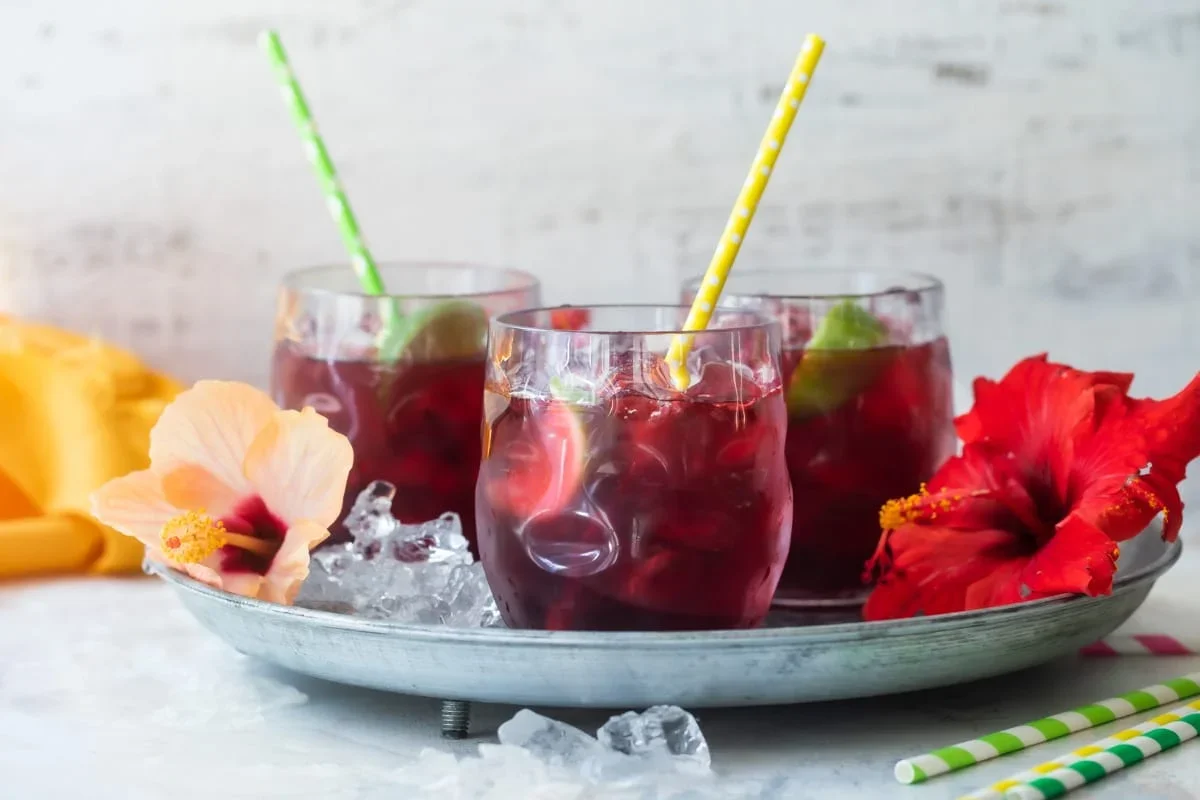
What to drink: A cold Pacífico or Modelo Especial is the classic Sinaloan match — crisp, light, and built for heat. For a non-alcoholic option, make a quick agua de pepino con limón (blend cucumber, lime juice, water, and a pinch of salt) and serve it ice-cold alongside.
Plating note: Less is more. The beauty of aguachile is the contrast of vivid green against pink shrimp and pale cucumber. Don’t pile on garnishes. Serve the avocado on the side or in a few clean slices. A lime wedge and a few thin rings of serrano on top are all you need.
The Story Behind Aguachile
The origin story of aguachile begins not at the coast, but in the mountains. According to food historians and researchers at the Sinaloa Science Center, the original aguachile was an inland preparation — dried or sun-cured meats softened in water boiled with wild chiltepín chiles, which grow in Sinaloa’s eastern foothills. Indigenous and ranching communities in those hills still use this preparation today. The chiltepín, a tiny round chile that is the wild ancestor of all domesticated Capsicum annuum peppers, appears in colonial-era documents as early as the 16th century.
As the dish migrated from the mountains to the Sinaloan coast, raw shrimp replaced cured meat. When exactly that happened is unclear. One account suggests that as late as the 1970s, the shrimp industry in Sinaloa was still taking off, and middle-class urbanites may have observed the raw-seafood traditions of Japanese migrants to the region and put a decidedly Sinaloan spin on it. Food journalist Gustavo Arellano has documented that aguachile didn’t appear as a regular menu item in Los Angeles — home to a large Sinaloan diaspora — until the 1990s or early 2000s. In Mexico itself, internet search data suggests aguachile barely registered as a dish people looked up until around 2008, when its popularity began rising sharply each summer.
Today, Sinaloa produces 37 percent of Mexico’s commercial shrimp, and aguachile is firmly established as the state’s signature dish — a food that carries the flavors of both the mountains and the sea, of indigenous traditions and centuries of mestizaje (cultural blending). Every marisquería from Mazatlán to Los Mochis serves some version of it, and it has become one of Mexico’s most searched seafood dishes in the United States.
Frequently Asked Questions
Is aguachile safe to eat? The shrimp are raw. The lime juice does begin to denature the proteins in the shrimp, giving the edges an opaque, “cooked” appearance. However, the center remains essentially raw. To minimize food-safety concerns, buy the freshest possible shrimp, keep everything cold throughout preparation, and serve immediately. Some cooks use “sushi-grade” shrimp or briefly freeze shrimp before use (freezing kills certain parasites). People who are pregnant, immunocompromised, or elderly should use caution with raw seafood.
What’s the difference between aguachile verde, rojo, and negro? Verde (green) uses fresh serrano or jalapeño chiles blended with lime and cilantro. Rojo (red) uses dried red chiles like guajillo or chile de árbol for a smokier, more complex sauce. Negro (black) incorporates soy sauce and sometimes charred chiles — a Sinaloan fusion tradition influenced by Asian immigrant communities in the region.
Can I make aguachile ahead of time? No. Aguachile is one of the few dishes that truly cannot be made in advance. The longer the shrimp sit in the acid, the tougher they become — eventually turning into something closer to ceviche. Prep all your components (slice the cucumber and onion, make the sauce, butterfly the shrimp), refrigerate separately, and combine only when you’re ready to serve.
Can I use frozen shrimp? Yes, with caveats. Thaw overnight in the refrigerator. Pat dry very thoroughly before butterflying — excess moisture will dilute the sauce. Avoid pre-cooked frozen shrimp entirely; the texture will be rubbery and the flavor flat.
What does aguachile taste like? It is intensely bright and acidic from the lime, grassy and vegetal from the cilantro, salty from the shrimp and salt, cool and refreshing from the cucumber, and fiery from the chiles. The shrimp themselves are sweet and tender. It tastes like summer near the ocean.
Is aguachile the same as Mexican shrimp cocktail (coctel de camarones)? No. Coctel de camarones uses cooked shrimp in a tomato-based sauce. Aguachile uses raw or barely-cured shrimp in a chile-lime sauce. The flavor profiles, textures, and traditions are completely different.
What beer goes with aguachile? Anything cold and crisp. Pacífico is the Sinaloan choice and a natural pairing. Modelo Especial works just as well. A michelada — beer mixed with lime juice, Clamato or tomato juice, and hot sauce, served in a salt-rimmed glass — is the classic aguachile accompaniment.
How spicy is authentic aguachile? Traditional Sinaloan aguachile made with fresh chiltepín is extremely hot — the kind of heat that builds and lingers on the lips. The serrano-based version you’ll make from this recipe is moderately-to-very spicy depending on how many chiles you use. Real aguachile should have some bite; that’s the whole identity of the dish.