

Pozole Recipe (Step-by-Step Guide)
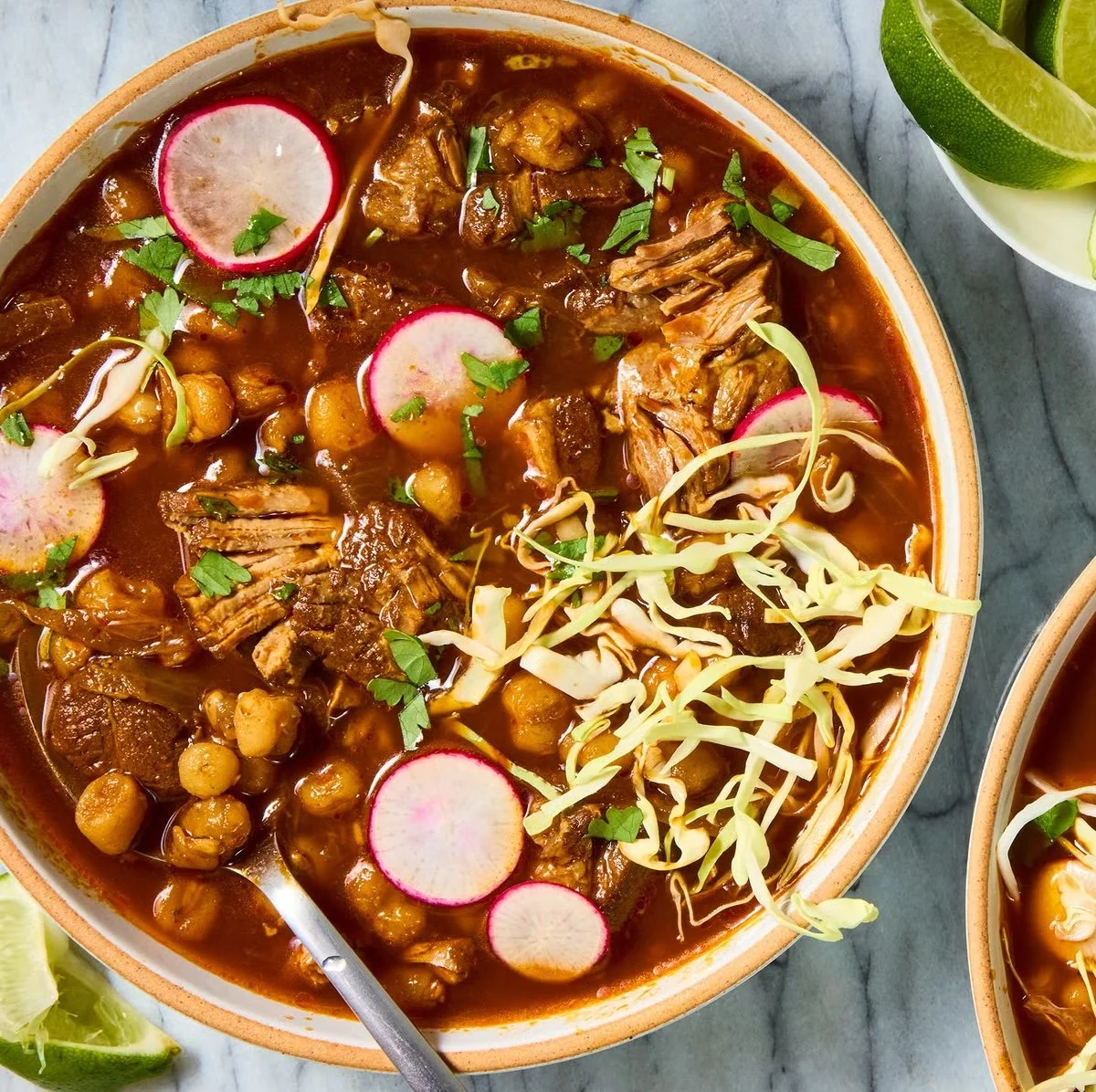
Pozole (pronounced poh-SOH-leh) is a rich, deeply flavored hominy soup — whole dried corn kernels, called cacahuazintle maize, that have been nixtamalized (treated with slaked lime, which opens the kernel into a plump, chewy, satisfying bite), cooked in a slow-simmered pork broth and flavored with dried chiles. As noted by Mexico News Daily’s reporting on pozole’s origins, the dish is deeply associated with the state of Guerrero — where corn itself was first domesticated approximately 9,000 years ago. There are three major styles: rojo (red, with dried chiles), blanco (white/clear, no chile sauce), and verde (green, tomatillo-based). We’re making rojo today — the most popular style in the U.S. and, in my opinion, the most comforting.
What makes pozole different from every other soup is the garnish bar. Thinly shredded cabbage, sliced radishes, diced onion, dried oregano, tostadas, lime, avocado, fresh chile — each diner builds their own bowl, adding crunch and acid and freshness in their own measure. The garnishes are not decoration. They are structural components of the dish. Don’t skip them.
Not enough time to make it from scratch? Use a pozole bomb to make it in just a few minutes. Watch our pozole bomb video here.
Recipe at a Glance
• Prep time: 20 minutes
• Cook time: 2–3 hours (or 45 minutes in a pressure cooker)
• Total time: 2.5–3.5 hours stovetop (or ~1 hour with pressure cooker)
• Difficulty: Beginner–Intermediate
• Yield: 8–10 servings
• Course: Soup / Stew / Main
• Region/Origin: Guerrero (origin state); now beloved nationwide
Ingredients
For the Broth and Pork
• 3 lbs (1.4 kg) bone-in pork shoulder (butt) — cut into large chunks
• 1 lb (450 g) pork neck bones (optional but strongly recommended for richness)
• 1 white onion, halved
• 6 garlic cloves, smashed
• 2 bay leaves
• 1 tablespoon (1 g) dried Mexican oregano
• 2 teaspoons (10 g) kosher salt, plus more to taste
• 10 cups (2.4 liters) water
Bone-in pork is essential. The marrow and collagen from the bones create the silky, rounded broth that makes authentic pozole what it is. Boneless pork loin is not a substitute — it produces a thin, flavorless broth.
For the Red Chile Sauce (Pozole Rojo)
• 5 dried guajillo chiles, stems and seeds removed
• 3 dried ancho chiles, stems and seeds removed
• 2 dried pasilla chiles, stems and seeds removed
• 4 garlic cloves
• 1 teaspoon (2 g) ground cumin
• 1 teaspoon (5 ml) apple cider vinegar
• 1 tablespoon (15 ml) lard or vegetable oil (for frying the sauce)
• Salt to taste
The guajillo-ancho combination gives pozole rojo its signature brick-red color and gently fruity heat. Toast each chile separately for even, consistent flavor development.
For the Hominy
• 2 cans (29 oz / 822 g each) white hominy, drained and rinsed — this is the standard weeknight approach
• OR 2 cups (400 g) dried cacahuazintle corn, soaked overnight and cooked from scratch (see FAQ for instructions)
Canned hominy is perfectly acceptable and what most Mexican home cooks use on weekdays. For a special occasion, dried hominy cooked from scratch produces a more deeply flavored, “bloomed” kernel with a superior texture.
For the Garnish Bar (Non-Negotiable)
Set all garnishes in individual bowls at the center of the table — this is where the magic happens.
• 2 cups (180 g) green cabbage, very thinly shredded
• 1 cup (120 g) radishes, thinly sliced
• ½ white onion, finely diced
• 2 limes, cut into wedges
• 1 avocado, sliced
• 2 tostadas per person (or a pile on the table)
• Dried oregano, for sprinkling
• 1–2 fresh jalapeños or serranos, thinly sliced
• Chile flakes or chile piquín (a tiny, intensely hot dried chile) for heat seekers
• Mexican crema or sour cream (optional)
We offer catering services in and around Austin, TX and Texas Hill Country. Inquire HERE.
Not enough time to make it from scratch? Use a pozole bomb to make it in just a few minutes. Watch our pozole bomb video here.
Step-by-Step Instructions
1. Build the broth and cook the pork. Place pork shoulder chunks and neck bones (if using) in a large pot. Cover with 10 cups of cold water. Add the halved onion, smashed garlic, bay leaves, and salt. Bring to a vigorous boil over high heat. A gray, foamy scum will rise to the surface — skim this thoroughly with a spoon or ladle for 5–10 minutes until the foam stops appearing. This step produces a cleaner, clearer broth. Once skimmed, reduce heat to a gentle simmer. Cook uncovered for 1.5–2 hours until the pork is completely tender and the meat is beginning to fall from the bones.
2. Toast and soak the chiles. While the pork cooks, wipe the guajillo, ancho, and pasilla chiles with a damp cloth. Heat a dry skillet over medium heat. Toast each chile type separately — press flat with a spatula, 25–30 seconds per side, until fragrant and just darkened. Do not let them blacken. Place all toasted chiles in a bowl and cover with hot water. Soak 20 minutes until completely soft.
3. Blend the chile sauce. Drain soaked chiles (reserve the soaking liquid — you may use some in the sauce). Add drained chiles, 4 garlic cloves, ground cumin, apple cider vinegar, and a pinch of salt to a blender. Add ½ cup of the reserved soaking liquid (or pork broth) and blend until completely smooth — 2 full minutes. Strain through a fine-mesh sieve, pressing the solids firmly.
4. Fry the chile sauce. Heat 1 tablespoon lard or oil in a medium skillet over medium-high heat. Pour in the strained chile sauce — it will sizzle and splatter, so stand back. Stir immediately and cook 5–7 minutes, stirring frequently, until the sauce deepens in color from bright red to a rich brick-red and thickens slightly. This frying step removes the raw, metallic edge from the chiles and concentrates the flavor.
5. Shred the pork. Remove the cooked pork from the broth with tongs. Discard the onion halves, bay leaves, and any loose garlic. Remove and discard the bones. Shred the pork into rustic, rough chunks — not too fine. You want pieces you can find with a spoon in the bowl.
6. Combine everything. Drain and rinse the canned hominy. Add it to the pork broth along with the shredded pork. Pour in the fried chile sauce and stir to incorporate. Taste and correct the salt — you will likely need more at this stage.
7. Simmer together. Bring the pozole to a gentle simmer over medium heat. Cook 30–45 minutes — this is when the hominy absorbs the flavors of the chile-enriched broth and everything comes together. The broth should smell deeply savory and earthy, and the hominy will look slightly swollen and glossy when it’s fully saturated. The longer it simmers, the better it becomes. Taste again before serving.
8. Set up the garnish bar. While the pozole finishes, arrange all garnishes in individual small bowls on the table. Slice the radishes, shred the cabbage, dice the onion, cut the limes. This step is non-negotiable — the garnishes are not optional toppings, they are flavor and texture components of the dish itself.
9. Serve piping hot. Ladle pozole generously into deep bowls. Send each bowl to the table and let diners customize their own with the garnish bar. Breaking a tostada over the bowl and letting it soften slightly in the broth is one of life’s great small pleasures.
Critical Technique Tips


• Skim the foam when the pork first boils. This 5–10 minute step produces a broth that is clearer, more refined, and less gamey. Skip it and you’ll notice the difference in the finished soup.
• Fry the chile sauce before adding it to the broth. A raw, unfried chile sauce added directly to the soup produces a harsh, metallic edge. The frying step is what gives the pozole its deep, rounded, complex flavor.
• The garnish bar is structural, not decorative. The crunch of cabbage, the acid of lime, the texture of tostada — these are designed to balance the richness of the broth. A bowl of pozole without garnishes is half a dish.
Not enough time to make it from scratch? Use a pozole bomb to make it in just a few minutes. Watch our pozole bomb video here.
Tips, Variations & Substitutions
Texas Sourcing
Canned white hominy (Bush’s or Goya brands) is carried at nearly every H-E-B and major grocery chain in Texas. For dried guajillo, ancho, and pasilla chiles, check the Latin foods section at H-E-B or visit any Latin grocery in Austin, San Antonio, or Houston — the dried chile selection at those stores is excellent. If you want to cook dried hominy from scratch, cacahuazintle corn is sometimes available at specialty Latin markets or through online retailers like MexGrocer.
Regional Variations
• Pozole blanco (Guerrero): No chile sauce at all — the broth is pure, clear pork broth with hominy. The flavor is subtle and clean, and the garnishes do all the seasoning work at the table. It’s the most ancient form of the dish and the purest expression of hominy and pork together.
• Pozole verde (Mexico City / Guerrero): The chile sauce is replaced with a tomatillo-based green sauce with epazote (a pungent herb used extensively in Mexican cooking), serrano chile, and sometimes pumpkin seeds — bright, herbaceous, and considerably lighter than the rojo.
• Pozole rojo is the most popular in the U.S. and what most restaurants serve; it’s also the most robust and crowd-pleasing.
• Jalisco variation: Sometimes uses a combination of chicken and pork; may include beet slices added to the broth for color.
Spice Level Adjustments
• Mild: Use only guajillo chiles (the mildest in the mix); remove all seeds.
• Medium: The recipe as written.
• Hot: Add 1–2 dried chiles de árbol to the chile blend; provide fresh sliced serrano at the garnish bar.
Dietary Adaptations
• Chicken pozole: Substitute bone-in chicken thighs and drumsticks for pork — cook 45–60 minutes instead of 2 hours. Use chicken broth in place of pork broth. The flavor is lighter and works beautifully.
• Vegetarian/vegan pozole: Use vegetable broth; substitute the pork with two cans of hominy (double the hominy) plus roasted mushrooms (portobello, shiitake, or oyster) for the savory, meaty component. Add a can of pinto beans for protein.
• Pressure cooker: Brown pork briefly in the pot, add all broth ingredients, seal, and cook on high pressure 45 minutes. Natural release 15 minutes. Add hominy and chile sauce, simmer 15 minutes.
• Gluten-free: Naturally gluten-free. Verify your tostada brand is certified GF if needed.
How to Serve Pozole
Pozole is communal food — it’s designed to be made in a large pot and eaten around a crowded table.
Traditional accompaniments (beyond the garnish bar): - Tostadas — either broken into the bowl or served on the side for dipping - Warm corn tortillas alongside for scooping - A cold beer (Mexican lager — Modelo, Pacifico, or Tecate) or a glass of agua fresca (watermelon or hibiscus) - Bolillo rolls for soaking up the broth
Serving notes: - Serve in deep, wide bowls — pozole requires room for all the garnishes. - Bring the pot to the table and let people ladle their own second helpings. This soup is meant to be refilled. - Set the garnish bar in the center of the table and let guests serve themselves at their own pace — the gradual addition of garnishes over the course of the meal is part of the experience. - A drizzle of crema stirred into the broth at the end is a Guerrero-style finishing touch that adds a whisper of dairy richness.
The Story Behind Pozole
Pozole’s history is one of the most layered and, at times, startling in all of Mexican cuisine. According to Mexico News Daily’s deep dive into Guerrero’s pozole, the dish is tied to Guerrero — the very state where corn (maize) was first domesticated from wild teosinte grass approximately 9,000 years ago. The word pozole comes from the Nahuatl pozolli, meaning a stew of prepared corn kernels, as noted by Familia Kitchen’s history of pozole.
The earliest detailed documentation of pozole comes from Fray Bernardino de Sahagún’s Florentine Codex — the 16th-century ethnographic text that recorded Aztec life in extraordinary detail. As Playalarga’s pozole history documents, Sahagún described a ceremonial hominy broth served during major Aztec festivals, particularly those dedicated to Xipe Tótec, the deity of renewal and agricultural fertility. The Wikipedia entry on pozole](https://en.wikipedia.org/wiki/Pozole) notes that research by the Instituto Nacional de Antropología e Historia* (INAH) and the Universidad Nacional Autónoma de México (UNAM) has identified the pre-Columbian pozole as a ceremonial dish — reserved for nobles, priests, and warriors during ritual festivals, not everyday consumption.
After the Spanish conquest, the dish was transformed: the ceremonial elements were erased, and pork — introduced by Spanish colonizers — became the standard protein. The hominy and the simmered broth remained. What had been sacred became communal, and pozole gradually moved into the realm of shared celebration: feast days, family gatherings, national holidays.
Today, pozole is Mexico’s great cold-weather comfort food. It’s the dish served at every Día de la Independencia (September 16) celebration across the country — a broth that connects modern Mexicans to an ancient table. Learning that history changed how I cook it, and how I eat it. Every bowl of pozole rojo on a cold Texas evening is, in some small way, a continuation of a 9,000-year-old story. I find that remarkable.
Frequently Asked Questions
What is hominy, and where do I find it in the U.S.? Hominy is dried corn kernels that have been treated with an alkaline solution (traditionally slaked lime, or cal) in a process called nixtamalization — the same process used to make masa for tortillas and tamales. Nixtamalization changes the nutritional profile, texture, and flavor of the corn dramatically, producing the plump, chewy, satisfying kernel that defines pozole. Canned white hominy is sold at most U.S. grocery stores (look in the canned vegetable aisle or the Latin foods section) under brands like Bush’s or Goya. Dried hominy is available at Latin markets.
What is the difference between pozole rojo, verde, and blanco? The difference is the chile sauce — or the absence of one. Rojo uses a red sauce from dried guajillo and ancho chiles; it’s the richest and most robust. Verde uses a green sauce from tomatillos, serrano, and herbs like epazote; it’s lighter, brighter, and herbaceous. Blanco uses no sauce at all — just clear pork broth and hominy, with all the flavor coming from the garnishes and the quality of the broth itself. All three are authentic; all three are wonderful; your preference depends on the day.
Can I make pozole in a slow cooker or Instant Pot? Yes to both. Instant Pot: Sauté mode to brown the pork lightly; add broth ingredients, seal, cook on high pressure 45 minutes, natural release 15 minutes. Add hominy and chile sauce; simmer on sauté mode 15 minutes. Slow cooker: Add all broth ingredients plus the fried chile sauce; cook on low 8–10 hours. Shred pork, add hominy, cook on high 30 minutes more. Both methods produce excellent pozole; the stovetop produces a slightly more nuanced broth.
How do I cook dried hominy from scratch? Soak dried cacahuazintle corn in cold water for 8 hours (or overnight). Drain and place in a large pot with 8 cups of water and 1 tablespoon of slaked lime (cal) or food-grade calcium hydroxide. Bring to a boil, cook 30 minutes. Drain and rinse thoroughly. Return to the pot, cover with fresh water, and simmer 2–4 hours until the kernels have “bloomed” — opened at the crown like a flower. This takes patience, but the resulting hominy has a superior texture and a faintly earthy, corn-milk flavor that canned hominy doesn’t quite match.
How long does pozole keep, and does it freeze well? Pozole keeps beautifully in the refrigerator for up to 5 days — it tastes better on Day 2 and Day 3 as the flavors deepen. It freezes for up to 4 months in sealed containers. Freeze the pozole without garnishes; make fresh garnishes when you reheat. Thaw overnight in the refrigerator and reheat slowly on the stovetop over medium-low heat with a splash of water or broth.
What is epazote and should I add it to my pozole?Epazote is a pungent, herbal Mexican herb with a flavor somewhere between oregano, mint, and diesel — I say that lovingly. It is traditional in certain regional pozole preparations (particularly verde) and in bean dishes. Fresh epazote can be found at Latin markets; dried epazote is available online. If you can find it and are making pozole verde, add 2–3 fresh sprigs to the broth during the final simmer. It’s not traditional in rojo, but it adds character to blanco as well.
Can I make pozole ahead for a party? Pozole is actually ideal for parties precisely because it’s best made ahead. Make the full pot 1–2 days before your gathering (skip the garnishes — make those fresh the day of). Reheat on the stovetop, taste and re-season, and set up the garnish bar just before guests arrive. Keep the pot on low heat on the stove so guests can serve themselves throughout the evening.