

Mole Poblano Recipe (Step-by-Step Guide)
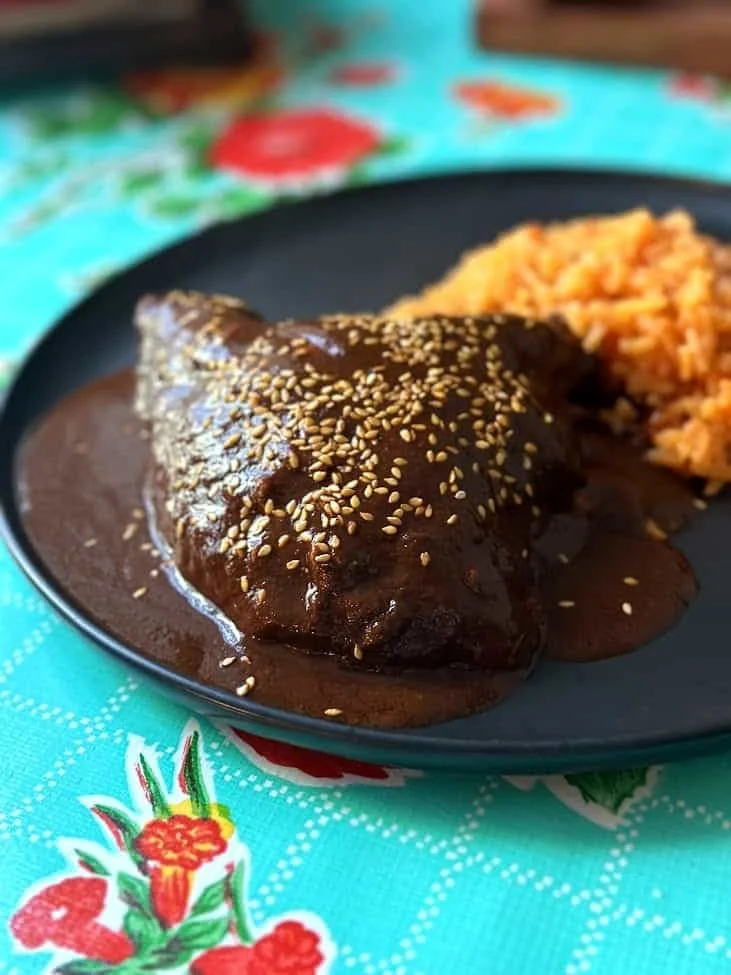
Mole poblano is Puebla’s greatest culinary achievement — a deep, complex, mahogany-colored sauce built from four types of dried chiles, toasted nuts and seeds, spices, charred vegetables, and Mexican chocolate, served over turkey or chicken. As The Tablet’s coverage of mole’s history notes, the word mole comes from the Nahuatl mulli, meaning sauce or mixture — evidence that chile-based sauces predate the Spanish by centuries. The complex chocolate-chile version we know today is a colonial-era fusion, its flavors shaped by both indigenous and European ingredients and techniques.
I want to acknowledge the fear factor here. Mole has a reputation. People hear “over thirty ingredients” and immediately close the browser tab. But here’s what I want you to understand: mole is not complicated, it is just long. There are many steps, but none of them are technically difficult. If you can toast a chile and run a blender, you can make this. I’ve broken it into clear stages so you can even split it over two days — and honestly, Day 2 mole is better than Day 1 mole every single time. Let’s start.
Recipe at a Glance
• Prep time: 45 minutes
• Cook time: 1 hour 30 minutes
• Total time: ~2 hours 15 minutes (can be staged over 2 days)
• Difficulty: Intermediate–Advanced
• Yield: 8–10 servings (about 5–6 cups / 1.2–1.4 liters of sauce)
• Course: Main / Sauce
• Region/Origin: Puebla; beloved nationwide and internationally
Ingredients
For the Chile Base
• 4 dried mulato chiles — smoky, chocolatey, earthy; the backbone of mole poblano
• 3 dried ancho chiles — sweet, fruity, mild heat
• 3 dried pasilla chiles — dark berry notes, moderate heat
• 2 dried chipotle or morita chiles — smoky heat
• 2 teaspoons of reserved chile seeds (toast separately)
The combination of these four chiles is what makes this mole poblano, not just “red mole.” Do not reduce to a single chile type.Mulato chiles are the hardest to find — look for them at Latin grocery stores or order from MexGrocer or Amazon. They are worth the effort.
For the Body and Texture
• 3 Roma tomatoes
• 3 tomatillos (husked and rinsed)
• ½ white onion, quartered
• 4 garlic cloves, unpeeled
• 3 tablespoons (27 g) sesame seeds
• ¼ cup (35 g) blanched almonds
• 3 tablespoons (30 g) raisins
• ¼ of a ripe plantain or ¼ banana, sliced
• 1 thick slice day-old white bread (or ½ of a bolillo roll)
• 1 stale corn tortilla, torn into pieces
• 3 oz (85 g) Mexican chocolate (Ibarra or Abuelita brand) — roughly chopped
Mexican chocolate is grainy, spiced with cinnamon and almonds, and less sweet than American baking chocolate. It is NOT the same as dark chocolate, though dark chocolate (70%+) can substitute — add ½ teaspoon cinnamon separately if using it.
For the Spice Layer
• 1 teaspoon (2 g) cumin seeds, toasted
• 4 whole black peppercorns
• 3 whole cloves
• 1 small stick canela (Mexican cinnamon — the soft, crumbly kind, NOT the hard grocery-store cassia variety)
• ½ teaspoon dried thyme
• ½ teaspoon dried marjoram
Canela (Mexican cinnamon) is softer, lighter, and more floral than the standard cinnamon sticks sold in most U.S. grocery stores. It is sold in Latin markets and online. If you can only find regular cinnamon, use ¼ teaspoon ground cinnamon.
For Cooking and Serving
• 3–4 tablespoons (45–60 ml) lard or vegetable oil, divided
• 3–4 cups (720 ml–1 liter) warm turkey or chicken broth
• 4 lbs (1.8 kg) bone-in chicken thighs or turkey pieces
• Salt and sugar to taste
• Additional toasted sesame seeds for garnish
Substitution — lard: Lard produces the most authentic, rich flavor; substitute with vegetable oil or avocado oil if preferred. The depth changes slightly but the mole is still wonderful.
We offer catering services in and around Austin, TX and Texas Hill Country. Inquire HERE.
Step-by-Step Instructions
1. Toast the chiles — carefully. Wipe each chile with a damp cloth. Remove stems and seeds, reserving 2 teaspoons of seeds for later. Heat a dry skillet or comal (flat griddle) over medium heat. Toast each chile type separately, 25–30 seconds per side, pressing gently with a spatula. They should darken slightly, blister, and release a warm, toasty, chile-oil aroma. The moment they smell good, they’re done. Burnt chiles have an irreversible bitter taste — if in doubt, pull them early.
2. Soak the chiles. Place all toasted chiles in a bowl. Cover with boiling water and weight them down with a small plate to keep submerged. Soak 20–30 minutes until completely soft and pliable. Drain; reserve the soaking liquid. Strain it through a fine-mesh sieve — you may use a small amount in the sauce if needed.
3. Char the vegetables. Place tomatoes, tomatillos, onion, and unpeeled garlic directly on a dry comal or cast-iron skillet over high heat. Cook, turning occasionally, until blackened on all sides — the exterior should be charred and the vegetables should be soft. Peel the garlic when cool enough to handle. This char adds true complexity; do not skip it.
4. Toast the seeds, nuts, and bread. Using the same dry skillet over medium heat:
– Toast reserved chile seeds until dark and fragrant (1–2 minutes) — they should smell faintly of popcorn and warm spice.
– Toast sesame seeds until golden (2–3 minutes).
– Toast almonds until lightly browned and fragrant (3–4 minutes).
– Add 1 tablespoon of lard; fry raisins and plantain slices until slightly puffed and golden.
– Fry bread slice and torn tortilla in the remaining lard until deep golden-brown. Let cool.
5. Blend in three separate stages. This is the heart of the process:
– Chile paste: Blend soaked chiles with enough broth (about ½ cup) to blend smooth. Strain through a fine-mesh sieve. Set aside.
– Vegetable paste: Blend charred tomatoes, tomatillos, onion, and garlic with a splash of broth until smooth. Set aside.
– Nut/seed/chocolate paste: Blend sesame seeds, almonds, raisins, plantain, fried bread, fried tortilla, and chopped chocolate with enough broth to blend smooth. Set aside.
6. Fry each paste separately — this is the soul of mole. Heat a large, deep, heavy pot (cazuela or Dutch oven) over medium-high heat. Add 1 tablespoon lard or oil.
– Pour in the chile paste first. It will splatter — stand back, stir immediately, and reduce heat to medium. Fry 8–10 minutes, stirring constantly, until the paste darkens a shade and thickens visibly. You’ll see it go from bright red to deep brick-red.
– Add the vegetable paste directly on top. Stir together and fry 5–8 minutes more, continuing to stir.
– Add the nut/seed/chocolate paste and fry 5 more minutes. The mixture should now smell deeply complex — smoky, nutty, chocolatey, chile-spiced.
7. Combine and simmer. Pour warm broth into the pot gradually, ½ cup at a time, whisking as you go to prevent lumps. The final sauce should be thick but pourable — like a rich gravy. Bring to a gentle simmer, then reduce heat to low. Simmer 30–45 minutes, stirring every 5 minutes to prevent scorching on the bottom. You’ll know the mole is developing when the kitchen fills with that deep, layered aroma — smoky, nutty, chocolatey, and unmistakably complex.
8. Season the mole. Add salt, starting with 1 teaspoon and adjusting. If the chocolate is very bitter, add a pinch of sugar (½ teaspoon at a time). Taste repeatedly — mole’s flavor evolves significantly as it cooks. What tastes sharp at 20 minutes will mellow and integrate by 45.
9. Cook the poultry. Add bone-in chicken thighs or turkey pieces directly to the mole. Simmer on low heat 35–45 minutes for chicken, longer for turkey, until cooked through and the meat is starting to fall from the bone. Baste frequently.
10. Garnish and serve. Ladle mole generously over poultry on a platter. Shower with toasted sesame seeds and serve immediately.
Critical Technique Tips
• Toast, don’t burn. Everything in this recipe — chiles, seeds, nuts, bread — benefits from toasting, but each has a narrow window. Work over medium heat, use your nose, and pull things the moment they smell good.
• Fry each paste separately. Dumping everything into the pot at once produces a flat, one-note sauce. Frying each paste alone concentrates its individual flavors before they all marry together.
• Make it the day before. Mole tastes dramatically better on Day 2, after the flavors have rested and deepened overnight. This is not just tradition — it is fact.
Tips, Variations & Substitutions
Texas Sourcing
Mulato chiles — the hardest ingredient in this recipe to find — are stocked at Central Market locations in Austin, Houston, and Dallas, and at most H-E-B Plus stores in the Latin foods aisle. Latin grocery stores throughout San Antonio and Austin carry them reliably. Mexican chocolate (Ibarra or Abuelita) is easy to find at any H-E-B or Walmart Supercenter in Texas. If you’re in Austin, Central Market also carries canela (Mexican cinnamon) in the bulk spice section.
Regional Variations
• Mole negro (Oaxaca): Darker, more intense; uses charred (nearly burnt) chile negro and Oaxacan chocolate; sometimes includes a dried avocado leaf for a distinctive anise note. This is the most complex mole of all.
• Mole rojo (general): A simplified red mole with fewer ingredients — more weeknight-friendly.
• Mole amarillo (yellow, Oaxaca): Uses guajillo and tomate verde (tomatillo); no chocolate; lighter and more citrusy.
• Mole verde: Tomatillo and herb-based; the fastest of the seven moles to prepare.
• Pipián: A seed-and-chile sauce — a cousin to mole, not identical; relies on pumpkin seeds for body.
Spice Level Adjustments
• Mild: Remove all chile seeds; omit chipotle or morita entirely; add slightly more chocolate.
• Hot: Leave some ancho seeds in the blend; add 1 dried chile de árbol to the chile paste.
Dietary Adaptations
• Vegetarian: Use vegetable broth; serve over roasted delicata squash, portobello mushrooms, or roasted cauliflower.
• Vegan: Substitute lard with coconut oil or vegetable oil; verify your chocolate is dairy-free (Ibarra brand is not vegan; use a vegan dark chocolate + ½ teaspoon Mexican cinnamon).
• Gluten-free: Replace the bread slice entirely with a second stale corn tortilla. The bread adds body — the extra tortilla does the same job.
How to Serve Mole Poblano
This is celebratory food. Serve it like one.
Traditional accompaniments: - Arroz rojo (Mexican red rice) — the most classic side; the red color echoes the mole - Frijoles de olla (pot beans) or refried beans - Warm corn tortillas — absolutely essential for scooping up every last bit of sauce - Extra toasted sesame seeds, fresh cilantro, and sliced white onion for the table - To drink: a cold agua de jamaica (hibiscus water) cuts through the richness beautifully, or serve a dark Mexican beer (Negra Modelo) for a dinner-party presentation
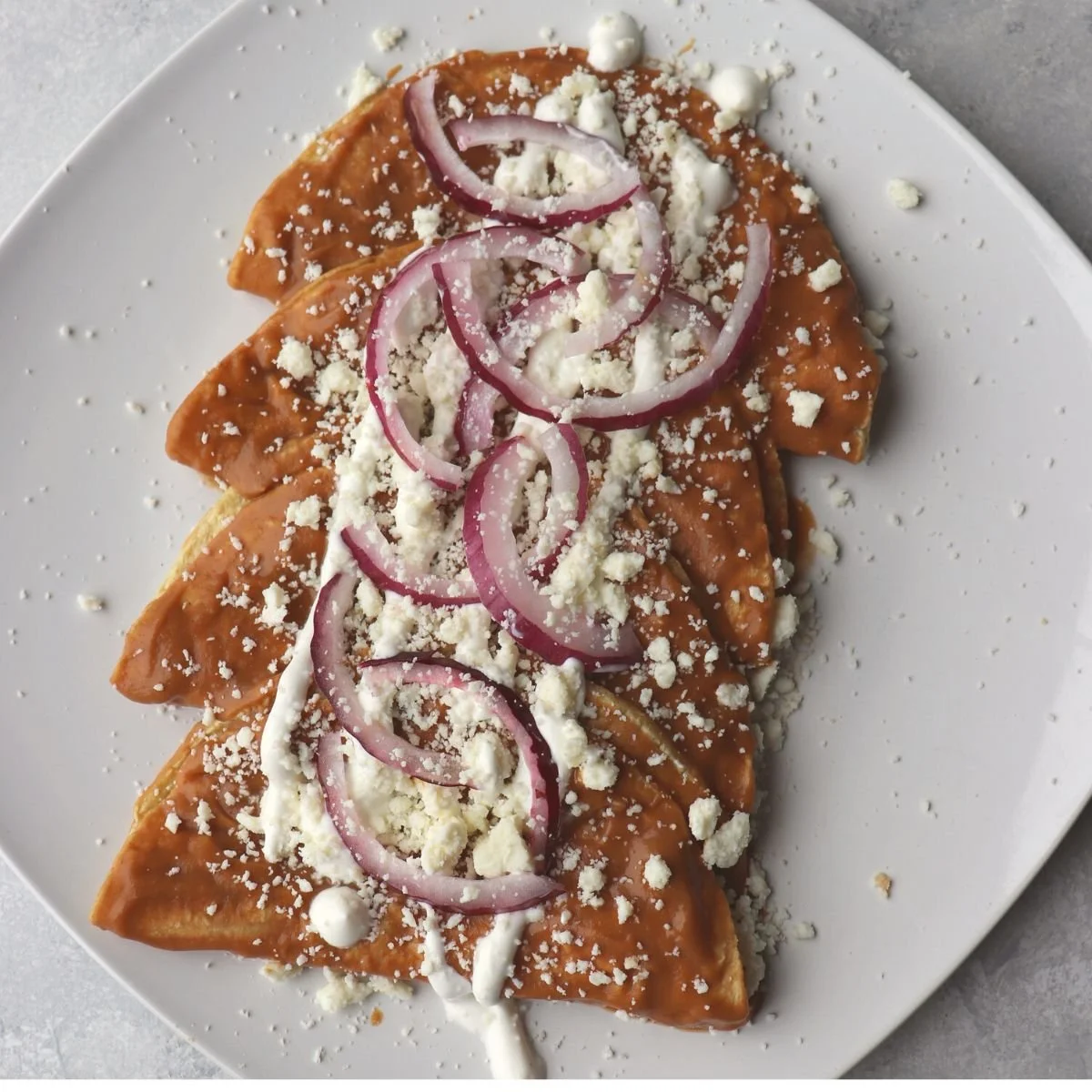
Plating notes: - Arrange turkey or chicken pieces on a wide platter, ladle mole over everything generously, and shower with sesame seeds. - For a more casual presentation, serve enmoladas — corn tortillas dipped in warm mole, filled with shredded chicken, folded in thirds, and topped with crema and queso fresco. - A small sprig of fresh thyme or a few dried rose petals (a Pueblan tradition) pressed into the sauce before serving adds a stunning, aromatic touch.
The Story Behind Mole Poblano
The most famous legend says that mole poblano was created at the Convent of Santa Rosa in Puebla in the 17th century. According to The Tablet’s history of mole, Sister Andrea of the Assumption developed the dish around 1685 to honor an unexpected visit from a Spanish viceroy. She and her fellow nuns gathered every ingredient in the convent — dried chiles, nuts, seeds, chocolate, spices — ground them together, simmered the mixture for hours, and poured the resulting dark sauce over turkey. When the viceroy asked what the dish was, a sister reportedly replied: “Es un mole” — “It is a mixture.”
Food historians note that this origin story is almost certainly more legend than history. As Food Republic covers in their analysis of mole, the sauce almost certainly evolved over decades or centuries, not a single afternoon in a convent kitchen. The word mole comes from the Nahuatl mulli, meaning sauce — evidence that chile-based sauces predate the Spanish by centuries. The complex chocolate-chile version is a colonial-era creation, shaped by the collision of indigenous Mexican and Spanish (and even Asian, via the Manila Galleon trade) culinary traditions. No single person invented it. It grew.
What we know for certain: each family in Puebla holds its own mole recipe, passed down through generations of women — rarely fully written down, always guarded, and always slightly different. The dish is used to mark Día de Muertos, weddings, quinceañeras, Christmas, and any occasion important enough to spend two days in the kitchen. In Puebla, making mole is not cooking. It is devotion.
Frequently Asked Questions
How many chiles go into mole poblano, and can I use fewer types? Traditional mole poblano uses four dried chile varieties: mulato, ancho, pasilla, and chipotle or morita. Each contributes a different flavor profile — smokiness, fruitiness, earthiness, heat — and reducing them produces a simpler, less complex sauce. You can make a very good two-chile version (ancho + guajillo) in a fraction of the time, but it won’t be mole poblano. Think of it as a worthy weeknight red mole instead.
What is Mexican chocolate and where do I buy it in the U.S.? Mexican chocolate — most commonly the Ibarra or Abuelita brands — is coarser and grainier than American baking chocolate, and is pre-sweetened and spiced with cinnamon and almonds. It is sold at most Latin grocery stores, World Market, and online. Do not substitute American unsweetened baking chocolate without also adding sugar and cinnamon — the flavor profile will be off.
Can I make mole poblano ahead of time, and does it freeze well? It freezes beautifully, and making it ahead is highly recommended. The sauce (without poultry) keeps in the freezer for up to 4 months in sealed containers. Thaw overnight in the refrigerator and reheat slowly over low heat with a splash of broth. Mole with the poultry already cooked in it keeps in the refrigerator for up to 5 days.
Why does my mole taste bitter — how do I fix it? The most common cause is burnt chiles. If the chiles blackened instead of toasting, there is no fix — start over with the chile paste. For a mild bitterness, add a pinch of sugar (½ teaspoon at a time), a small amount of raisins blended in, or more chocolate. A longer simmer also mellows bitterness as the flavors integrate.
What is the difference between mole poblano and mole negro? Both are complex dried-chile-and-chocolate moles, but mole negro (from Oaxaca) is darker, more intensely smoky, and uses a higher proportion of charred ingredients — including chiles toasted almost to burning point — and often includes a dried avocado leaf. Mole negro is widely considered the most complex mole; mole poblano is slightly sweeter, less austere, and more accessible for home cooks.
Can I use store-bought mole paste as a shortcut, and how do I improve it? Yes — brands like Doña María and La Costeña sell mole paste. Use it as directed but upgrade the result: fry the dissolved paste in a tablespoon of oil for 5 minutes before adding broth, add a small piece of Mexican chocolate, a pinch of cumin, and simmer for at least 30 minutes. The frying step and the chocolate make a significant difference in depth and roundness.