

Barbacoa Recipe (Step-by-Step Guide)
Barbacoa is one of the oldest and most culturally significant dishes in all of Mexican cooking — older, in many ways, than Mexico itself. The word traces back to the Taíno people of the Caribbean, and the cooking technique pre-dates the Spanish arrival on the continent. But it was in the central Mexican state of Hidalgo, in the valleys carved by the maguey plant, that barbacoa became the Sunday morning institution it remains today. Whole beef heads, wrapped in the thick pencas (leaves) of the maguey agave, slow-cooked in a sealed underground pit overnight and ready for the morning market — that is the original.
You don’t need a pit. You need a slow cooker, eight hours, and the right cut of meat. Let’s talk about that cut first.
Recipe at a Glance
• Prep time: 20 minutes
• Cook time: 8 hours (slow cooker) or 90 minutes (Instant Pot)
• Total time: 8–9 hours (slow cooker), mostly hands-off
• Difficulty: Beginner-friendly (mostly hands-off)
• Yield: 8–10 servings
• Course: Main / Taco filling / Breakfast taco
• Region/Origin: Hidalgo / Central Mexico / Nationwide

Ingredients
For the Chile Paste
• 4 dried guajillo chiles, stems and seeds removed
• 2 dried ancho chiles, stems and seeds removed
• 1–2 chipotle peppers in adobo sauce (canned) — essential for smokiness
• 6 garlic cloves
• ½ white onion, quartered
• 1 tablespoon (3 g) Mexican oregano
• 1 teaspoon (3 g) ground cumin
• ½ teaspoon (1 g) black pepper
• ¼ teaspoon ground cloves (just a hint — it’s strong)
• 2 tablespoons (30 ml) apple cider vinegar
• Salt to taste
For the Meat
• 3 lbs (1.4 kg) beef cheeks (cachete) — the most authentic choice (see notes)
• Substitutes: Bone-in beef chuck roast, oxtail, or short ribs — all work well
• Kosher salt for seasoning
For the Braise
• 1 cup (240 ml) beef broth
• 3 bay leaves
• Optional: 2–3 banana leaves, briefly passed over an open flame until pliable — for a faint earthy layer; available at Latin or Asian markets
For Serving
• Small corn tortillas (4–5 inch / 10–13 cm), warmed, doubled up
• Diced white onion
• Chopped fresh cilantro
• Lime wedges
• Salsa verde or salsa roja
• Pickled jalapeños
Ingredient notes:
• Beef cheeks (cachete): This is the most important ingredient in this entire recipe. Beef cheeks are the facial muscles of the cow — they work constantly, which makes them dense with connective tissue. When that connective tissue breaks down over 8+ hours of slow cooking, it transforms into gelatin, making each bite impossibly rich, silky, and tender. Available at Mexican butchers and most Latin supermarkets in Texas (H-E-B often carries them). Ask by name: cachete or mejilla de res.
• Chuck roast substitute: If beef cheeks are unavailable, a well-marbled bone-in chuck roast is the best alternative. The result is slightly less rich but still excellent.
• Chipotle in adobo: This is what bridges the gap between a slow cooker and an underground pit. The canned chipotle adds smoke and depth that the guajillo-ancho base alone cannot provide. Don’t skip it.
• Banana leaves or maguey leaves: In Hidalgo-style pit barbacoa, the meat is wrapped in the thick pencas of the maguey (agave) plant. At home, banana leaves add a faint, slightly sweet herbal note and make a beautiful presentation. They’re optional, but worth using if you can find them.
We offer catering services in and around Austin, TX and Texas Hill Country. Inquire HERE.
Step-by-Step Instructions
1. Toast and soak the chiles. Heat a dry skillet over medium heat. Press each guajillo and ancho chile flat against the hot surface for 20 seconds per side until fragrant and just beginning to darken — they should smell like dark chocolate and dried fruit, a toasty sweetness that fills the kitchen. Don’t let them burn. Place toasted chiles in a bowl, cover with boiling water, and soak for 20 minutes.
2. Build the chile paste. Drain the soaked chiles, reserving ½ cup of the soaking water. Add the chiles to a blender with the chipotle peppers in adobo, garlic, onion, all the spices, vinegar, and reserved soaking water. Blend on high for 2 minutes until very smooth — the paste should be the deep, brick-red color of dried blood and smell smoky and faintly sweet. Taste and add salt.
3. Season and coat the beef. Season the beef cheeks aggressively on all surfaces with kosher salt. Pour the chile paste over the meat and turn to coat every surface evenly. For best results, cover and refrigerate overnight. Even a 2-hour rest makes a noticeable difference.
4. Set up the slow cooker. If using banana leaves, briefly hold each leaf over a gas flame for a few seconds per side until bright green and pliable (this removes bitterness). Line the bottom of the slow cooker insert with the banana leaves. Place the chile-coated beef on top. Pour the beef broth around (not over) the meat. Tuck the bay leaves around the beef.
5. Cook. Slow cooker: Cook on LOW for 8–9 hours. Do not cook on HIGH — the gentle, sustained low heat is what converts the collagen in the beef cheeks to gelatin. High heat will make them tough instead of tender. Around the 6-hour mark the kitchen will smell deeply of chile and rendered beef fat — warm, smoky, almost impossible to resist. Instant Pot: Sear the beef first using the Sauté function (highly recommended — don’t skip). Then cook on Manual HIGH pressure for 90 minutes with a 20-minute natural release.
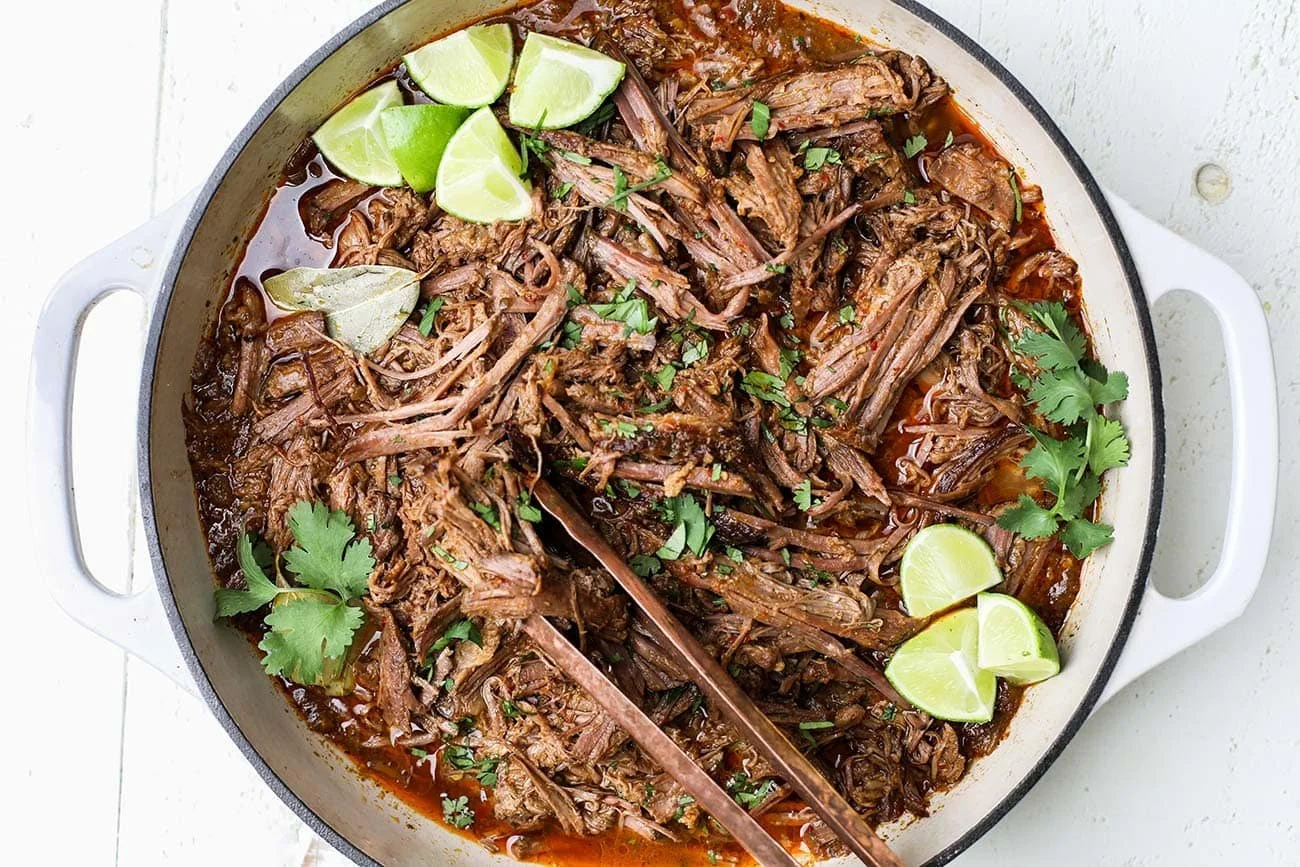
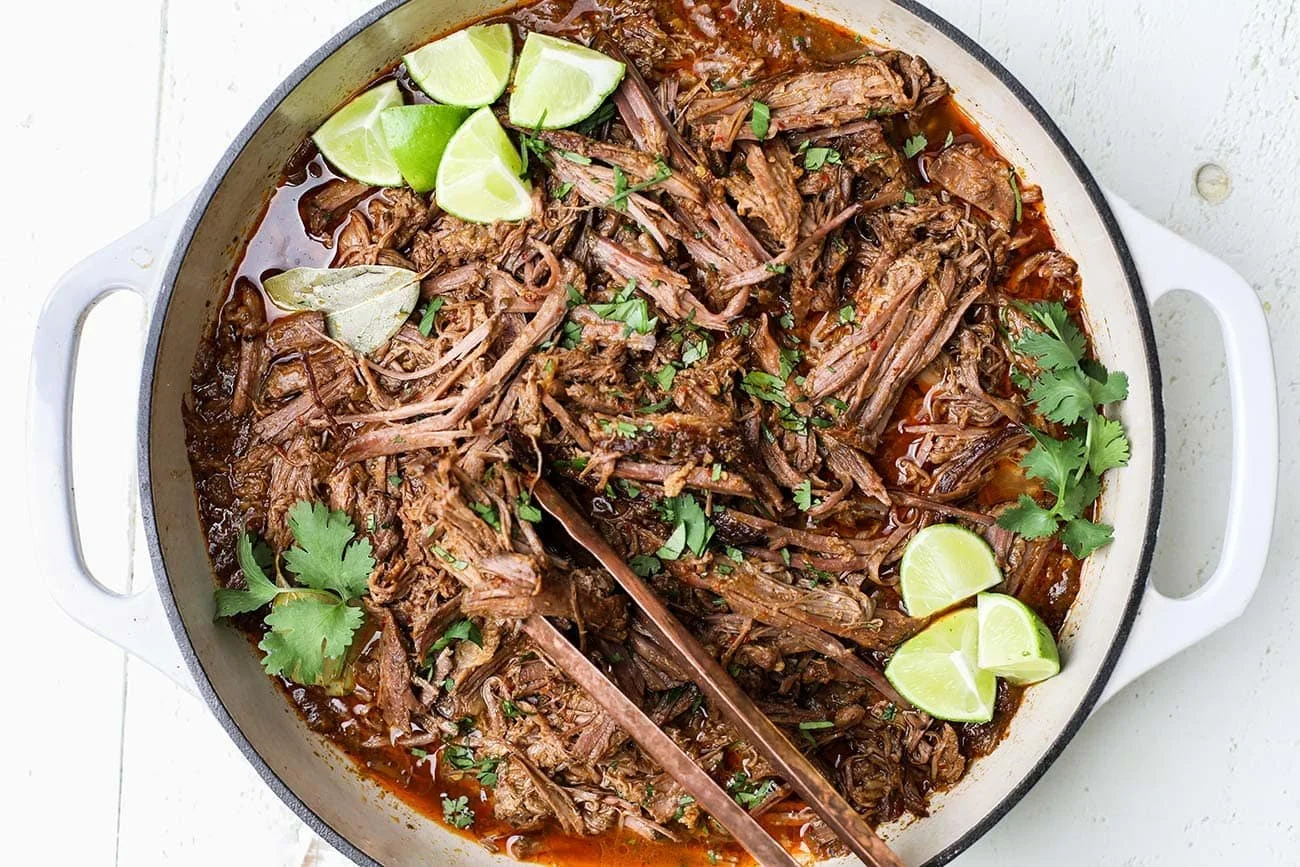
6. Shred the beef. Remove the beef and shred with two forks while still hot. It should fall apart at the very first touch — if it requires effort, cook 30 minutes longer. Discard the banana leaves and bay leaves.
7. Season and finish. Return the shredded beef to the cooking liquid. Stir to coat the meat in the juices. Taste and adjust salt. The meat should be deeply savory, slightly smoky, and coated in a glossy, chile-red liquid.
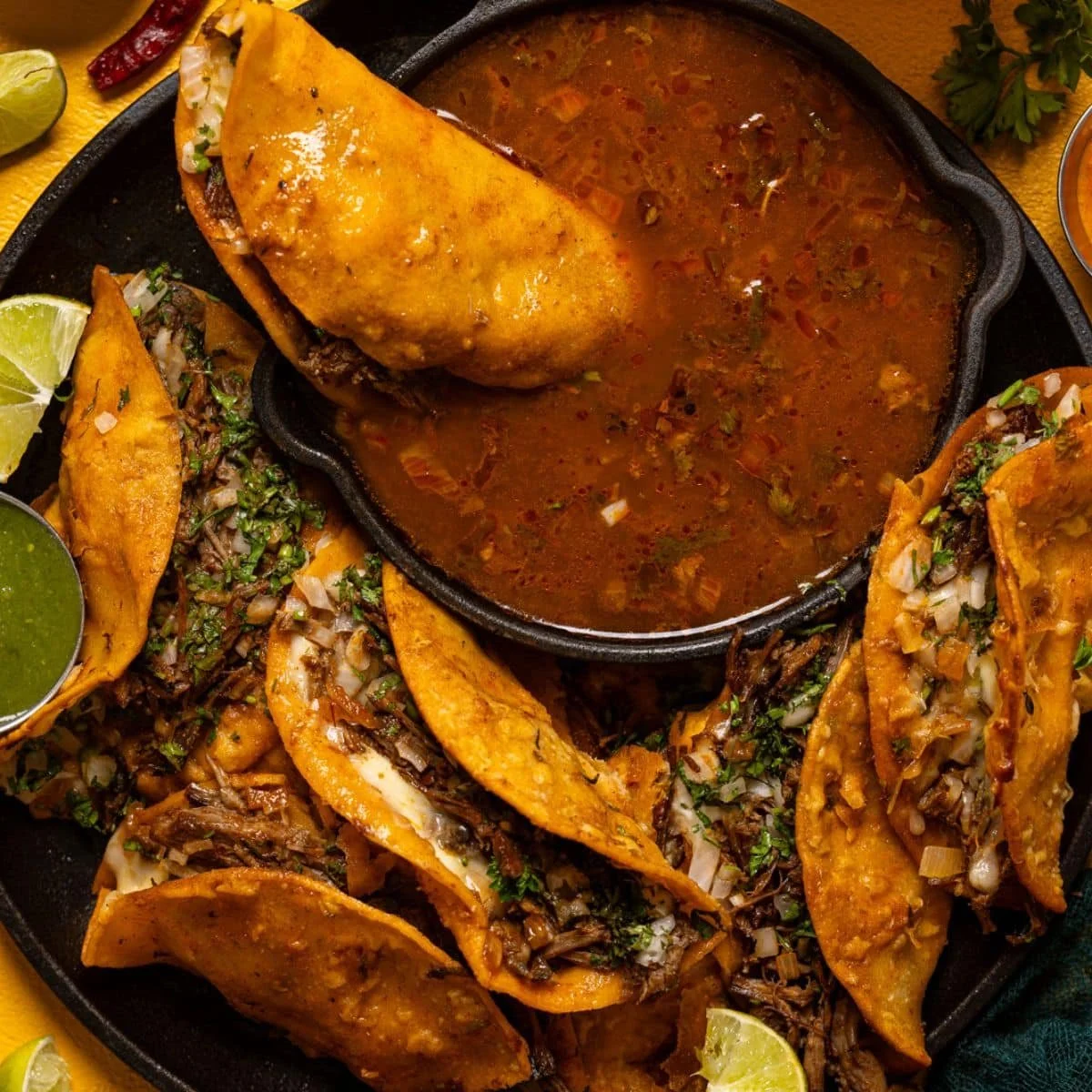
8. Make and serve the consommé. Strain the cooking liquid through a fine-mesh strainer into a small pot. Skim the fat from the surface (or, better, let it cool in the refrigerator overnight and lift the solidified fat cap off). Heat the strained consommé and serve in small cups alongside the tacos — this is not optional. Critical technique tips: - LOW and slow only. Beef cheeks have dense collagen that only converts properly to gelatin over a sustained, gentle cook. High heat produces a tough, grainy result. Eight hours on LOW is not the same as four hours on HIGH.
• Don’t add too much liquid. Barbacoa should be moist and juicy from its own braising juices, not soupy. The meat releases liquid as it cooks; add just enough broth to start the steam environment.
• Shred while hot. Beef cheeks are much easier to shred when warm. The fat and connective tissue that distributed through the meat during cooking is what makes each bite rich — don’t try to remove it.
• The cooking liquid is the consommé. Strain it, serve it hot in small cups alongside the tacos. This is how barbacoa is eaten throughout Hidalgo, and it is one of the best sipping broths in all of Mexican cooking.
Tips, Variations & Substitutions
Texas Sourcing
Beef cheeks (cachete) are the cut that makes this recipe truly authentic. In Texas, H-E-B Plus locations and Fiesta Mart regularly stock them; Central Market almost always has them. Latin carnicerias throughout Austin and San Antonio are your most reliable source — ask for cachete or mejilla de res. Dried guajillo and ancho chiles are stocked at H-E-B in the Hispanic foods aisle or at any Latin grocery store.
Regional Variations
• Hidalgo-style (the original): Whole cow’s head or beef cheeks, wrapped in maguey agave leaves, cooked overnight in a sealed underground pit. By 6 a.m. Sunday morning, barbacoa vendors throughout Hidalgo are already open, and the lines form early.
• Monterrey/Norteño style: Sometimes uses goat or lamb rather than beef, spiced more simply with just chiles, garlic, and oregano. The goat version is particularly excellent.
• Tex-Mex breakfast taco: Shredded beef cheek or brisket served in flour tortillas with a fried egg, refried beans, and salsa. A distinctly Texas-Mexican cultural institution.
• Barbacoa de borrego (lamb): A beautiful Easter variation throughout central Mexico, particularly in Tlaxcala and Hidalgo.
Spice Level Adjustments
• The guajillo-ancho base is mild and fruity — the dish without additional heat is approachable for all palates.
• Mild: Use only 1 chipotle pepper; no additional hot chiles.
• More heat: Add 2–3 dried árbol chiles to the paste, or serve with a fiery roasted tomatillo salsa verde.
Dietary Adaptations
• Gluten-free: The recipe as written is naturally gluten-free. Use corn tortillas.
• Lighter version: Bone-in chicken thighs follow the same process and produce a delicious, lighter result. Reduce slow cooker time to 4–5 hours.
• The consommé alone: Strain, skim, and serve the braising liquid as a sipping broth. Extraordinary on its own.
How to Serve Barbacoa
Barbacoa is, at its heart, street-breakfast food. Resist the urge to overthink the presentation.
The traditional way: - Small, fresh corn tortillas — always doubled up, always warm - Diced raw white onion and fresh cilantro (the only two traditional toppings in Hidalgo) - Lime wedges - Salsa verde or salsa roja - A small cup of hot consommé on the side for sipping
For drinks: agua de jamaica (cold hibiscus water) or a cold Mexican lager like Modelo or Tecate cuts through the richness beautifully. A black coffee alongside the tacos is the Hidalgo-style Sunday morning way.
For a dinner presentation: serve the shredded barbacoa in a clay pot (cazuela) with a pool of consommé, garnished with cilantro and raw onion, surrounded by warm tortillas. The richness of properly made beef cheek barbacoa needs no elaboration. Pile the meat in a tortilla, add a drizzle of salsa and a squeeze of lime. The meat is the story.
The Story Behind Barbacoa
The word barbacoa is older than Mexico, older than the Spanish language on this continent. According to Wikipedia and linguistic historians, it derives from the Taíno people of the Caribbean — the same indigenous group that first encountered Spanish explorers — where barabicu or barbacoa referred to a framework of sticks used for slow-cooking meat over fire. Spanish explorers carried the word (and the concept) to the mainland, where it found its most profound expression in the cooking traditions of Central Mexico.
In Mexico, the technique evolved from a raised wooden rack to an underground pit, lined with heated stones and wrapped in the leaves of the maguey agave plant. The Takeout notes that indigenous people were already slow-cooking in earth pits before the Spanish arrived — the technique merged seamlessly with pre-Columbian traditions of underground-roasting turkey, deer, and fish. When Spanish colonists introduced cattle, the indigenous communities of Hidalgo adapted their pit-cooking method to beef, and barbacoa de res became the Sunday morning tradition it still is.
Wikipedia’s barbacoa entry notes that in Hidalgo specifically, the barbacoa tradition is inseparable from the maguey plant — the same agave used to make pulque (an ancient fermented drink) and eventually tequila and mezcal. The maguey leaves impart a subtle vegetal sweetness to the meat, which is part of what makes Hidalgo-style barbacoa distinct from any other version.
Perhaps the most remarkable footnote in barbacoa’s history is linguistic: the English word “barbecue” traces directly to barbacoa, making this ancient Mexican and Caribbean cooking method the etymological ancestor of one of the most cherished American traditions. As barbacoa historians point out, every backyard grill in America carries a trace of that original Caribbean framework of sticks.
In Texas, barbacoa breakfast tacos on Sunday morning are not just food — they are cultural memory, a weekly connection to Mexican heritage maintained across generations of immigration and change.
Frequently Asked Questions
What cut of beef is used for authentic barbacoa?
Beef cheeks (cachete or mejilla de res) are the most authentic cut for home barbacoa. Traditional barbacoa uses the whole beef head — cheeks, tongue, eyes, and all — but for home cooking, cheeks alone deliver everything you need: extraordinary richness, silky tenderness, and deep flavor. If your local Latin market doesn’t carry them, ask — they can often order them. As a backup, bone-in chuck roast is an excellent substitute.
What is the difference between barbacoa and birria?
Both are slow-cooked beef dishes with chile-based sauces, but they’re distinct. Barbacoa is traditionally associated with Hidalgo and Central Mexico, uses beef cheeks or head, is more simply seasoned, and is steamed rather than braised in a saucy liquid. Birria is from Jalisco, uses goat or beef, features a complex multi-chile braise, and produces a thick, glossy consommé that is central to the dish. Barbacoa flavors are subtler and the beef is more forward; birria is spicier, more complex, and deeply sauced.
Can I make barbacoa in an Instant Pot or pressure cooker?
Yes. Sear the beef cheeks first using the Sauté function, then cook on Manual HIGH pressure for 90 minutes with a 20-minute natural release. The result is excellent — shorter on time but slightly less deep in flavor than the 8-hour slow cooker version. For meal prep, the Instant Pot is a practical shortcut.
Where can I buy beef cheeks in the U.S.?
In Texas, H-E-B, Fiesta Mart, and most Mexican carnicerias (butcher shops) carry beef cheeks, especially on weekends. Ask for cachete or mejilla de res. Outside of Texas, Latin supermarkets (Vallarta, Northgate, La Michoacana) are your best bet. Whole Foods and specialty butchers sometimes carry them. If you can’t find them, ask your butcher to order them — they’re an inexpensive cut that most butchers can source.
Is barbacoa the same as what Chipotle serves?
Not exactly. Chipotle’s barbacoa is a seasoned, slow-braised beef (typically chuck) that takes inspiration from traditional barbacoa but is adapted for mass production. The spice profile is different (more lime, adobo-heavy, more like a Tex-Mex interpretation), and it uses a standard braising cut rather than beef cheeks. It’s a tasty product on its own terms, but it won’t prepare you for the experience of traditional beef-cheek barbacoa from a Sunday-morning stand in Hidalgo.
What is the best salsa to serve with barbacoa tacos?
Salsa verde — roasted tomatillo salsa with serrano or jalapeño — is the classic and most complementary pairing. Its bright acidity cuts through the richness of the beef cheeks beautifully. Salsa roja (roasted tomato and chile) is equally good. Avoid overly sweet or fruit-based salsas; barbacoa needs acidity, not sweetness.