

Carnitas Recipe (Step-by-Step Guide)
Carnitas, the authentic Michoacán kind, aren’t just pork. They’re a technique. And once you understand that technique, it’s far easier than it sounds — even without a copper pot or a wood fire. Here’s how.
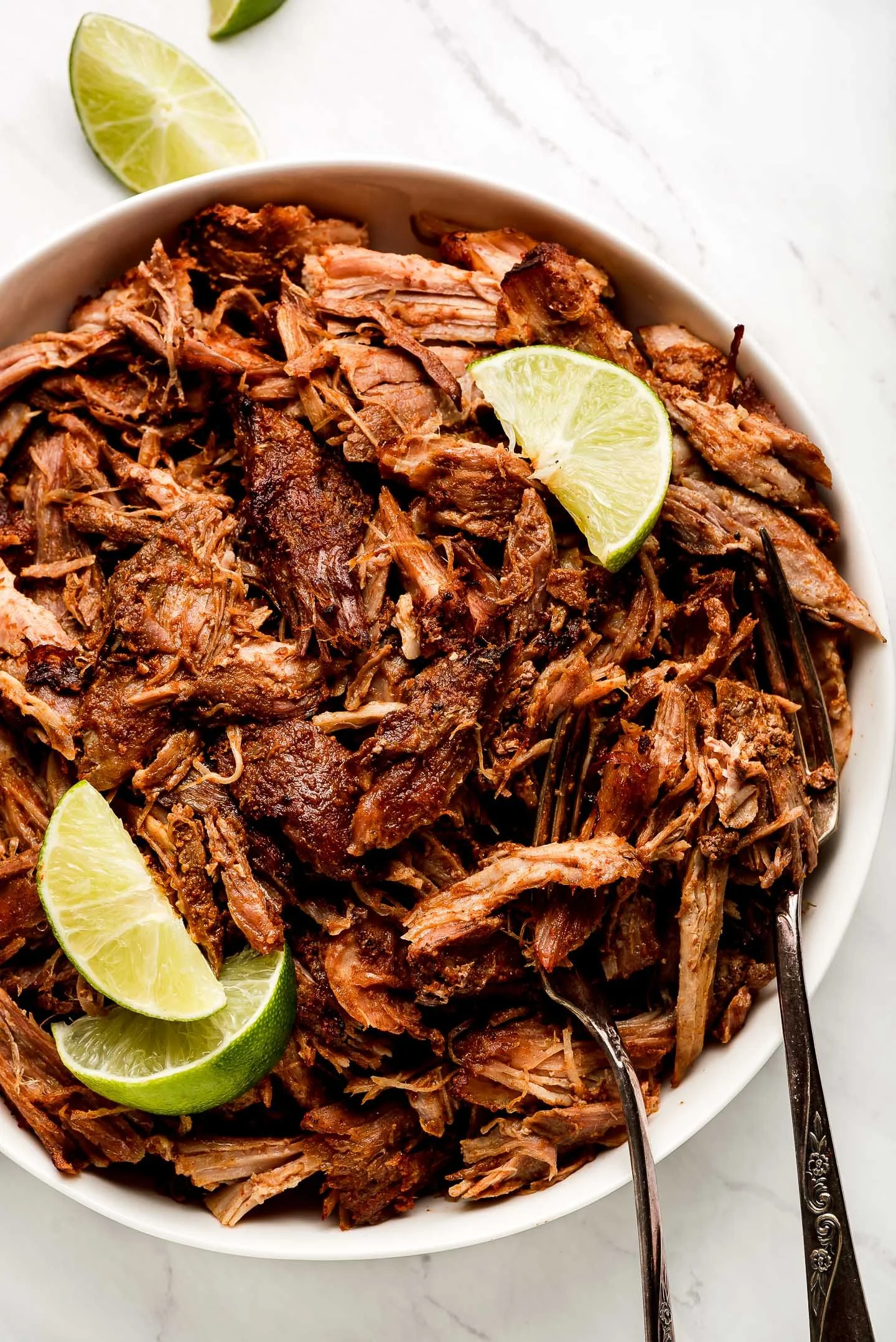
Recipe at a Glance
• Prep time: 15 minutes
• Cook time: 2 hours 30 minutes (oven method) or 45 minutes (pressure cooker + crisp)
• Total time: About 2 hours 45 minutes
• Difficulty: Beginner–Intermediate
• Yield: 8–10 servings (about 4–5 lbs finished meat)
• Course: Main / Antojito
• Region/Origin: Michoacán, Mexico; now a national and international icon
Ingredients
The Pork
• 4–5 lbs (1.8–2.3 kg) bone-in pork shoulder (also sold as pork butt), cut into 3-inch chunks
• 1½ tablespoons kosher salt
Don’t trim the fat. I can’t stress this enough. The fat is both the cooking medium and the source of flavor. Removing it before cooking is how you end up with dry, flavorless carnitas. The fat renders out during cooking — you’re not eating all of it.
For Braising
• 1 cup (225 g) lard (manteca de cerdo), plus more if needed — see substitution note
• Juice of 2 oranges (about ½ cup / 120 ml)
• ½ cup (120 ml) Mexican Coca-Cola or regular Coke
• 1 whole head of garlic, sliced in half horizontally
• ½ white onion, cut into wedges
• 3 bay leaves
• 1 teaspoon ground cumin
• 1 teaspoon dried Mexican oregano
• 1 teaspoon kosher salt
On lard: Lard is the authentic cooking fat for carnitas, and it makes a significant difference in flavor and texture. You can find it at Latin grocery stores (Walmart in Texas often carries it as manteca) or render your own from pork fatback. If you substitute with vegetable oil, use at least half lard if possible — full-oil carnitas will cook correctly but taste noticeably leaner and less glossy.
On the Coca-Cola: This sounds like a culinary crime and tastes like a miracle. The sugar caramelizes onto the pork exterior during the crisping phase, and the phosphoric acid helps tenderize the meat. Mexican Coke — made with cane sugar — is slightly better here, but regular Coke works fine.
For Serving
• Small (4-inch) corn tortillas, doubled up
• White onion, finely diced
• Fresh cilantro, roughly chopped
• Lime wedges
• Salsa verde (the traditional accompaniment — its sharpness cuts the fat perfectly)
• Avocado slices or guacamole
• Pickled jalapeños on the side
We offer catering services in and around Austin, TX and Texas Hill Country. Inquire HERE.
Step-by-Step Instructions
1. Salt the Pork. Cut pork shoulder into rough 3-inch chunks, keeping the bone pieces together and leaving fat attached. Season all surfaces generously with salt. Let the salted pork rest at room temperature for 30 minutes while you gather your other ingredients. This is a small step that makes a real difference in how evenly the pork seasons.
2. Choose Your Vessel. A wide, heavy Dutch oven is the ideal home-kitchen substitute for the copper cazo. You want width over depth — the pork should be in a near-single layer so that every piece has access to the hot fat. A 7-quart Dutch oven works well for a 4–5 pound batch.
3. Bloom the Aromatics in the Fat. Melt the lard in your Dutch oven over medium heat. Add the halved head of garlic, onion wedges, bay leaves, cumin, and oregano directly into the melted fat. Let them sizzle and bloom in the fat for about 2 minutes — you’ll smell the cumin immediately. This infuses the cooking fat with aromatics before the pork even goes in.
4. Add the Pork and Liquids. Place the pork chunks into the seasoned fat, nestling them in a single layer as best you can. Pour the orange juice and Coca-Cola over the pork. The liquid should come roughly halfway up the sides of the pork — add a splash more broth or water if needed. The fat will add more liquid as it renders.
5. Braise Low and Slow. Bring the pot to a steady, moderate simmer over medium heat — not a rolling boil, not a gentle whisper. You want active bubbling that keeps the heat circulating. Cook uncovered for 1.5 to 2 hours, stirring every 20–30 minutes. As the water-based liquids evaporate, the fat will take over as the primary cooking medium. The pork will gradually transition from braising to confit to frying — and it will smell increasingly incredible throughout.
6. Watch the Transition. This is the most important phase of the process. After about 90 minutes, you’ll notice the liquid level dropping significantly. The orange juice and Coca-Cola will have reduced to a sticky, fragrant glaze. What’s left in the pot is mostly fat with the pork pieces frying gently in it. Reduce your heat slightly here and stir more frequently.
7. Crisp the Carnitas. When the liquid is fully evaporated and the pork is frying in pure fat — about 2 to 2.5 hours from the start — increase the heat to medium-high. Stir every few minutes. The pork pieces will begin developing golden-brown, caramelized edges and the kitchen will smell like something from your best food memory. This crisping phase takes 15–20 minutes. Don’t rush it and don’t walk away. > Watch the heat closely during crisping. This is when most home cooks accidentally burn their carnitas. The transition from perfectly golden to scorched happens in under a minute at high heat. If things are browning too fast, pull back to medium.
8. Remove, Drain, and Chop. Use a slotted spoon to transfer the crispy pork to a cutting board or sheet pan. Let drain for 2–3 minutes. Now: chop, don’t pull. Use a knife or two forks to roughly break the pork into bite-sized pieces, preserving the mix of crispy exterior shards and tender interior. Michoacán carnitas are not pulled pork. You want variation — some stringy, tender pieces; some crispy, caramelized chunks. That textural contrast is the whole point.
9. Taste and Serve. Taste the chopped carnitas and add a squeeze of lime and a pinch of flaky salt if needed. Serve immediately in the Dutch oven or transfer to a warm cast-iron skillet or cazuela. Reserve a small ladle of the cooking fat to drizzle over the top just before serving.

Tips, Variations & Substitutions
Texas Sourcing
Lard (manteca de cerdo) is widely available at Texas H-E-B stores — look for it in the cooking oil or baking aisle, often sold as Armour or the H-E-B store brand. Mexican Coca-Cola is stocked at most H-E-B Plus locations in the beverage section, and Latin grocery stores in Austin and San Antonio carry it reliably. For the copper cazo aesthetic, Central Market in Austin sometimes stocks them in their specialty cookware section.
Regional Variations
• Michoacán purist style: Cooked in a copper cazo over a wood fire, using every part of the pig — maciza (shoulder), costilla (ribs), cuerito (skin), and buche (stomach). The different cuts provide variety and different textures on a single taco platter.
• Mexico City taqueria style: Often cooked in enormous visible cazos behind the counter, kept warm in fat, and scooped to order. Mexico City taquerias frequently offer a mix of cuts — let your taquero know which parts you want.
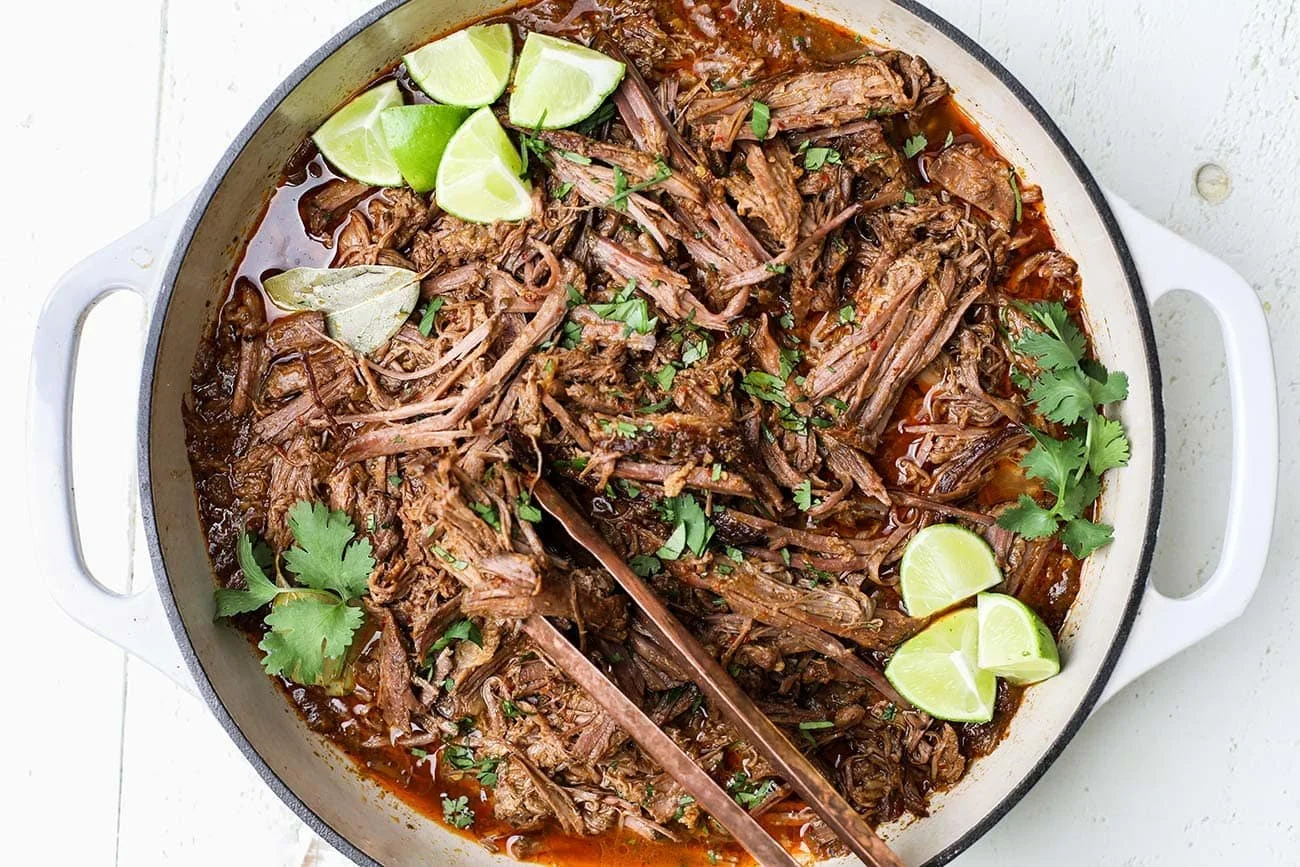
• Carnitas en salsa: Day-two carnitas simmered briefly in green or red salsa. Arguably better than the original. Make extra carnitas specifically for this purpose.
Can I Use a Pressure Cooker or Instant Pot?
Yes — with a significant caveat. Pressure cook the pork in broth, garlic, and aromatics for 45 minutes (no lard needed at this stage). Release pressure, shred or chop the pork roughly, then transfer to a hot cast-iron skillet with a generous amount of lard or oil and fry in batches until crispy. The pressure cooker handles the tenderizing; the skillet handles the crisping. The result is very good, though lacking the slight caramelized depth of the slow-cooked version.
Dietary Notes
• Leaner option: Pork loin cooks faster but produces drier, less tender carnitas. Add extra lard to the crisping pan to compensate for the reduced fat.
• Gluten-free: Naturally gluten-free as written.
• Vegan twist: The braising-then-crisping technique works surprisingly well with jackfruit (use coconut oil instead of lard). It won’t taste like carnitas, but the texture is impressive for a plant-based taco filling.
Serving Suggestions
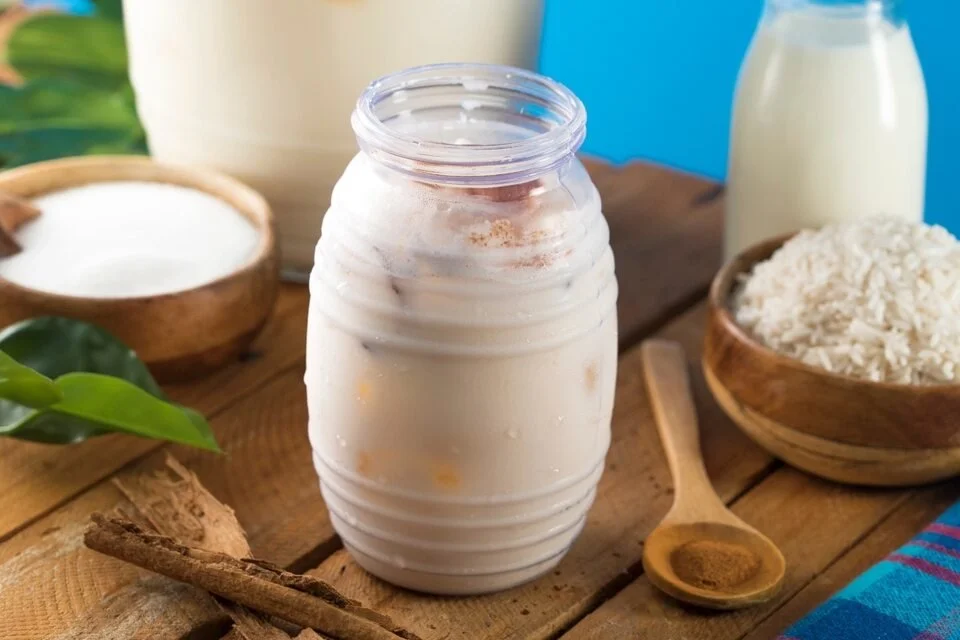
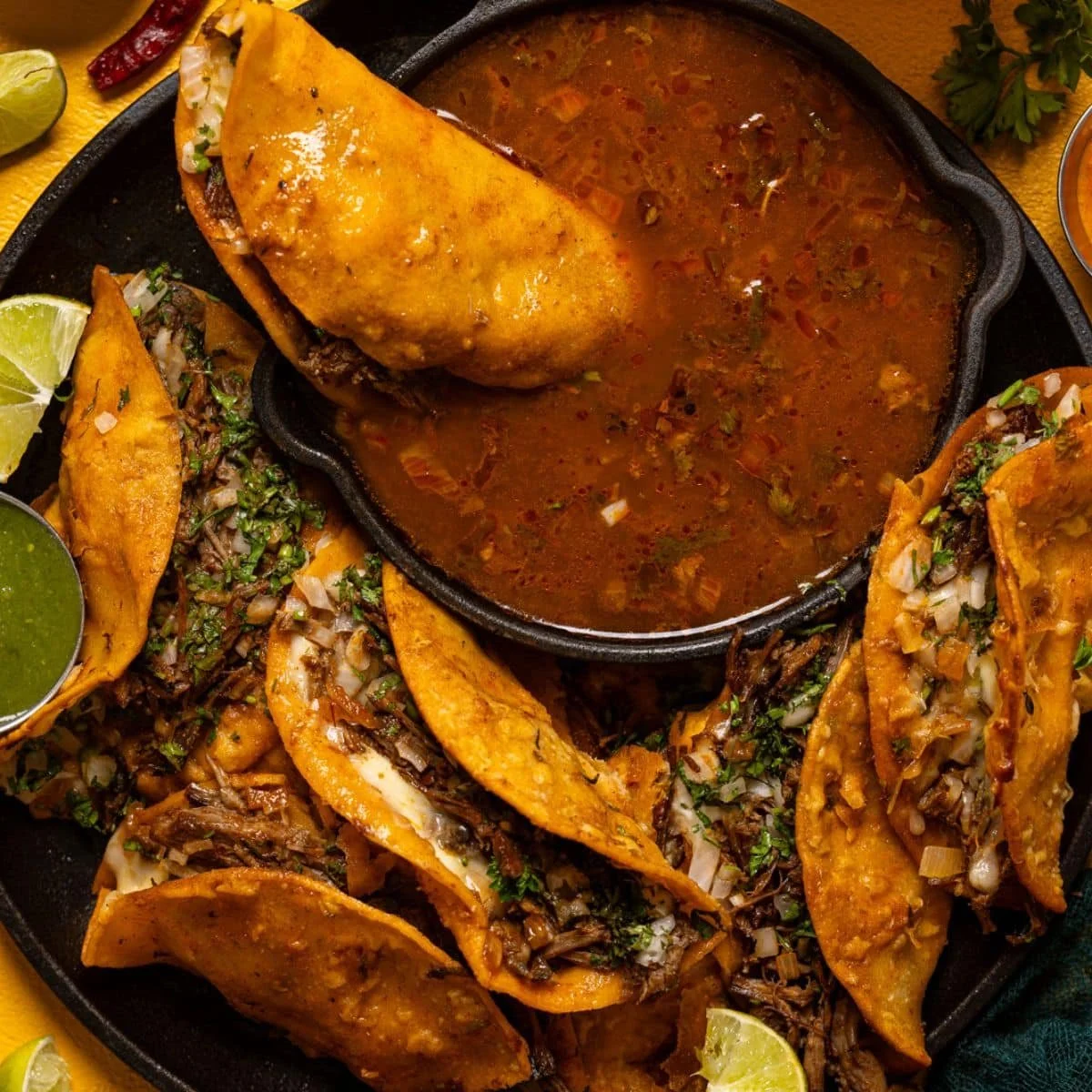
Carnitas are Sunday food, party food, and “I need to feed a crowd and keep everyone happy” food. Drink-wise, a cold Mexican lager (Modelo, Pacifico, or Victoria) is the classic pairing — or make a big pitcher of agua de horchata (cinnamon rice water) for a crowd-pleasing non-alcoholic option that echoes the sweetness in the carnitas. For a taquiza — a taco party — pile the carnitas on a large wooden board or in a warm cazuela and let guests build their own tacos. Set out bowls of diced white onion, fresh cilantro, lime wedges, salsa verde, salsa roja, pickled jalapeños, and guacamole. The tortillas should be warm and soft, doubled up to hold the weight of the filling.
For a sit-down plate, three tacos on a colorful plate alongside a cup of black beans, a small scoop of guacamole, and a pair of lime wedges is the classic comida presentation. A drizzle of reserved cooking fat over the finished plate adds gloss and an extra hit of that caramelized pork flavor.
Carnitas are also extraordinary in tortas (Mexican sandwiches on telera or bolillo rolls), on tostadas, in breakfast burritos, over eggs, or alongside a simple pot of black beans and rice for an everyday weeknight dinner.
Cultural & Historical Notes
Carnitas are inextricably linked to the state of Michoacán in the same way that tequila belongs to Jalisco. According to Mexican culinary historians, the city of Quiroga in Michoacán is widely considered the undisputed carnitas capital of Mexico — its main street is lined with vendors selling carnitas by the kilo, wrapped in wax paper, from early morning until they sell out, which is usually before noon.
The technique itself — submerging pork in fat and cooking long and slow until tender — mirrors the French confit method, though it arrived in Mexico by a completely different path. Spanish colonizers brought domesticated pigs to Mexico in the early 1500s, and lard quickly became an abundant, central cooking fat throughout colonial Mexican cuisine. The copper cazo used for carnitas is itself a Michoacán cultural artifact: the indigenous copper-smithing tradition of Santa Clara del Cobre, a town that has produced copper cookware for centuries, supplies the distinctive cauldrons still used in carnitas restaurants today.
Carnitas also democratized pork consumption. Originally a communal preparation made in large quantities for weekly markets and festivals, they allowed entire communities to eat well from a single animal — a tradition that continues at Mexican tianguis and flea markets across both Mexico and the United States every weekend.
Frequently Asked Questions
What cut of pork is best for carnitas, and can I use pork loin? Bone-in pork shoulder (also called pork butt) is the best cut — it has the right ratio of fat and connective tissue that, when cooked slowly, becomes tender and flavorful. Pork loin is too lean; it will cook faster but produce dry, stringy results, and the crisping phase is harder to achieve without adequate fat. If you use loin, supplement with extra lard in the crisping pan.
Do I really need lard? Can I use vegetable oil instead? You can use vegetable oil, but lard makes a meaningful difference in flavor, texture, and the glossy finish of the finished meat. Lard has a higher smoke point than butter, a clean pork flavor that complements the meat, and a richness that vegetable oil simply doesn’t have. Lard is increasingly available — check the baking aisle of Latin grocery stores, or look for Armour brand lard at most Texas supermarkets.
What is the difference between carnitas and pulled pork? The method, the fat, and the finish. Pulled pork (the American BBQ style) is smoked or slow-cooked in a moist, often sweet environment and then pulled into strands. Carnitas are braised in fat and then crisped — they should be chopped, not pulled, with a mix of textures. The flavor profiles are also very different: carnitas have the brightness of citrus, the slight sweetness of caramelized cola, and the depth of rendered fat; pulled pork has smoke and vinegar and spice rub.
Can I make carnitas in a slow cooker? Yes, but you’ll need to finish them on the stovetop. Cook on low for 8 hours with orange juice, garlic, onion, and spices. Drain and chop the pork, then fry in batches in a cast-iron skillet with lard until crispy. Never skip the crisping step — soft slow-cooker pork served as carnitas is missing everything that makes carnitas worth eating.
How do I reheat carnitas and keep them crispy? The best method is a hot cast-iron skillet with just a little oil or reserved carnitas fat. Spread the pork out without crowding and let it sit undisturbed for 2–3 minutes before stirring — this re-crisps the edges. Avoid the microwave, which steams the meat and destroys the texture.
Why does my carnitas come out dry? Two likely causes: you trimmed too much fat before cooking, or you rushed the braising phase and the collagen didn’t have time to fully convert to gelatin. Carnitas should be cooked until the pork is fully fall-apart tender before the crisping phase begins. If the meat is still a little tough when the liquid evaporates, add a splash of broth, cover the pot, and cook another 20–30 minutes before proceeding.