

Cochinita Pibil Recipe (Step-by-Step Guide)
The first bite was something I can only describe as specific. The flavor of achiote — earthy, slightly floral, with a mineral depth unlike anything in a European spice cabinet — mixed with the sour brightness of bitter orange. The pork was so tender it had essentially become one with the braising liquid. The pickled onions cut through the richness with a hot, acidic snap. I stood there at that market stall and ate three of those tacos and then bought a fourth.
I’ve been chasing that flavor ever since, right here in my Hill Country kitchen. And the great news is this: cochinita pibil is secretly one of the most manageable dishes in all of Mexican cooking. The oven and the marinade do almost all the work. You don’t need a backyard pit. You don’t need to fly to the Yucatán. You just need to plan ahead, trust the process, and let time do what time does best. Let’s get into it.
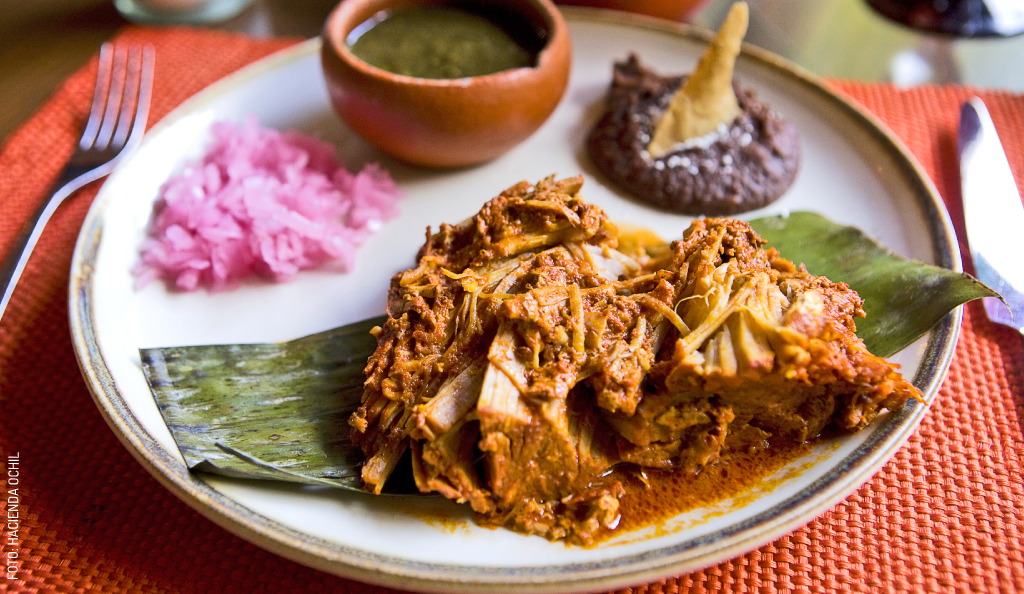
Recipe at a Glance
• Prep time: 20 minutes (plus at least 4 hours marinating — overnight strongly preferred)
• Cook time: 3.5–4 hours (oven); 8 hours (slow cooker)
• Total time: 4–12 hours depending on method
• Difficulty: Beginner-friendly — mostly marinade and patience
• Yield: 8–10 servings
• Course: Main / Taco filling
• Region/Origin: Yucatán Peninsula, Mexico
Ingredients
For the Achiote Marinade (Recado Rojo)
• 3.5 oz (100 g) achiote paste (recado rojo) — Goya and El Yucateco brands are widely available in Texas
• ½ cup (120 ml) bitter orange juice (naranja agria) — see substitution note below
• 4 garlic cloves, peeled
• 1 teaspoon dried Mexican oregano
• ½ teaspoon ground cumin
• ½ teaspoon freshly ground black pepper
• 2 tablespoons white vinegar
• 1½ teaspoons kosher salt
On achiote paste: This is the soul of the dish — don’t try to substitute it with achiote powder alone. The paste (recado rojo) contains the correct ratio of annatto, garlic, cumin, and other spices ground together to the right texture. Find it in the Latin foods aisle, at Latin grocery stores, or easily online. It keeps for months in the refrigerator after opening.
On bitter orange (naranja agria): This is the hardest ingredient to source fresh. If you can find it (Mexican and Caribbean grocery stores often carry it), use it — nothing else is quite the same. If not, mix equal parts fresh orange juice and fresh lime juice. Some cooks add a small splash of grapefruit juice for additional bitterness. Bottled Seville orange juice, available at some specialty stores, is also an excellent substitute.
For the Pork
• 4–5 lbs (1.8–2.3 kg) bone-in pork shoulder
• Kosher salt
Bone-in vs. boneless: Bone-in gives richer flavor and helps the pork stay moist during the long cook. Boneless is fine and makes shredding easier — your call.
For Wrapping
• 4–6 banana leaves, fresh or frozen (thawed if frozen, wiped clean with a damp cloth)
• Heavy-duty aluminum foil as backup
On banana leaves: They add a subtle, grassy, lightly smoky flavor that is genuinely part of the dish’s character. Find them frozen at Latin, Asian, or Caribbean grocery stores. If you truly cannot find them, foil works — the pork will still be incredibly flavorful, just without that aromatic note. Before using, pass each leaf briefly over a gas flame or hot skillet until it turns slightly darker green and fragrant — this makes it pliable and activates the aroma.
For the Habanero Pickled Onions (Cebollas Curtidas)
• 1 large red onion, thinly sliced into half-moons
• 1–2 fresh habanero chiles, thinly sliced (seeds in for heat, seeds removed for moderate spice)
• Juice of 3 limes
• ½ teaspoon fine sea salt
• Optional: a pinch of dried Mexican oregano
For Serving
• Small (4-inch) corn tortillas, warmed
• Black beans (frijoles negros), either whole or refried
• Fresh cilantro and lime wedges
We offer catering services in and around Austin, TX and Texas Hill Country. Inquire HERE.
Step-by-Step Instructions
1. Make the Achiote Marinade. Combine the achiote paste, bitter orange juice (or substitute), garlic, oregano, cumin, black pepper, vinegar, and salt in a blender. Blend on high for 60–90 seconds until completely smooth. The marinade should be a deep, vivid orange-red with a smooth, pourable consistency — it will smell earthy, faintly floral, and citrusy all at once, a distinctly Yucatecan aroma unlike anything else in your kitchen. Taste and adjust salt.
2. Score and Marinate the Pork. Using a sharp knife, cut deep slits into the pork shoulder — about 1 inch deep — all over the surface, including between the muscle groups if using bone-in. This allows the marinade to penetrate deeply into the meat rather than sitting on the surface. Rub the marinade aggressively into every surface and every cut. Place in a large zip-lock bag or a covered container. Refrigerate for a minimum of 4 hours — overnight is better, and 24 hours is ideal. The longer it marinates, the more deeply the achiote flavor penetrates.
3. Prepare the Banana Leaves. If using frozen banana leaves, thaw completely and wipe dry. Pass each leaf directly over a gas burner on medium flame for a few seconds per side — or press against a hot, dry skillet. It will change color from bright green to a slightly darker, olive green, release a grassy aroma, and become pliable. This step also eliminates any bacteria on the surface and is important for both safety and flavor.
4. Line the Baking Dish. Preheat your oven to 325°F (160°C). Use a deep baking dish, Dutch oven, or roasting pan. Line it with the prepared banana leaves, overlapping the leaves generously so there are no gaps and the edges drape over the sides of the dish — you’ll fold them over to enclose the pork. Pour any marinade remaining in the bag over the pork.
5. Wrap and Seal. Place the marinated pork on the banana-leaf lining. Fold the overhanging banana leaves over the pork to enclose it as completely as possible. Cover tightly with a double layer of heavy-duty foil, pressing it down around the edges to seal. You want to create a steam environment that keeps all the moisture and flavor inside.
6. Low and Slow in the Oven. Bake at 325°F (160°C) for 3.5 to 4 hours. The pork is done when it offers zero resistance to a fork inserted at the thickest point — it should fall apart when pressed. Internal temperature should reach at least 200°F (93°C) for true shreddability; at 195°F it’s technically safe but won’t shred the way it should.
7. Make the Pickled Onions. While the pork cooks, combine the sliced red onion, habanero, lime juice, and salt in a bowl. Stir, press the onions down into the liquid, and let sit at room temperature for at least 30 minutes before serving. The onions will turn a vivid pink and soften slightly while retaining their crunch. These keep in the refrigerator for up to a week and improve with time.
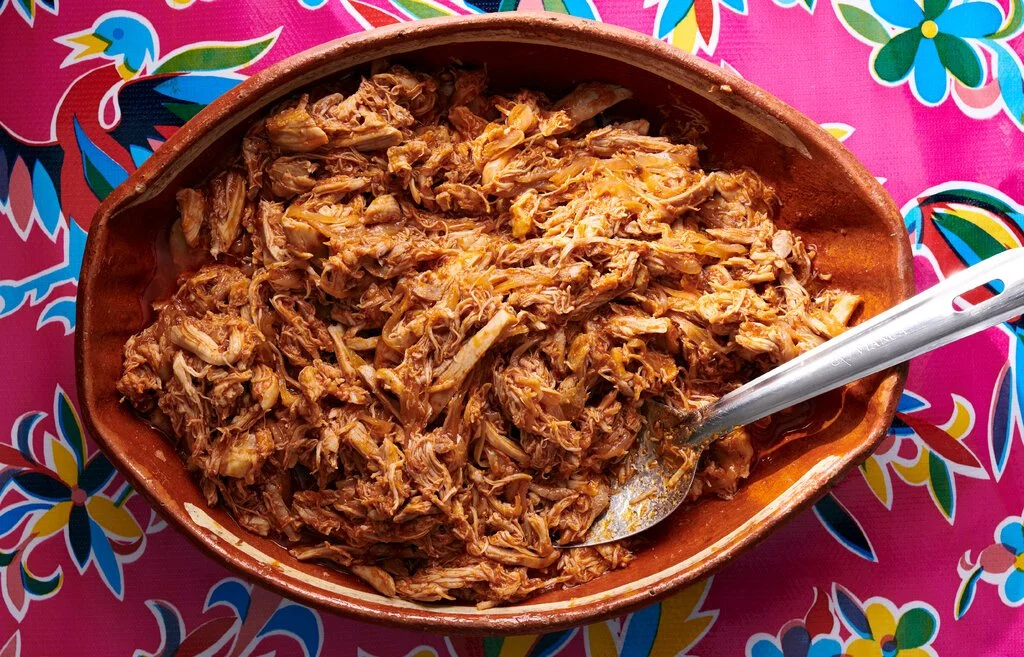
8. Shred and Return to Juices. Remove the pork from the oven and let rest, still wrapped, for 15 minutes. Open the banana leaf package and carefully pour all the cooking juices into a bowl — don’t lose a drop of this liquid. Shred the pork using two forks, discarding bones. Return the shredded pork to the baking dish and ladle the cooking juices back over it, stirring to coat. The pork should be moist, glossy, and stained that signature orange-red.
9. Warm the Tortillas and Serve. Warm corn tortillas directly on a comal, cast-iron skillet, or gas flame. Pile the cochinita pibil into the doubled tortillas, top with pickled habanero onions, cilantro, and a squeeze of lime. > Slow cooker method: Follow the same marinade and wrapping steps. Cook on LOW for 8 hours. The pork will produce more liquid — drain excess braising liquid into a saucepan and reduce on the stovetop for 10 minutes until concentrated, then stir it back into the shredded pork.
Tips, Variations & Substitutions
Texas Sourcing
Achiote paste (recado rojo) is stocked at most H-E-B stores in Texas in the Latin foods aisle — look for the Goya or El Yucateco brand. Frozen banana leaves are usually available at Latin, Asian, and Caribbean grocery stores in Austin, San Antonio, and Houston. Bitter orange juice (naranja agria) can sometimes be found at Mexican grocery stores or ordered online; if you’re in San Antonio, many of the Latin markets near downtown carry it bottled.
Regional Variations
• Pollo pibil: The same achiote marinade and banana-leaf wrapping technique applied to chicken thighs. Reduce oven time to 1.5–2 hours at 350°F (175°C). Equally authentic in the Yucatán — pibil refers to the cooking method, not the protein.
• Allspice addition: Some Mérida cooks add a small pinch of ground allspice (pimienta gorda) to the marinade — it adds warmth and complexity that echoes the Maya origins of the spice blend.
• Pineapple juice accent: A small splash of pineapple juice in the marinade adds brightness; non-traditional but delicious.
Spice Adjustments
The pork itself is mild — all the heat lives in the cebollas curtidas. For a gentler experience, use less habanero (or substitute jalapeño) in the pickled onions. For heat lovers, blend a whole roasted habanero directly into the achiote marinade — the heat will permeate every shred of pork.
Dietary Adaptations
• Gluten-free: As written.
• Lighter version: Bone-in chicken thighs work beautifully with the same marinade; reduce cook time significantly.
Serving Suggestions
In the Yucatán, cochinita pibil is Sunday food. Pair it with a cold agua de jamaica (hibiscus water) — the tartness cuts through the richness of the pork perfectly — or serve an ice-cold Modelo Especial for a classic weekend spread. It is served on small, doubled corn tortillas — nothing else is appropriate as a vessel. The cebollas curtidas (habanero pickled onions) are not optional; their acidity and heat are the essential counterpoint to the richness of the pork. Black beans (frijoles negros) are the traditional side — either whole in their broth or spread directly on the tortilla before the pork goes on.
For a gathering, serve the shredded pork in a cazuela or Dutch oven lined with a banana leaf for visual drama. The vivid orange-red pork against the purple pickled onions is genuinely beautiful — one of the best-looking taco spreads you can put on a table. Set out extra lime wedges, cilantro, and a small bowl of habanero salsa for those who want even more heat.
Cultural & Historical Notes
The name cochinita pibil contains its entire history. Pibil comes from the Maya word pib, meaning “buried” — a reference to the underground pit oven (pib) that Maya cooks have used for thousands of years, long before Spanish colonization brought pigs to the Yucatán. According to food historians andanthropologists, the Maya pib was used for cooking deer, turkey, and other meats wrapped in leaves; when the Spanish introduced pigs in the 16th century, Yucatecan cooks adapted the ancient pit-cooking technique to the new animal, and cochinita pibil was born.
Achiote — annatto seeds, Bixa orellana — has been part of Maya cuisine and culture since pre-Columbian times, used both as a flavoring and as a ceremonial red body paint. The Yucatán Peninsula’s geographic isolation from central Mexico for much of its history created one of the most distinct regional food cultures in the world — one that feels almost like a separate culinary country. The cuisine of the Yucatán draws from Maya tradition, Spanish colonialism, and Caribbean influences in proportions you simply don’t find anywhere else in Mexico.
In the Yucatán, cochinita pibil is not everyday food. It is Sunday food, celebration food, the kind made for weddings and baptisms. Markets in Mérida open early specifically for it — lines form before eight in the morning, and vendors sell out by noon.
Frequently Asked Questions
Can I make cochinita pibil without banana leaves? Yes — aluminum foil is an acceptable substitute. The pork will still be delicious and deeply flavored from the achiote marinade. What you lose is the subtle grassy, smoky aroma that banana leaves impart to the cooking environment. If you can find banana leaves (check Latin, Asian, or Caribbean grocery stores; they’re often sold frozen), it’s worth the minor effort.
What is the difference between cochinita pibil and carnitas? Both are slow-cooked pork dishes central to Mexican cuisine, but they come from entirely different culinary traditions and taste nothing alike. Cochinita pibil is Yucatecan — marinated in achiote and bitter orange, pit-cooked (or oven-roasted), tender and falling apart, with a vivid citrus-earthiness. Carnitas are Michoacán — cooked in lard or their own fat until crispy-edged and caramelized, with a rich, savory, slightly sweet flavor. Think of them as cousins from opposite ends of Mexico.
Where can I buy achiote paste in the United States? In Texas, most H-E-B stores carry it in the Latin foods aisle. Latin grocery stores nearly always stock it. Goya and El Yucateco are the two most common brands. It is also easily ordered online through Amazon — search for “achiote paste recado rojo.” Once you have it, it keeps for months in the refrigerator.
Can I make cochinita pibil in an Instant Pot or pressure cooker? Yes. Marinate the pork as directed. In the Instant Pot, use the Sauté mode to briefly sear the pork on both sides (optional but adds depth), then add the remaining marinade and ½ cup water. Pressure cook on HIGH for 60 minutes, followed by a natural release of 20 minutes. The result is excellent — slightly less nuanced than the long oven method but genuinely delicious and dramatically faster.
How do I store and reheat leftovers? Store the shredded pork in its braising juices in an airtight container in the refrigerator for up to 5 days, or freeze for up to 3 months. To reheat, warm in a saucepan over medium heat with a splash of water or chicken broth, stirring to separate the shreds. The pickled onions keep separately in the refrigerator for up to a week and are good on anything.
Can I use a different cut of pork? Pork shoulder is strongly recommended — its fat content and connective tissue are what give the dish its characteristic richness and shreddability. Pork loin will cook faster but will be drier and lack the silky texture. Pork ribs can be added alongside the shoulder for richness and variety. Bone-in is best for flavor; boneless is convenient — choose based on your priorities.