

Tres Leches Cake Recipe (Step-by-Step Guide)
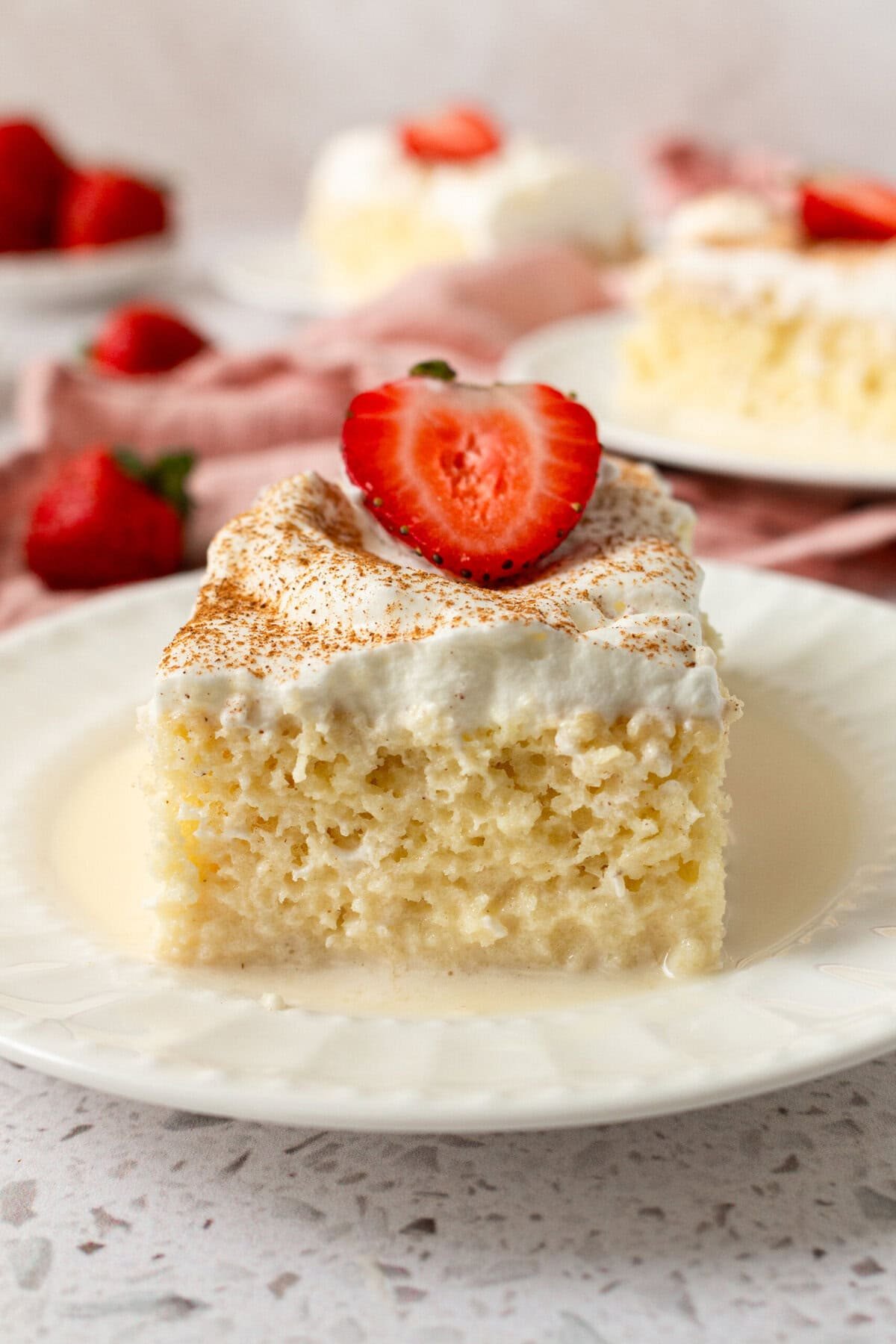
Tres leches (literally “three milks”) is a light, airy sponge cake soaked entirely in a mixture of sweetened condensed milk, evaporated milk, and heavy cream until gloriously, impossibly saturated — not soggy, not wet, but deeply moist in a way that a normal cake never achieves. The topping is a simple lightly sweetened whipped cream with a generous dusting of cinnamon. It is served cold, directly from the pan, in generous squares. It is beloved across all of Mexico and Latin America. And it gets better overnight.
The genius of this cake is that it is a make-ahead recipe that actually improves with time. Make it the day before your party, refrigerate it, frost it the morning of, and show up to the table with the best dessert in the room. Let me show you how.
Recipe at a Glance
• Prep time: 30 minutes
• Cook time: 25–30 minutes
• Total time: About 1 hour active (plus 4–12 hours soaking and chilling)
• Difficulty: Beginner–Intermediate
• Yield: 15–18 servings (9x13 / 23x33 cm pan)
• Course: Dessert
• Region/Origin: Nationwide Mexico / Latin America
Ingredients
For the Sponge Cake
• 1½ cups (190 g) all-purpose flour, sifted
• 1½ tsp baking powder
• ¼ tsp fine salt
• 5 large eggs, separated, at room temperature (The separated eggs are the structural key — do not skip this step. The whipped whites create the airy, porous sponge that absorbs the milk soak without collapsing.)
• 1 cup (200 g) granulated sugar, divided (¾ cup for yolks, ¼ cup for whites)
• ⅓ cup (80 ml) whole milk
• 1 tsp pure vanilla extract
• Butter and flour for the pan
For the Three-Milk Soak (Tres Leches)
• 1 can (14 oz / 397 g) sweetened condensed milk
• 1 can (12 oz / 354 ml) evaporated milk
• 1 cup (240 ml) heavy whipping cream (Do not substitute with half-and-half or whole milk — the fat in the heavy cream prevents the soak from making the cake watery and keeps it rich and luscious)
• Optional: 2 tbsp dark rum or brandy (adult version — adds wonderful complexity without tasting boozy)
• Optional: 1 tsp vanilla extract
For the Whipped Cream Topping
• 2 cups (480 ml) heavy whipping cream, very cold
• 3 tbsp powdered sugar (adjust to taste)
• 1 tsp pure vanilla extract
For Garnish
• Ground cinnamon, for dusting
• Fresh strawberries, sliced (optional but highly recommended — the fresh fruit cuts through the richness perfectly)
• Maraschino cherries (optional, for a more classic Mexican-restaurant presentation)
We offer catering services in and around Austin, TX and Texas Hill Country. Inquire HERE.
Step-by-Step Instructions
1. Preheat the oven to 350°F (175°C). Grease a 9x13-inch baking pan generously with butter, then dust with flour and tap out the excess. Set aside.
2. Beat the egg yolks and sugar. In a large mixing bowl, beat the egg yolks with ¾ cup of the sugar using a hand mixer or stand mixer on medium-high until the mixture is pale, thick, and falls in ribbons from the beater — about 3–4 minutes. Add the whole milk and vanilla and mix on low until incorporated.
3. Fold in the flour. Sift the flour, baking powder, and salt together directly over the egg yolk mixture. Using a rubber spatula, fold gently until just combined — no streaks of dry flour should remain. The batter at this stage will be thick, almost like a soft paste, and should smell faintly sweet and eggy. Do not overmix. A few gentle strokes are all you need.
4. Beat the egg whites to stiff peaks. In a separate, completely clean bowl (any fat will prevent the whites from whipping), beat the egg whites with the remaining ¼ cup of sugar until they form stiff, glossy peaks that stand straight up when the beater is lifted. The whites should look like thick, shiny meringue.
5. Fold whites into the batter. Add about one third of the beaten whites to the flour-yolk mixture and fold firmly — this first addition lightens the batter and makes folding in the rest easier. Add the remaining whites in two additions, folding gently each time with a large spatula, lifting from the bottom and turning over the top. Stop while you can still see a few small streaks of white — they will disappear in the pan. Preserving the volume is far more important than perfect uniformity at this stage.
6. Bake. Pour the batter into the prepared pan and spread evenly. Bake 25–30 minutes until the top is golden, the cake has pulled slightly from the edges, and a toothpick inserted in the center comes out clean. Do not open the oven door in the first 20 minutes.
7. Cool the cake completely. This step is non-negotiable. Let the cake cool in the pan on a wire rack for at least 45 minutes to 1 hour until it is completely at room temperature — it should feel no warmer than the back of your hand when you touch the surface. A warm cake will disintegrate when you pour the soak over it.
8. Poke the cake. Using a fork, a wooden skewer, or a chopstick, poke holes all over the surface of the cooled cake — aim for holes about every ½ to 1 inch, going all the way to the bottom of the cake. Be generous. These holes are the channels through which the milk travels, and the more channels you create, the more evenly the cake soaks.
9. Make and pour the three-milk soak. Whisk together the condensed milk, evaporated milk, heavy cream, and optional rum and vanilla until combined. Pour the mixture slowly and evenly over the surface of the cake, starting at the edges and working toward the center. The cake will absorb the liquid almost immediately in some areas and pool in others — use a spoon to push the pooled soak back toward any dry-looking patches on the sides. If the pan starts to overflow, stop and wait — the cake will absorb it and you can add more. Use all of the soak.
10. Refrigerate. Cover the pan tightly with plastic wrap and refrigerate for at least 4 hours. Overnight (10–12 hours) produces a dramatically better result — the soak distributes completely and evenly throughout the cake, and the flavors deepen significantly. This is the recipe’s superpower.
11. Make the whipped cream topping. Just before serving (or up to 2–3 hours ahead), beat the cold heavy cream with powdered sugar and vanilla to medium-stiff peaks — you want the cream to hold its shape when spread but still look soft and billowy, not stiff and dry. Spread over the entire surface of the soaked cake in an even layer.
12. Garnish and serve. Dust the whipped cream generously with ground cinnamon — the cinnamon will settle into the cream and perfume each bite. Arrange sliced fresh strawberries across the top if using. Cut into squares and serve cold from the pan, with a spoon to scoop up any extra milk that has pooled.
Technique Tips: - The sponge cake must be fully cooled before soaking — a warm cake breaks down and turns to mush rather than absorbing. - Pour the soak slowly and patiently; do not try to rush the absorption. The cake takes time to drink the liquid in. - Add the whipped cream topping no more than 2–3 hours before serving so it stays fresh and does not weep. If making the night before, apply the topping the morning of serving. - The longer the cake refrigerates before cutting, the more evenly soaked and flavorful it becomes. A 12-hour rest is noticeably better than a 4-hour rest.


Tips, Variations & Substitutions
Texas Sourcing
All three milks (sweetened condensed, evaporated, and heavy cream) are pantry staples at every H-E-B in Texas. For the optional rum addition, look for a good dark rum at any H-E-B Plus or Total Wine. Cajeta — the goat’s milk caramel used in one of the variations below — is stocked at most H-E-Bs in the Mexican foods aisle, and Central Market usually carries imported Celaya cajeta.
Regional Variations
Tres leches varies meaningfully across Mexico and Latin America. In Oaxaca, some bakers substitute one of the milks with mezcal cream — warm, smoky, and extraordinarily complex. In Nicaragua, where the cake also has deep roots, the topping is often a toasted meringue rather than whipped cream, which is lighter and has a slightly marshmallowy quality. Some Mexican families finish the whipped cream layer with a drizzle of cajeta — goat’s milk caramel — which adds a deeply savory-sweet counterpoint to the cream and cinnamon.
In Mexican-American communities in Texas, it is common to see tres leches with a layer of sliced strawberries between the whipped cream and the cake surface — this “strawberry tres leches” version is now perhaps more commonly encountered than the plain version at bakeries and celebrations.
Spice Variations
Ground cinnamon dusted over the top is traditional and correct. For a warming, surprising adult variation, mix equal parts ground cinnamon and the tiniest pinch of cayenne for the final dusting — the heat blooms slowly and works beautifully against the cold sweetness.
Dietary Adaptations
• Dairy-free: Use coconut condensed milk and coconut evaporated milk for the soak, and full-fat coconut cream (refrigerated overnight so the solids separate) whipped for the topping. This produces a coconut tres leches that is genuinely excellent in its own right — slightly tropical, rich, and aromatic. The sponge itself is already dairy-free.
• Gluten-free: A 1:1 GF all-purpose flour blend (King Arthur measure-for-measure, Bob’s Red Mill 1:1) works well in this recipe. The dense, saturated structure of tres leches is forgiving of GF flour substitutions. Verify baking powder is GF.
• Reduced sugar: Reduce the sweetened condensed milk to ¾ of a can and supplement with more evaporated milk to keep the volume of the soak the same. The cake will be noticeably less sweet but still delicious.
• Individual cups: Cube the cooled cake and layer in individual glasses with the milk soak poured over, topped with whipped cream and cinnamon. This “tres leches cups” version is charming for parties and eliminates the slicing and serving complexity of a large pan.
Serving Suggestions
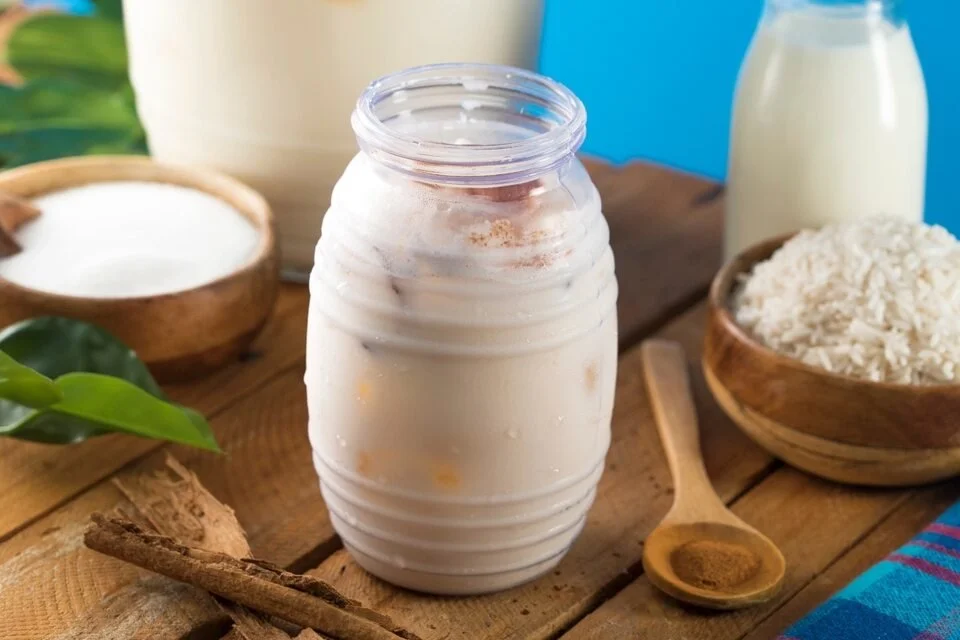
What to drink: Tres leches is rich and sweet — it calls for something that cuts through. Café de olla is the traditional celebration pairing. A cold horchata also works beautifully, or simply strong black coffee. For adults, a Kahlúa on ice alongside is a wonderful indulgence.
Tres leches is a pan dessert — a 9x13, served in squares, passed around the table. It is not a pedestal cake or a layered confection. Embrace the generous, family-style spirit of it. Cut big squares, spoon the pooled milk that has settled at the edges of the pan back over each slice, and serve cold.
Alongside tres leches, the best pairings are coffee and contrast. Café de olla — Mexican spiced coffee brewed with cinnamon and piloncillo — is the classic partner. A strong espresso or a cortado does the same work. The bitterness cuts through the cream and makes each bite of the cake taste fresher.
At a Mexican dessert spread alongside flan and buñuelos (fried pastry dusted with sugar and cinnamon), tres leches reads as the most approachable and crowd-pleasing of the three — and it almost always runs out first. If you are bringing one dessert to a party, bring this.
Cultural & Historical Notes
The origin of tres leches cake is a genuinely charming debate that has never been definitively settled. Nicaragua, Mexico, Cuba, Puerto Rico, and several other Latin American countries all point to themselves as the birthplace. What food historians broadly agree on is that the recipe spread across Latin America during the mid-20th century, significantly accelerated by a phenomenon unusual in culinary history: it was printed on the labels of Nestlé condensed milk cans and Carnation evaporated milk cans distributed across Latin America. Home cooks found the recipe while opening pantry staples, and it spread organically through home kitchens in every direction.
This is a crucial piece of culinary history. As food journalist Gustavo Arellano has written, the enormous influence of industrial canned milk products on 20th-century Latin American home cooking cannot be overstated. Before widespread refrigeration — which arrived in rural and working-class Latin American homes far later than in the United States — canned condensed and evaporated milks were pantry-stable, affordable, and reliable sources of dairy. They changed what was possible in home kitchens. Flan, tres leches, arroz con leche, key lime pie variations — entire categories of Latin American desserts were built around or transformed by canned milk.
The sponge cake technique itself is older, with Spanish and French baking roots — the génoise and bizcocho traditions that arrived in the Americas with European colonizers in the 16th and 17th centuries. The innovation that created tres leches was the insight — or happy accident — of soaking that porous sponge in the rich, sweet mixture. The result is structurally simple but flavor-profound: a cake that is not merely moist but saturated, that has absorbed its accompaniment rather than merely sitting beside it.
In Mexico today, tres leches is thoroughly woven into celebration culture. According to culinary historian Enrique Olvera, it appears at virtually every significant personal celebration — birthdays, baptisms, first communions, quinceañeras, baby showers — as well as at office parties and neighborhood gatherings. It is the great democratic dessert: one large pan, many servings, maximum joy per dollar spent.
Frequently Asked Questions
Why is my tres leches cake soggy instead of moist? The difference between moist and soggy tres leches usually comes down to one of three things: the cake was warm when the soak was added (warm cake breaks down and absorbs too aggressively), the sponge was overmixed (dense cake doesn’t create the right structure for proper absorption), or the wrong milks were used (substituting lower-fat milks for heavy cream makes the soak watery rather than rich). Make sure the cake is completely cool, the sponge was mixed gently, and the full heavy cream is in the soak.
Can I use a box cake mix as the base? You can, and it will still taste good — I am not here to judge a Tuesday night shortcut. Use a white or vanilla box cake mix, prepare according to directions, and proceed with the three-milk soak. What you lose is the specific texture of the homemade sponge — the egg-white-beaten lightness that creates a particularly porous, airy structure perfectly suited to absorbing the soak. The box mix version will be denser and slightly less elegant but still a better tres leches than anything at the grocery store.
How far in advance can I make tres leches? The baked, soaked cake (without the whipped cream topping) keeps beautifully in the refrigerator for up to 3 days. Add the whipped cream topping no more than 2–3 hours before serving so it stays fresh and doesn’t weep or absorb into the cake surface. For a party, this means you can bake and soak the cake 1–2 days ahead and add the topping the morning of — an ideal prep schedule.
How long does tres leches cake last in the refrigerator? The fully assembled cake lasts about 4–5 days refrigerated and covered. It is best in the first 3 days. After day 4, the whipped cream topping begins to weep and the cake texture becomes softer than ideal, though it remains perfectly edible.
What is the best way to transport tres leches to a party? In the pan it was baked in, covered tightly with plastic wrap, kept cold. Do not add the whipped cream topping before transport — add it on arrival. A 9x13 glass pan with a fitted lid works beautifully. A soft-sided insulated bag keeps it cold if you have a drive of more than 20 minutes.
Can I make individual tres leches cups instead of a whole cake? Absolutely — and it is a wonderful party format. Bake the sponge as directed, cool completely, then cut into 1-inch cubes. Layer the cubes into individual clear cups or glasses. Pour a few tablespoons of the three-milk soak over each cup, let it absorb for 30 minutes, then top with a spoonful of whipped cream and a dusting of cinnamon. These can be assembled up to 2 hours ahead and refrigerated. They look beautiful, serve themselves, and eliminate all the cutting and serving logistics of the full pan.