

Regional Spice Blends: How to Make Your Own Mexican Pantry Staples
The difference between ordinary home cooking and extraordinary food often lives in a spice jar. Not the faded bottles of dried herbs purchased years ago and forgotten in the back of the cupboard, but carefully blended seasonings that capture entire culinary traditions in a few tablespoons of aromatic powder. Mexican cuisine, with its indigenous roots and centuries of regional evolution, has produced some of the world's most sophisticated spice blends—complex combinations that transform simple proteins and vegetables into dishes that taste like they simmered for hours even when they took minutes to prepare.
Yet most home cooks outside Mexico encounter only the palest echoes of these traditions: generic "taco seasoning" packets heavy with salt and preservatives, or bottles labeled "chili powder" that bear little resemblance to the chile-forward blends used in authentic Mexican kitchens. Learning to make your own spice blends doesn't just save money or reduce sodium—it connects you directly to regional Mexican cooking traditions, allows complete control over heat levels and flavor profiles, and fills your kitchen with the intoxicating aromas that make cooking a pleasure rather than a chore.
Understanding the Foundation: Chile Powder vs. Chili Powder
Before mixing a single blend, understanding one crucial distinction prevents countless ruined recipes: "chile powder" and "chili powder" are not interchangeable. Chile powder refers to a single pepper variety—ancho, chipotle, guajillo, New Mexico—dried and ground into fine powder. Chili powder, conversely, is a spice blend that typically contains chile peppers plus cumin, oregano, garlic powder, and salt.
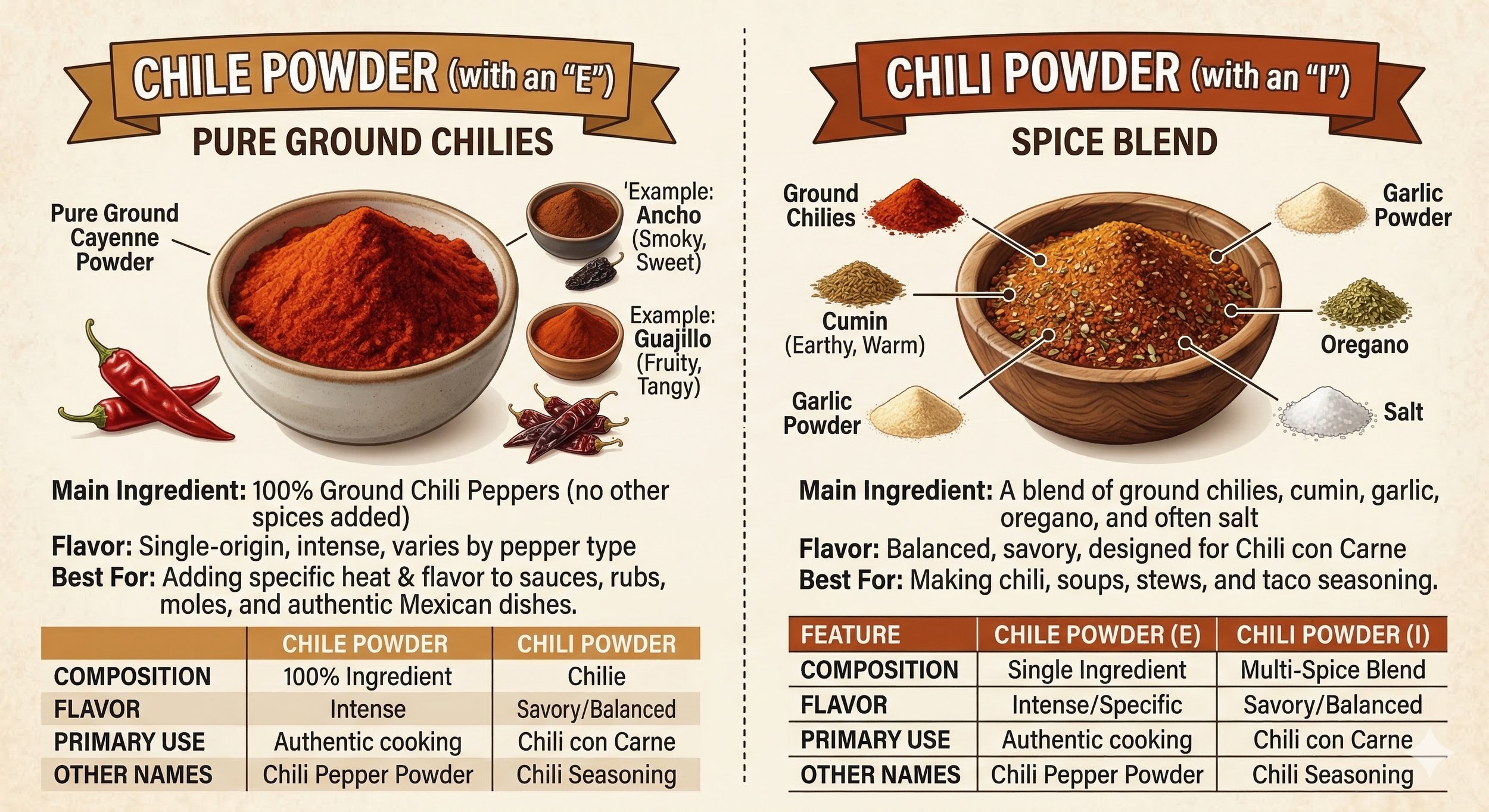
This matters because recipes calling for pure chile powder expect singular, focused heat and flavor. Adding commercial chili powder instead introduces cumin and garlic where they don't belong, throwing off carefully calibrated proportions. For authentic Mexican cooking, stock your pantry with individual chile powders—ancho for sweet, mild earthiness; chipotle for smoky heat; guajillo for bright, tangy notes; cayenne or árbol for pure fire—then blend them purposefully rather than relying on pre-mixed versions.
Making chile powder from whole dried chiles delivers superior results. Toast dried chiles in a dry skillet until fragrant (30-60 seconds, careful not to burn), remove stems and seeds, then grind in a spice grinder or high-powered blender until fine. Four ounces of fresh chiles equals approximately one ounce dried, which yields roughly two heaping tablespoons of ground chile. This freshly ground powder contains essential oils and aromatic compounds that fade rapidly in pre-ground versions.
Adobo: The All-Purpose Workhorse
We offer catering services in and around Austin, TX and Texas Hill Country. Inquire HERE.
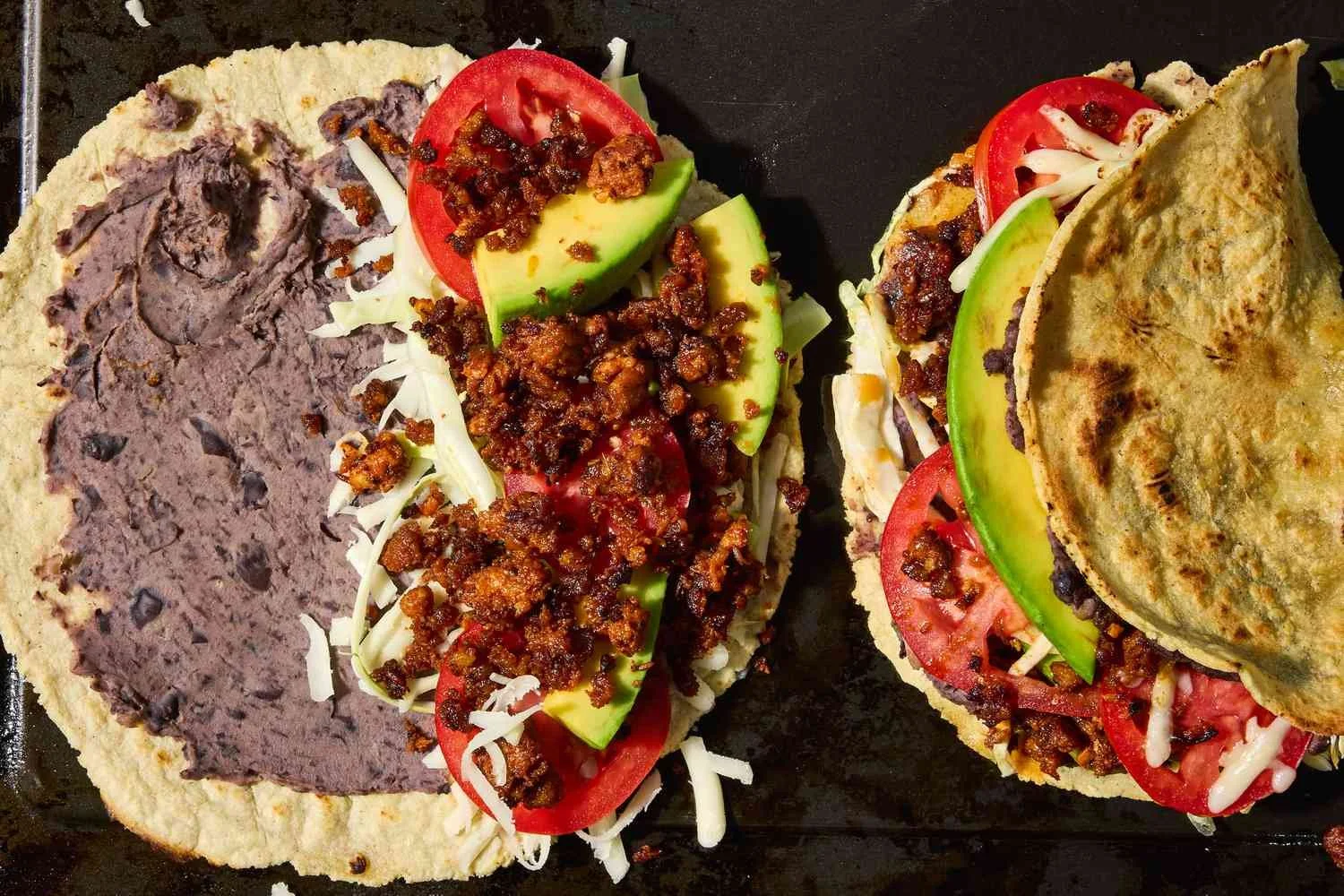
Adobo seasoning represents Latin American cooking's secret weapon—a savory, garlicky blend that enhances virtually everything it touches. While the exact formula varies by region, the core remains consistent: garlic powder, oregano, black pepper, and salt.
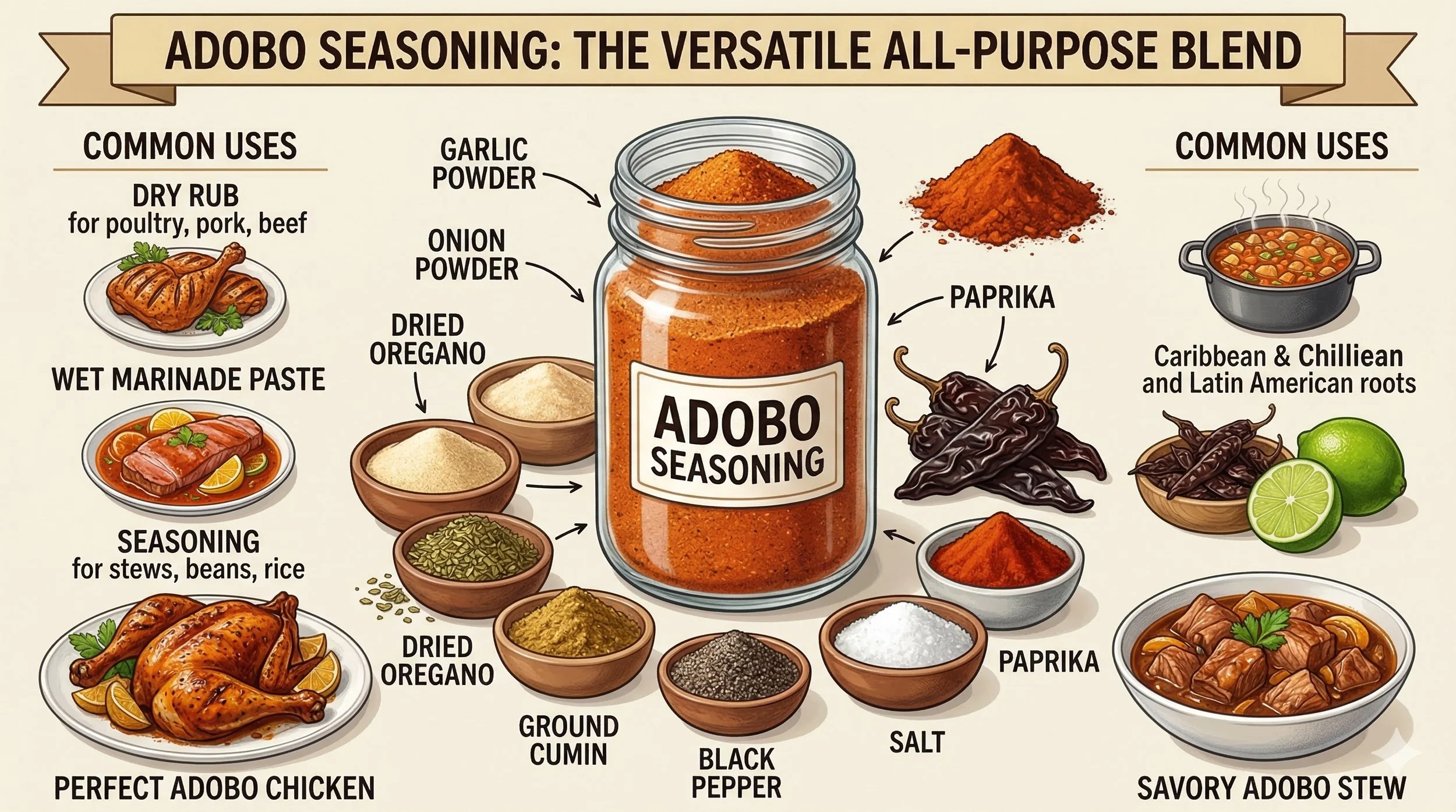
Basic Adobo Recipe:
- 3 tablespoons garlic powder
- 1 tablespoon onion powder
- 1 tablespoon coarse kosher salt
- 2 teaspoons Mexican oregano (broken up if pieces are large)
- 1 teaspoon freshly ground black pepper
- 1/2 teaspoon cumin
- 1/2 teaspoon turmeric
Regional variations tell culinary stories. Cuban adobo emphasizes cumin and incorporates sour orange juice for marinades. Puerto Rican versions favor vinegar and oregano while typically excluding chile peppers. Mexican adobo prominently features chile powder—ancho or standard chili powder—for earthy depth and gentle heat. Spanish and Portuguese renditions include paprika but generally omit cumin.
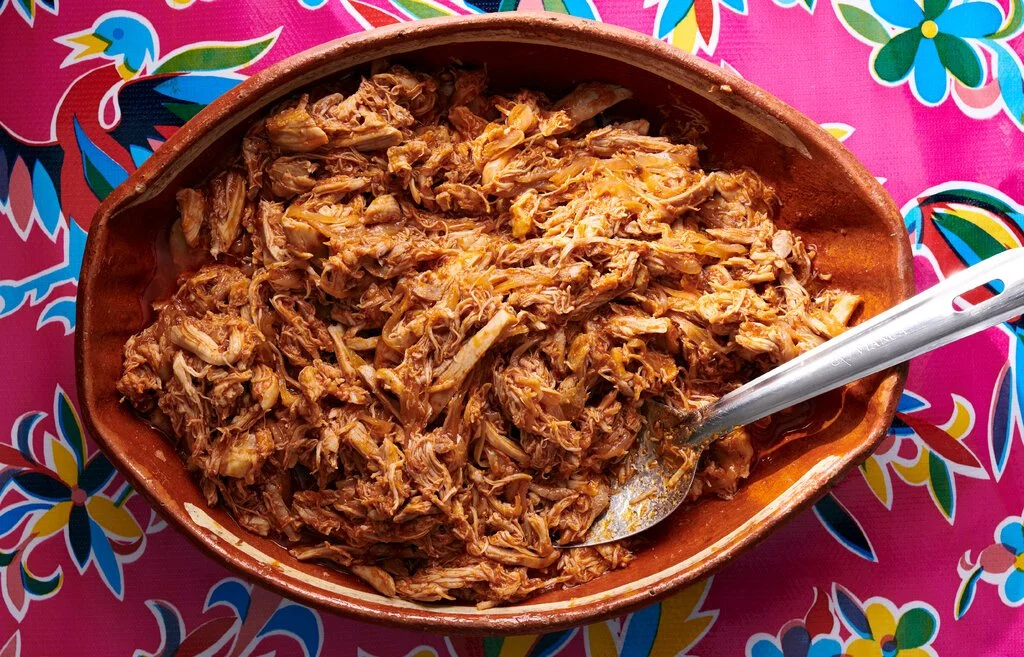
For maximum versatility, prepare the dry base blend and store it in an airtight container in a cool, dark place. When needed, transform it into wet adobo by mixing with olive oil, citrus juice, or vinegar to create marinades for pernil (roasted pork shoulder), arroz con pollo, or any grilled meat. The dry blend also works beautifully as a finishing sprinkle on roasted vegetables, French fries, or popcorn—anywhere you might use seasoned salt.
Mole-Inspired Dry Rub: Complexity in Four Ingredients
Traditional mole sauces require hours of toasting, grinding, and simmering dozens of ingredients. While irreplaceable for special occasions, they're impractical for weeknight cooking. Enter the mole-inspired dry spice blend: a four-ingredient shortcut that captures mole's essential character—earthy, slightly sweet, warm with cinnamon, complex with cocoa—in minutes.
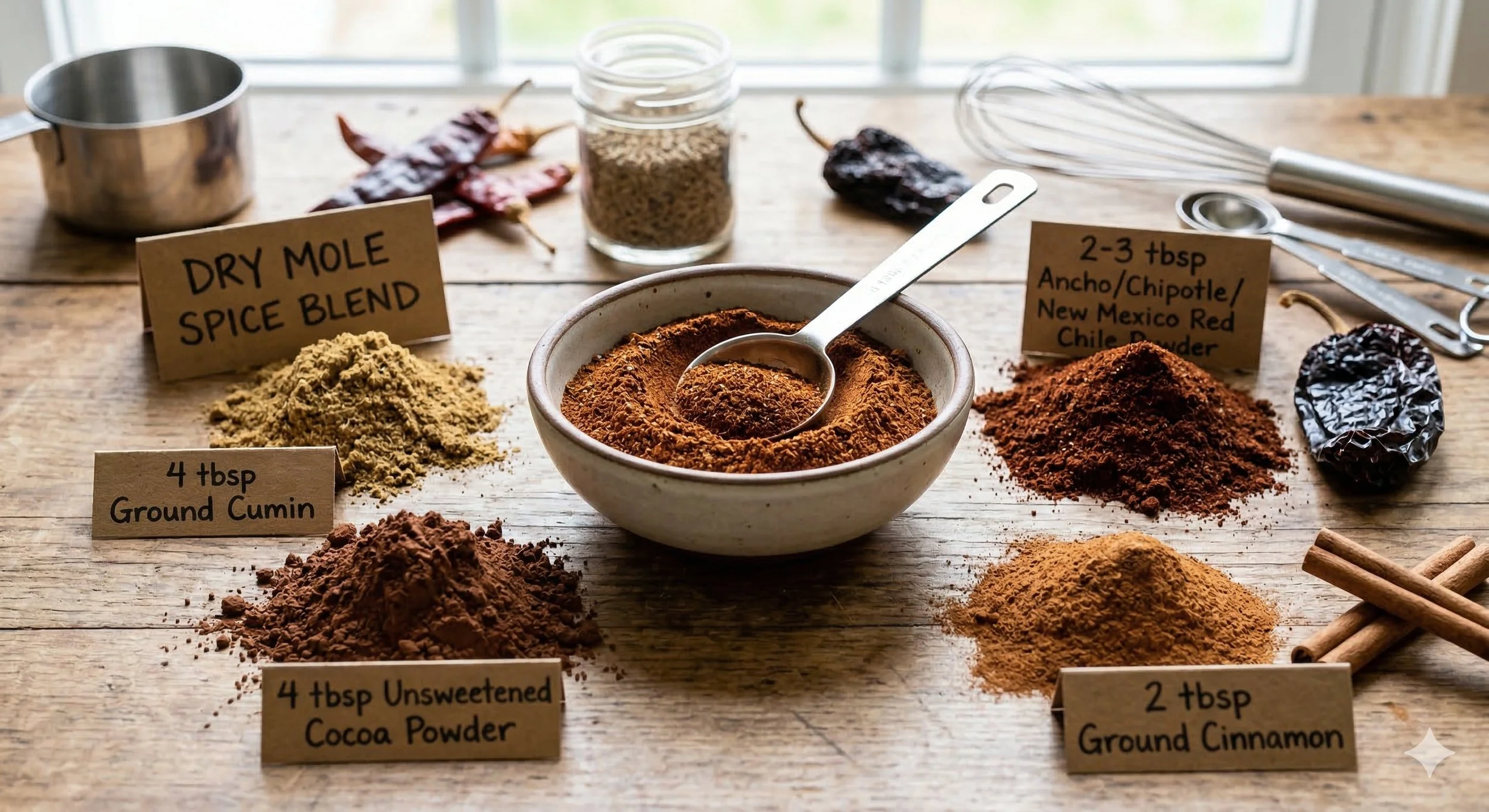
Dry Mole Spice Blend:
- 4 tablespoons ground cumin
- 4 tablespoons unsweetened cocoa powder
- 2-3 tablespoons ancho, chipotle, or New Mexico red chile powder
- 2 tablespoons ground cinnamon
The proportions create balance: cumin and cocoa lead, providing earthy depth and subtle bitterness; chile powder adds heat and fruity complexity (adjust to taste); cinnamon supports with warmth without dominating. This blend transforms lamb tacos, beef stews, roasted root vegetables, or serves as a dry rub for whole chickens. Bobby Flay's version scales up significantly and adds brown sugar for caramelization, making it ideal for grilled meats.
Critical reminder: use pure chile powder, not commercial chili powder blends, which contain cumin and other spices that will skew the carefully balanced proportions.
Tajín: Mexico's Addictive Chile-Lime Seasoning
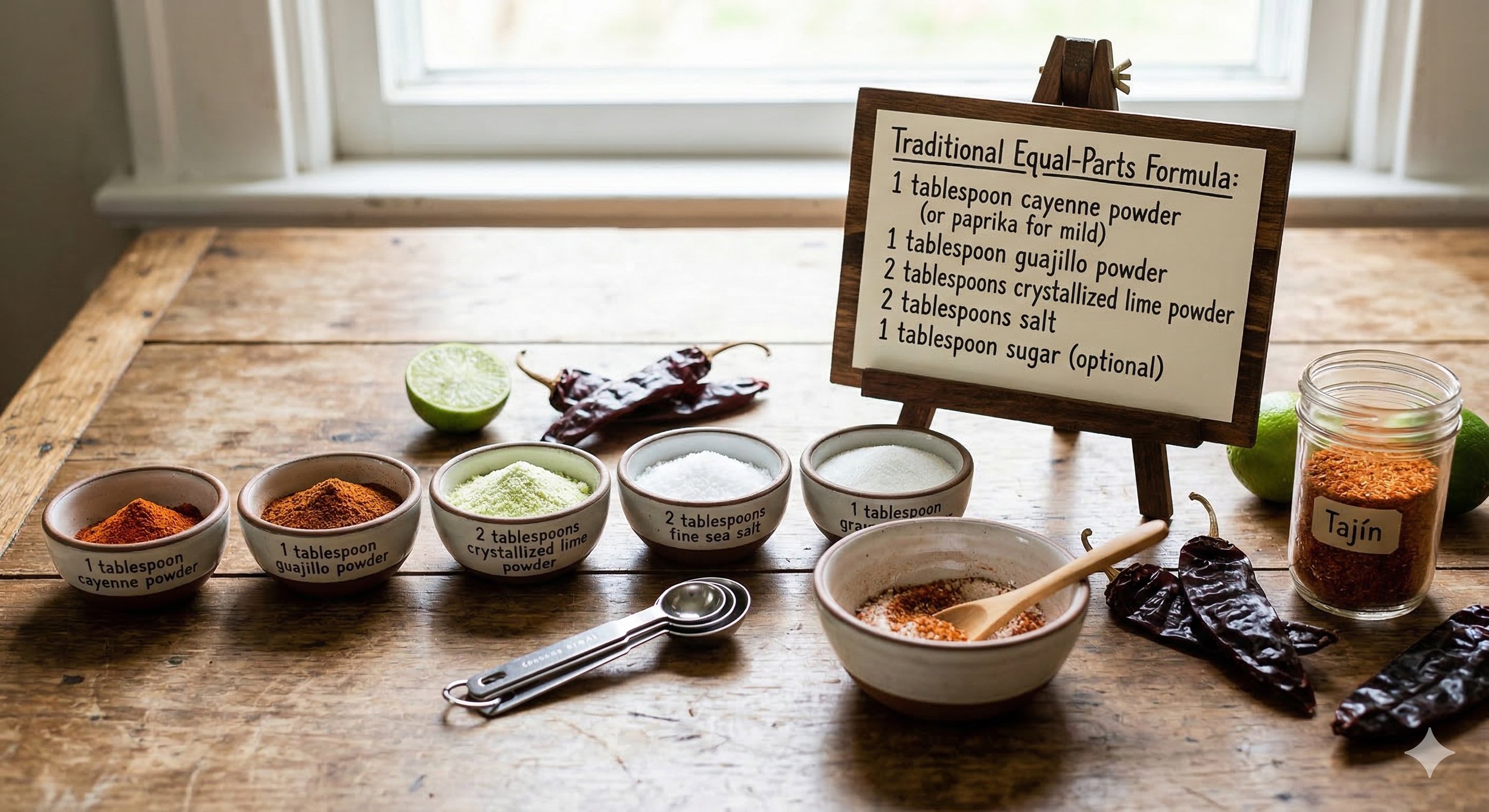
If you've enjoyed Mexican street corn, fresh mango with chile, or micheladas, you've likely encountered Tajín—the ubiquitous Mexican seasoning that combines chili peppers, lime, and sea salt into something greater than the sum of its parts. The commercial version uses mild chiles, but homemade versions allow customization of heat and salt levels.
Homemade Tajín (Low-Sodium Version):
- 2 tablespoons ancho chile powder
- 2 tablespoons chipotle chile powder
- 4 tablespoons crystallized lime powder
- 2 tablespoons fine sea salt
Traditional Equal-Parts Formula:
- 1 tablespoon cayenne powder (or paprika for mild)
- 1 tablespoon guajillo powder
- 2 tablespoons crystallized lime powder
- 2 tablespoons salt
- 1 tablespoon sugar (optional)
The lime powder proves essential—don't substitute citric acid, which provides only sourness without actual lime flavor. Crystallized lime powder contains dehydrated lime juice and lime oil, delivering authentic citrus character. While it contains maltodextrin (a processed starch), the quantities remain minimal. Use fine sea salt specifically; coarse salt won't blend properly.
Tajín's versatility astounds: sprinkle on fresh fruit (watermelon, pineapple, cucumber, jicama), rim cocktail glasses, season grilled chicken or fish, elevate popcorn, finish street corn, or add zing to avocado toast. The bright acidity, gentle heat, and salt create an addictive flavor profile that improves virtually everything.
Salsa Macha: The Mexican Chili Oil
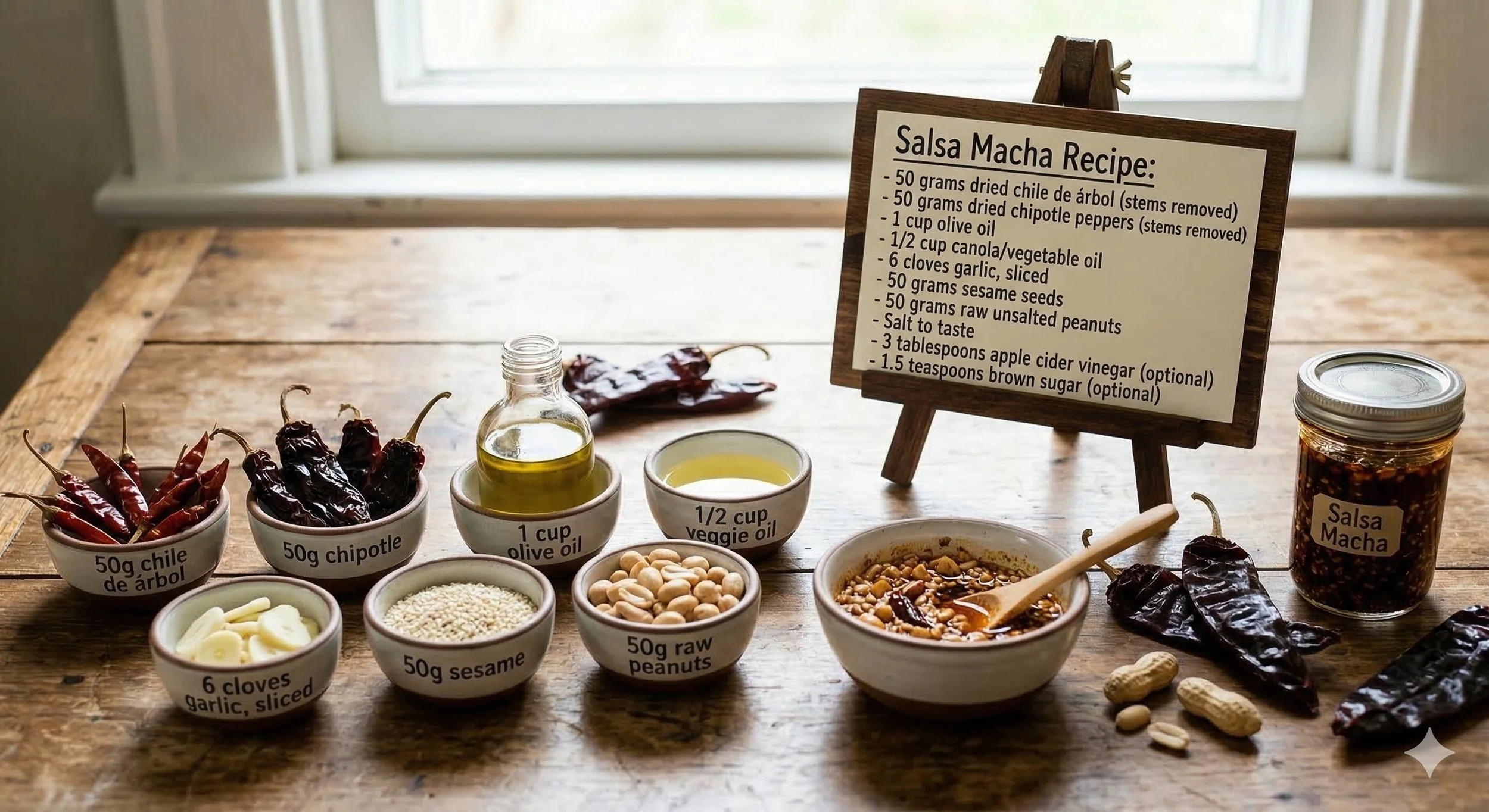
Salsa macha from Veracruz (and Oaxaca) represents Mexico's answer to Chinese chili oil—a spicy, nutty, oil-based condiment that you'll want to drizzle on everything once you taste it. The name derives from "machacar" (to crush), as traditional versions were ground in a molcajete.
Salsa Macha:
- 50 grams dried chile de árbol (stems removed)
- 50 grams dried chipotle peppers (stems removed)
- 1 cup olive oil
- 1/2 cup canola/vegetable oil
- 6 cloves garlic, sliced
- 50 grams sesame seeds
- 50 grams raw unsalted peanuts
- Salt to taste
- 3 tablespoons apple cider vinegar (optional)
- 1.5 teaspoons brown sugar (optional)
Heat the canola oil over medium and sauté garlic for 2-3 minutes until fragrant but not burned—set aside. In the same oil, briefly fry the chiles (30-60 seconds) until they just begin darkening. Don't burn them or bitterness will ruin the batch. Add peanuts, sesame seeds, and any reserved chile seeds; fry until toasty and fragrant. Transfer everything to a blender with olive oil, vinegar, and sugar; pulse to a chunky pesto consistency. You want it fine enough to avoid big chile chunks but coarse enough to maintain texture—not puréed smooth.
This intensely flavorful oil enhances tacos (especially quesadillas), grilled meats, fish, tostadas, eggs, pasta, and pozole. Store in the refrigerator in an airtight container where it will keep for weeks, the flavors intensifying over time.
Sal de Gusano: The Adventurous Addition
For the adventurous cook, sal de gusano (worm salt) from Oaxaca offers a distinctive umami-rich seasoning that pairs perfectly with mezcal and adds complexity to numerous dishes. Yes, it contains actual worms—specifically, toasted and ground agave moth larvae that feed on the maguey plants used to m
- Dried agave worms
- Sea salt (coarse or fine)
- Dried chili peppers (árbol, guajillo, or chipotle)
Toast the worms and chiles together for 1-2 minutes until fragrant, grind to fine powder, then mix with salt in roughly a 1:2 ratio of worm-chile powder to salt (adjust to taste). The flavor is mineral-driven, salty, earthy, spicy, smoky, with complex umami reminiscent of fried fish skin or gamey chicharrones.
Traditionally served alongside mezcal shots with orange slices—dip the orange in worm salt, bite, then sip the mezcal. Beyond drinking, use it to rim cocktails, season raw vegetable platters with lime, elevate potato chips or popcorn, or finish a Mexican-style caprese salad with tomatoes and queso Oaxaca. While once exclusive to Mexico, sal de gusano is now available online through Amazon, specialty retailers, and some liquor stores.
Regional Specialties: Yucatecan Recados
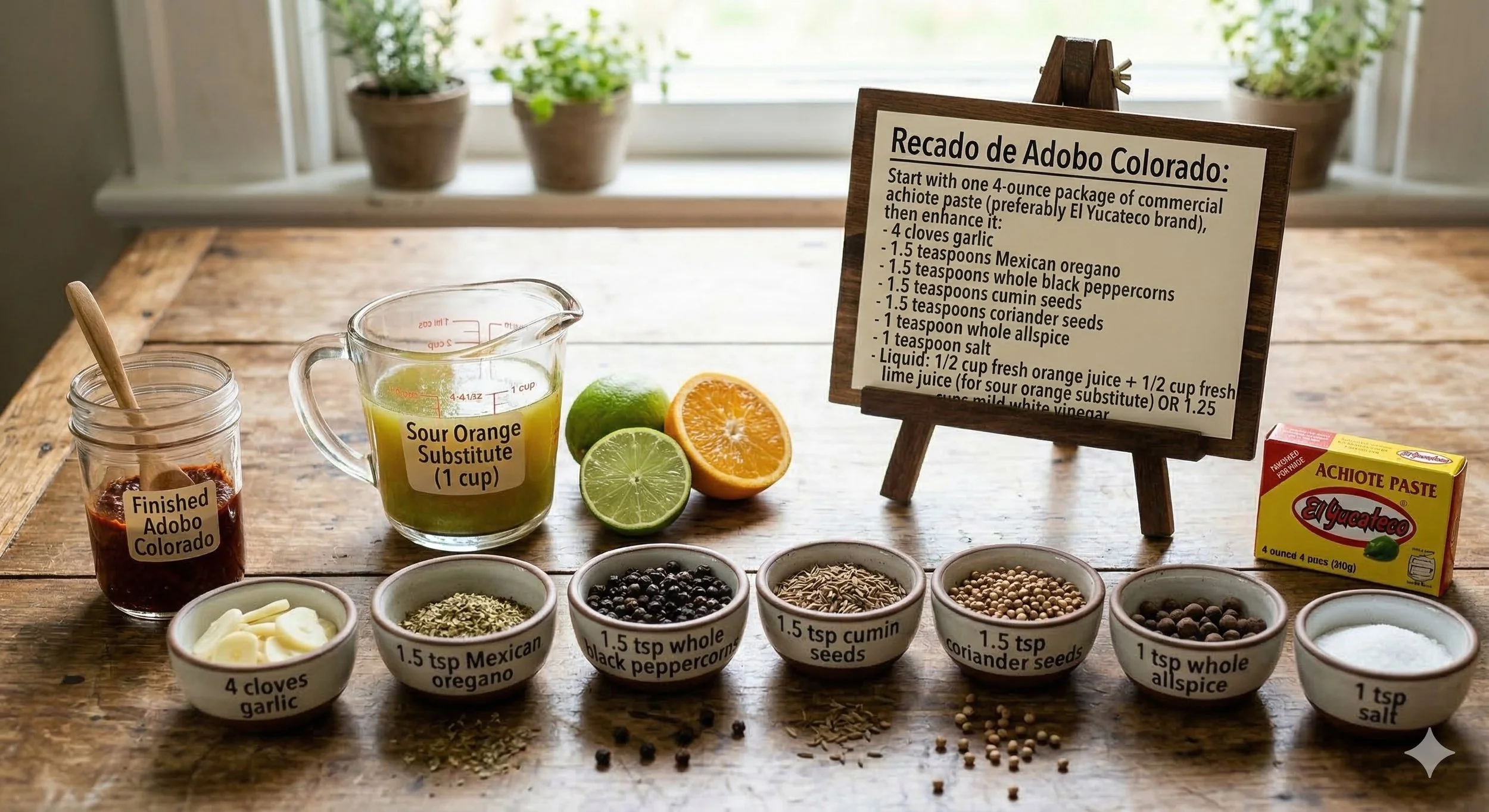
The Yucatán Peninsula developed its own spice paste tradition called recados—thick, concentrated blends of ground spices, chiles, and aromatics mixed with acidic liquid. Recado de adobo colorado (achiote paste) forms the foundation of cochinita pibil and countless other Yucatecan dishes.
Recado de Adobo Colorado:
Start with one 4-ounce package of commercial achiote paste (preferably El Yucateco brand), then enhance it:
- 4 cloves garlic
- 1.5 teaspoons Mexican oregano
- 1.5 teaspoons whole black peppercorns
- 1.5 teaspoons cumin seeds
- 1.5 teaspoons coriander seeds
- 1 teaspoon whole allspice
- 1 teaspoon salt
- Liquid: 1/2 cup fresh orange juice + 1/2 cup fresh lime juice (for sour orange substitute) OR 1.25 cups mild white vinegar
Blend the achiote paste and garlic until smooth, grind all spices in a coffee grinder, combine, then gradually add liquid until thoroughly mixed. Made with vinegar, this paste keeps indefinitely in the refrigerator; with fresh citrus, it lasts about three weeks but delivers more subtle, authentic flavor.
Recado negro represents Yucatán's boldest spice paste—made by intentionally burning chiles and spices until black, then reviving them in water to create an intensely smoky, charred paste used in relleno negro stew. While fascinating, this advanced technique requires experience to avoid bitterness and is best attempted after mastering simpler blends.
The Oregano Question: Mexican vs. Mediterranean
Many recipes specify "Mexican oregano," leading cooks to wonder whether it truly matters. The short answer: yes, considerably. Despite sharing a name, Mexican and Mediterranean oregano are entirely different plants from different botanical families.
Mexican oregano (*Lippia palmeri*) belongs to the verbena family and tastes earthier, more pungent, and plant-like with almost bay leaf-like umami notes. Mediterranean/Greek oregano (*Origanum vulgare*) is in the mint family and has more floral, minty, slightly sweet character. Both contain the aromatic oils carvacrol and thymol, which is why they share a name despite botanical differences.
For authentic Mexican flavor, seek out Mexican oregano at Latin markets or online. If substituting becomes necessary, marjoram actually approximates Mexican oregano's flavor more closely than Greek oregano does. Mexican oregano typically comes in larger leaves and stems that need breaking up before use.
Roasted Pepita Seasoning: The Crunchy Snack
Pepitas (pumpkin seeds) appear throughout Mexican cuisine—in green mole, sikil p'ak, and as crunchy toppings—but they truly shine as a spiced snack.
Spiced Roasted Pepitas:
- 2 cups hulled pepitas
- 2 teaspoons New Mexican chile powder
- 1/2 teaspoon chipotle powder
- 1/8 teaspoon ancho powder
- 1/8 teaspoon garlic powder
- 1 teaspoon salt
- 1 tablespoon oil
Toss everything together, spread on a baking sheet, and roast at 350°F for 8-12 minutes until toasted and fragrant. For a chile-lime version, drizzle with fresh lime juice after roasting. Variations can include cumin, coriander, smoked paprika, or cayenne depending on preference.
Building Your Mexican Spice Pantry
Creating a well-stocked Mexican spice pantry requires modest investment but pays dividends in flavor and versatility. Start with these essentials:
Whole dried chiles: ancho, guajillo, chipotle, chile de árbol
Ground pure chile powders: ancho, chipotle, New Mexico red, cayenne
Herbs: Mexican oregano, bay leaves
Spices: cumin (whole seeds and ground), coriander seeds, Mexican cinnamon (Ceylon), allspice, cloves
Aromatics: garlic powder, onion powder
Specialty items:** achiote paste, unsweetened cocoa powder, crystallized lime powder, sesame seeds
Store spices in airtight containers away from light and heat. Use the freshest spices possible—aromatic compounds fade over time, so if your cumin smells dusty rather than earthy and warm, replace it. Toasting whole spices before grinding intensifies flavors dramatically; the few extra minutes repay themselves in depth and complexity.
Conclusion: Reclaiming Flavor
The spice blends explored here represent just a fraction of Mexico's regional seasoning traditions. Each state, each city, often each family maintains distinct formulas refined over generations—slight variations in proportion, secret ingredients, particular preparation methods that make their version unique. Learning to make even a few of these blends at home connects you to that living tradition while liberating your cooking from the limitations of commercial products designed for shelf stability rather than flavor.
Start with one or two blends that appeal to your palate. Maybe it's the versatile adobo that seasons everything from breakfast eggs to Sunday roasts. Perhaps Tajín's bright, chile-lime zing becomes your go-to finishing sprinkle. Or salsa macha's spicy, nutty oil transforms your relationship with quesadillas and grilled fish. As these blends become second nature, expand your repertoire gradually, always prioritizing fresh, quality ingredients over convenience.
The rewards extend beyond improved flavor. Making spice blends engages your senses—the visual beauty of jewel-toned chile powders, the intoxicating aroma of toasting cumin and coriander, the tactile satisfaction of grinding spices by hand. It teaches you to taste critically, adjusting heat or salt to suit your preferences rather than accepting one-size-fits-all formulas. Most importantly, it embeds you more deeply in the act of cooking, transforming it from task to craft.
Your pantry staples need not come from distant factories. With dried chiles, quality spices, and a few simple techniques, you can produce blends that rival or surpass anything commercially available—seasoning mixes that taste unmistakably Mexican, distinctly regional, and uniquely yours.