De Vaquero to Cowboy Pt. 2: The Mission System - The Foundation of American Ranching
NOTE: This is part 2 of 7 in this series. For part 1, visit HERE.
The Mission System: Building the Foundation of American Ranching (1700s-1820s)
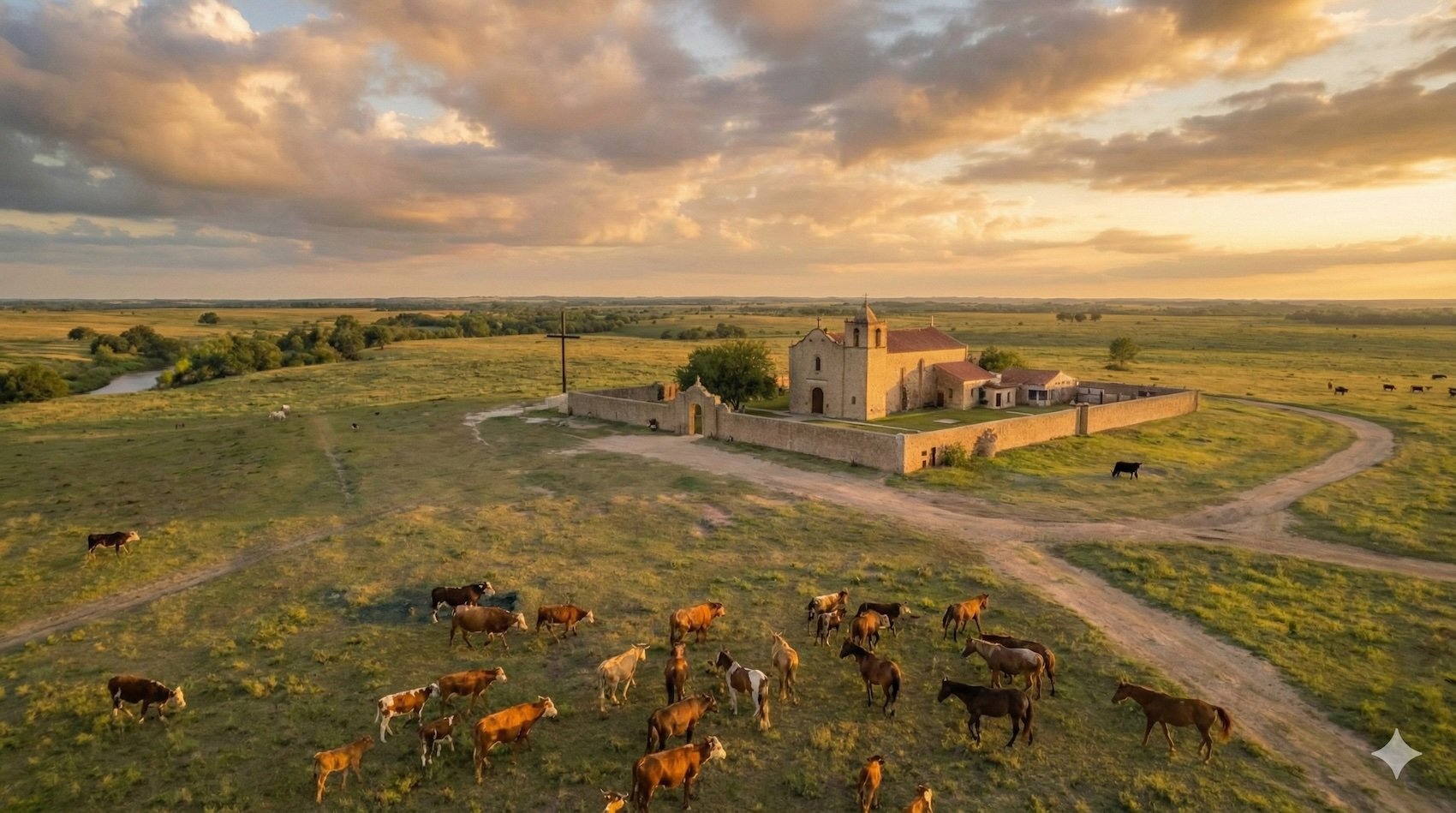
The story of the vaquero cannot be told without understanding the critical role of Spanish missions in establishing cattle culture across what would become the American Southwest. Beginning in the early 1700s, Spain established missions not just as religious outposts, but as fully functioning ranching enterprises that trained the first generation of indigenous vaqueros and created the infrastructure upon which the entire American cattle industry would be built.
In 1721, when six Spanish missions were re-established in Texas after French encroachment threats, priests, soldiers, and colonists brought 4,800 head of Spanish cattle** to the San Antonio River Valley region. The Franciscan priests were initially charged with managing these massive herds, making them Texas's first cattle ranchers. These weren't small operations—by 1834, California missions operated herds averaging 40,000 cattle each, creating an enormous livestock population that would outlive the mission system itself.
The missions faced unique challenges. Each of the five missions established in San Antonio maintained livestock including cattle, horses, mules, goats, and sheep that roamed between mission farms and the farms of villa (town) residents. Conflicts emerged constantly—townspeople complained about crop damage from unmanaged mission cattle, while mission fathers accused residents of beating and even killing their livestock.


To resolve these conflicts, the Spanish government allocated massive land grants—mission ranchos—spread out north and south of San Antonio on both sides of the San Antonio River and along Cibolo Creek. These ranching operations began operating during the 1740s with a clear purpose: supply meat, horses, beasts of burden, and other products to the missions and the Indigenous peoples living within them.
The vaquero training that occurred at these missions was revolutionary. Robed missionaries taught Mission Indians how to ride horses and work cattle from horseback, creating the first generation of Indigenous vaqueros—the true "early cowboys." These weren't helpers or assistants; they became master horsemen who would define ranching techniques for centuries.
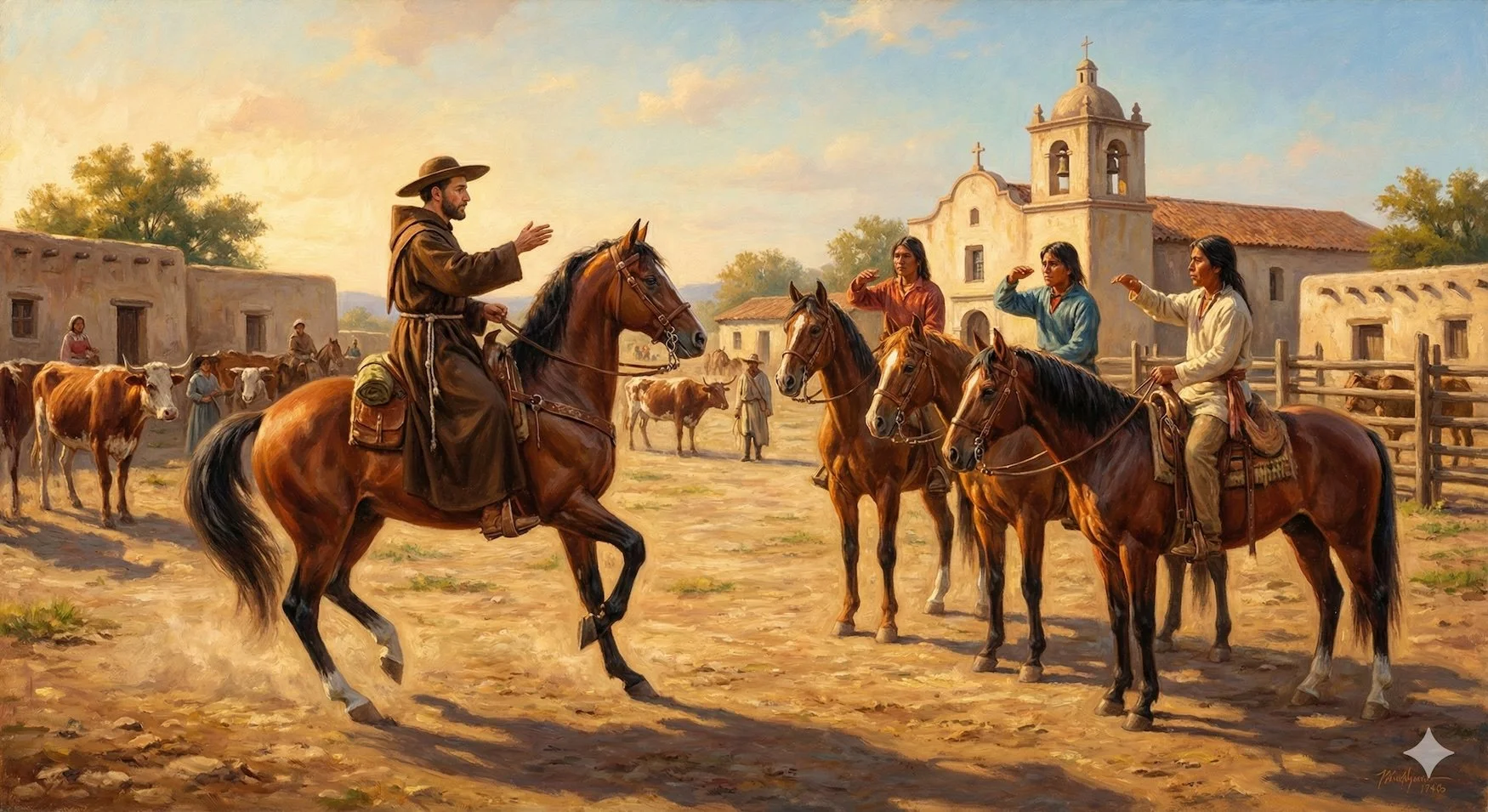
When the missions closed after 1763 (following France's loss of North American land claims), the priests and cowboy-soldiers evacuated, but the cattle remained. These animals—labeled according to their tameness using terms still in use today—roamed freely and multiplied explosively. Private citizens like Antonio Gil Y Barbo (who later founded Nacogdoches) began rounding up these wild herds and driving them to market in New Orleans, now part of New Spain.
We offer catering services in and around Austin, TX and Texas Hill Country. Inquire HERE.
By 1765, most Spanish missions were closed, leaving behind what became known as Mesteño—ownerless cattle that multiplied rapidly across the Texas landscape. This enormous population of semi-wild longhorns would become the foundation for the great cattle drives of the 1860s-1880s.
The Great Cattle Drives: Moving Five Million Head North (1860s-1890s)
The post-Civil War era transformed the vaquero tradition into an American industry. From approximately 1865 to the mid-1890s, Texas vaqueros and cowboys herded about 5 million cattle to northern markets, creating legends that defined the American West.
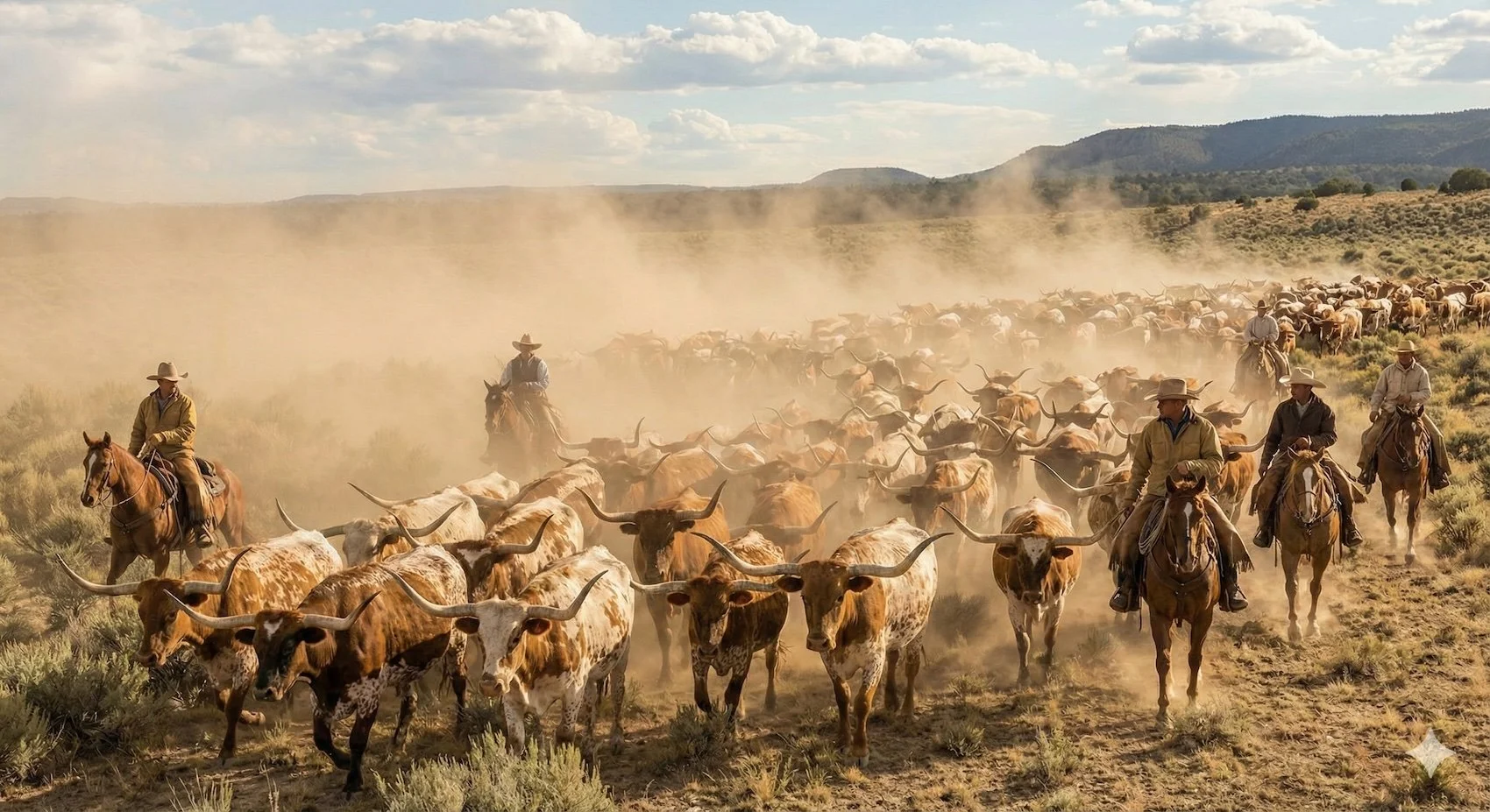
The drives were necessitated by simple economics: Texas had an abundance of longhorn cattle (descendants of those Spanish mission herds), while the rest of the country wanted beef. With railroads reaching Kansas and Missouri but not yet extended into Texas, the only way to get cattle to market was to walk them there—sometimes over distances exceeding 1,000 miles.
The Chisholm Trail: America's Cattle Highway
Created by Jesse Chisholm in 1865, the Chisholm Trail became the most important route for cattle drives leading north from the vicinity of Fort Worth, Texas, across Indian Territory (Oklahoma) to the railhead at Abilene, Kansas. The trail was approximately 520 miles long, generally following the ninety-eighth meridian.
By the mid-1870s, the trail's starting point had shifted south to begin at the Rio Grande near Brownsville, stretching all the way to Abilene. The trail reached peak usage in 1871 but declined rapidly by 1884 as railroads were built in Texas, eliminating the need to drive cattle north.
In 1866, Cuero businessman Crocket Cardwell hired trail boss Thornton Chisholm and 30 cowboys to drive 1,800 head of cattle from Dewitt County to St. Joseph, Missouri. The trip took seven months—an ordeal that required enduring harsh weather, Indian attacks, and hostility from settlers whose lands they crossed. Between 1866 and 1884, an estimated 6 million head of cattle were driven from Texas to Northern stockyards using this and other trails.
The drives weren't without costs. Cowboys and drovers faced natural dangers including major river crossings (the Arkansas and Red rivers, plus innumerable smaller creeks), canyons, badlands, desolate plains, and low mountain ranges. They encountered rustlers and conflicts with Native Americans, whose lands they crossed and whose hunting grounds and crop cultivation they disrupted. Tribal members often demanded trail bosses pay tolls of 10 cents per head for crossing rights.
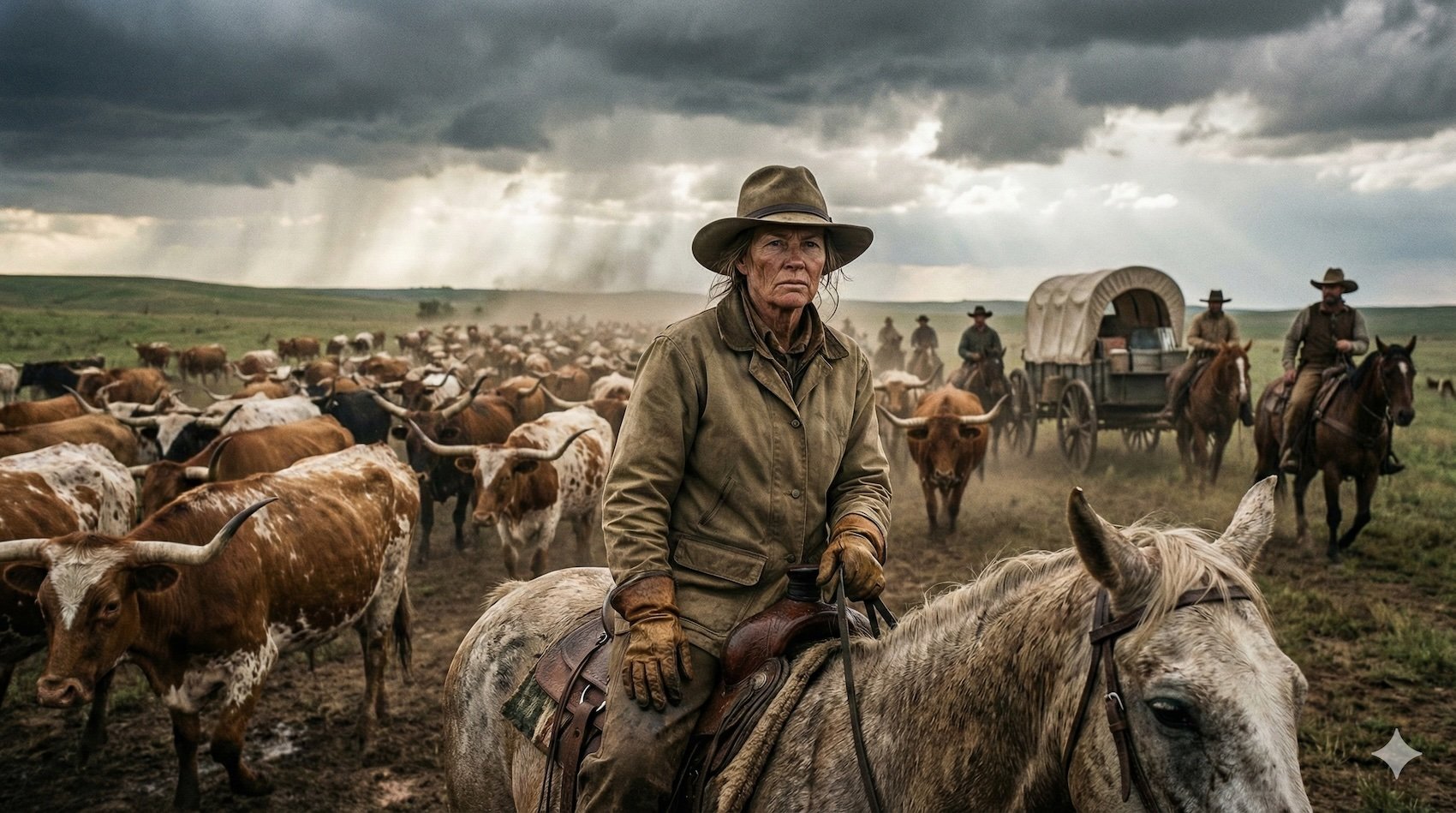
One extraordinary figure stands out: Margaret Borland, the only woman known to run her own cattle drive. In 1873, she took her family, hired hands, and 2,500 Longhorns from Texas to Wichita using the Chisholm Trail, seeking profit as cattle were worth triple in Kansas compared to Texas prices. Tragically, she died from "trail fever" just after arriving in Wichita, after an otherwise successful journey.
The Goodnight-Loving Trail: Opening Western Markets

While the Chisholm Trail moved cattle north to Kansas, the Goodnight-Loving Trail opened a different frontier. Created by Charles Goodnight and Oliver Loving in the spring of 1866, this trail ran from Young County, Texas, southwest to Horsehead Crossing on the Pecos River, up the Pecos to Fort Sumner, New Mexico, and on north to Colorado and Wyoming.
The route was brutal. Goodnight and Loving drove cattle over the Butterfield Overland Mail route through some of the most unforgiving terrain in North America, crossing deserts where water holes might be days apart. In June 1866, they drove 2,000 head of cattle to Fort Sumner with 18 cowpunchers, supplying beef to soldiers at military outposts, settlers, and Navajos recently placed on reservations.
Popular Blog Posts:


The trail evolved constantly. In 1867, Goodnight altered the route fifty to sixty miles east, and in 1868 he contracted with John Wesley Iliff to deliver cattle to the Union Pacific Railroad town of Cheyenne, Wyoming. To avoid paying toll road fees at Raton Pass (where "Uncle Dick" Wootton charged **ten cents a head**), Goodnight opened a new, easier passage through Tinchera Pass into Colorado.
The Western Trail, which replaced portions of the Chisholm Trail as barbed wire began slicing up the prairie, carried over 7 million cattle north between 1874 and 1886. These trails collectively moved an unprecedented volume of livestock and established the cowboy as an American icon.
The Art of Rawhide Braiding: Crafting the Vaquero's Tools
One of the most distinctive elements of vaquero culture was the art of rawhide braiding—a skill requiring years to master and producing equipment of unmatched durability and beauty. The centerpiece of this craft was the reata (or riata), the braided rawhide rope that became synonymous with California buckaroo tradition.
Creating a reata was an extraordinarily labor-intensive process. To produce a 65-foot finished reata, a braider needed to start with rawhide strands approximately 100 feet long, as the braiding process consumed about one-third of the length. Some braiders worked with even longer dimensions— a 3-strand reata might begin with 270 feet of usable rawhide before the final product emerged.
The process began with hide selection. Master braiders sought lighter-colored hides, as lighter rawhide tended to make superior reatas. The hide was stretched, slacked during drying, and then split from neck to tail along the "top line"—the strongest portion of the hide. Strings cut from this top line ensured consistent strength and flex throughout the finished product.
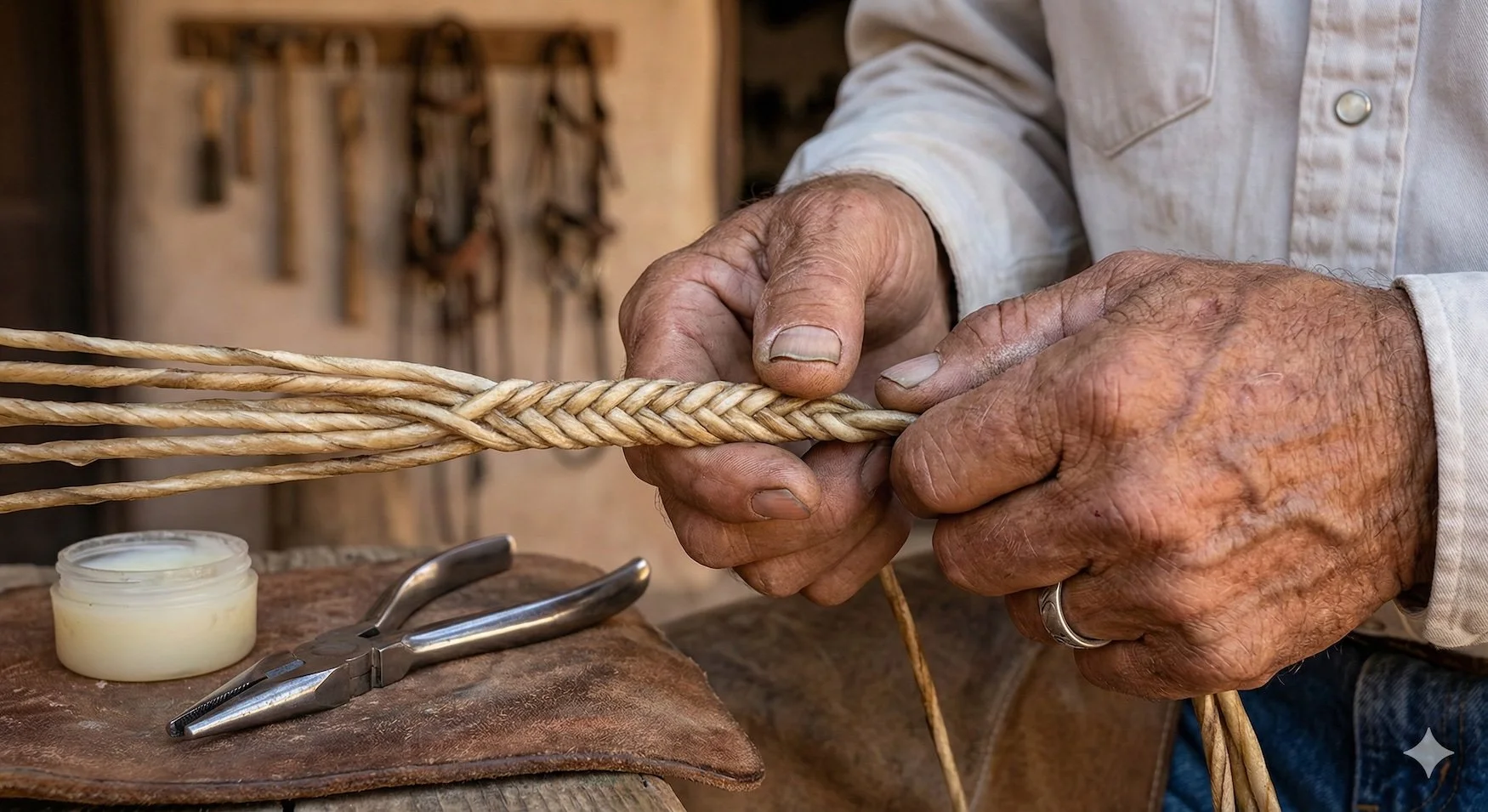
Traditional reatas were predominantly four-strand, though occasionally six-strand versions appeared. Master crafters avoided creating higher strand counts (8, 12, or 16-strand) for reatas because cutting strings finer reduced their strength, making the rope less functional despite appearing more ornate.
The core of the reata was critical to its performance. Some braiders used a single twist of rawhide with six additional strings beveled and braided over it. Others created cores by twisting rawhide in one direction (clockwise), then covering it with a second twist going the opposite direction (counterclockwise), sanding the core for consistency, and flexing it to identify any soft spots that required cutting and re-splicing.
Braiders had to work the rawhide dry—wet strings would create gaps when they dried out, ruining the rope's texture and strength. Each strand required pulling extremely tight to ensure consistent texture. Master braiders used polished-jaw pliers to work strings through without damaging them, creating reatas that could withstand tremendous force while maintaining flexibility.
The finished reatas ranged from 60 to 100 feet long—far longer than the shorter hemp or grass ropes used by Texas cowboys, whose thick brush would shred delicate rawhide. California buckaroos, working in more open terrain, valued the reata's length, which allowed them to rope cattle from greater distances and "play" the animal like a fisherman plays a fish, using the dally technique to control tension through friction rather than shock.
This craftsmanship extended beyond ropes to hackamores (bosals), saddle rigging, and even decorative elements. The tradition continues today among a small community of master braiders who preserve these ancient techniques, ensuring that the vaquero's artistry survives into the modern era.
In Part 3 we peel back the myth of instinct to reveal the engineered skill behind the vaquero’s tools, techniques, and biomechanics—showing how centuries of precision made mastery of the reata the foundation of real horsemanship and cattle work.
You can read part 3 HERE.


If you’ve been told you have prediabetes or type 2 diabetes and you feel overwhelmed, this ebook is for you. Written in clear, everyday language, Taking Charge of Type 2 Diabetes – Simple Choices, Real Results breaks down what your diagnosis really means and how small, realistic changes can lead to better blood sugar, more energy, and real long-term results.
Inside, you’ll learn how food, movement, stress, and sleep affect your blood sugar, with simple frameworks you can actually use in real life – whether you’re cooking at home, eating out, or juggling a busy schedule. You’ll find practical tips, and mindset shifts that help you stay consistent without feeling deprived.
This ebook is designed to feel like a supportive conversation, not a lecture. You can read it in short sections, highlight what speaks to you, and start applying one small change at a time so you build habits that stick. Whether your goal is to prevent complications, support weight loss, or simply feel more in control of your health, this guide gives you the foundation to take the next step with confidence.